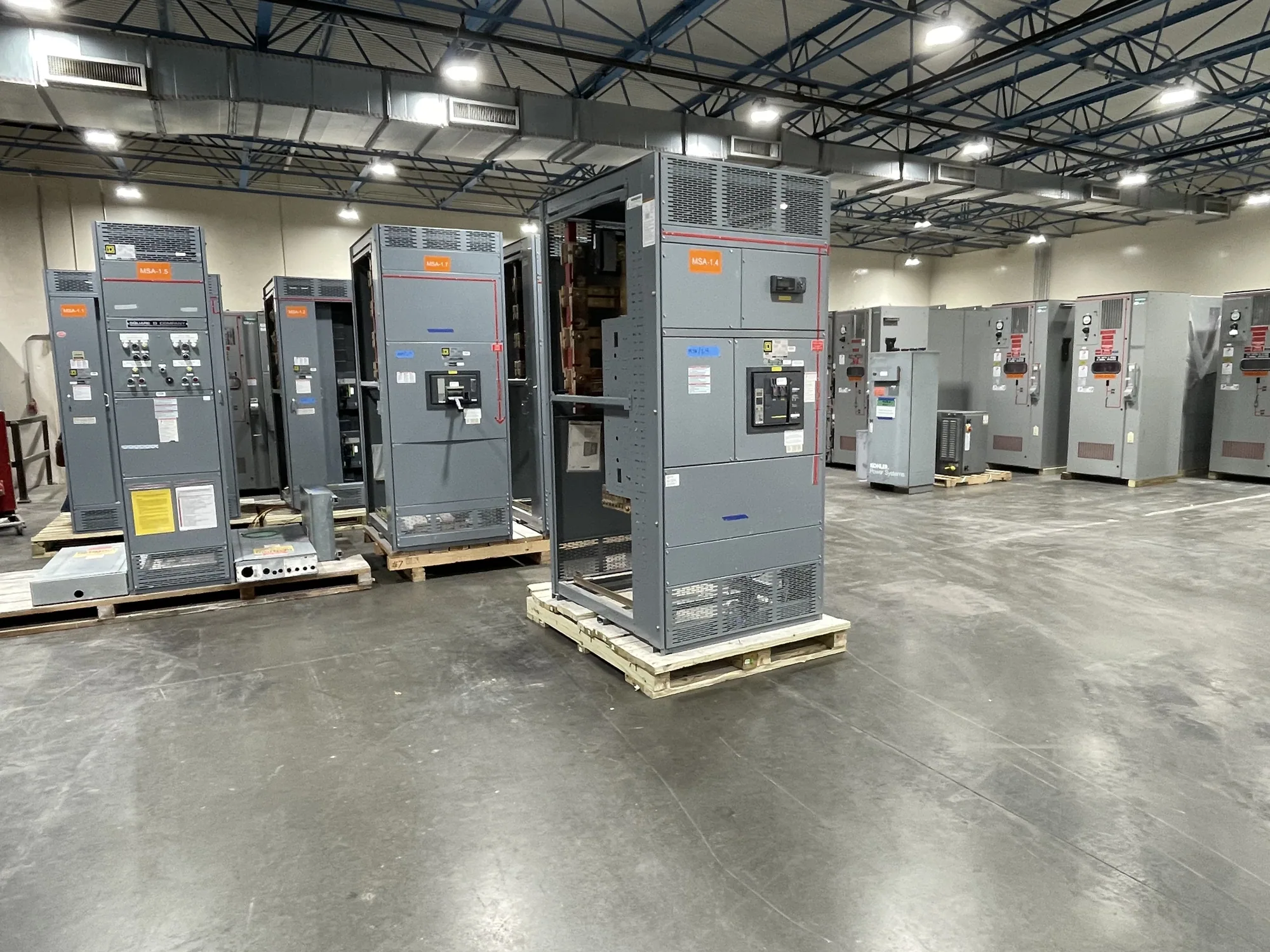
Start with the equipment and its application
Codes and standards for metal-clad switchgear are not a single checklist that applies identically to every project. Begin by defining the equipment: its voltage class, function, configuration, installation environment, and relationship to the rest of the electrical system. Metal-clad switchgear is medium-voltage equipment; do not treat low-voltage switchboard requirements as interchangeable with requirements for this equipment.
The responsible project engineer should identify the applicable product and construction standards, including the correct edition, for the proposed assembly and its intended use. Separately, the engineer must determine which installation codes, utility rules, and authority having jurisdiction (AHJ) requirements govern the project. Applicability depends on the actual design, location, project documents, and review process. Confirm these requirements rather than relying on a generic standard name or an assumption based on a previous installation.
Distinguish product standards from project rules
A product standard addresses equipment design or construction within its scope. Installation codes and project rules address how equipment is selected, integrated, installed, and accepted in a particular setting. Utility requirements may affect the service interface, metering, protection coordination, or submittal review, while the AHJ may identify applicable local adoption and approval requirements. These are related but distinct sources of requirements; one does not automatically replace the others.
For procurement, record the standard designation and edition specified by the project engineer, along with any amendments or project-specific requirements. Ask the engineer to resolve conflicts among the contract documents, utility criteria, and AHJ direction before releasing a design. The manufacturer can review the requested configuration against its proposed equipment, but the project team remains responsible for determining governing code requirements and obtaining required approvals.
Relate construction details to the specified standard
Metal-clad construction describes an arrangement of grounded metal compartments and separated equipment sections, but a construction label alone does not establish every performance characteristic or application. Review the proposed one-line diagram, lineup arrangement, circuit functions, and specified construction details together. If the project depends on barriers, shutters, removable devices, or particular access arrangements, state those requirements explicitly and ask how the offered design addresses them.
Removable circuit breakers and compartment interfaces can affect operating procedures, maintenance access, and the space needed for the lineup. Protection and control interfaces also need definition: identify required relaying functions, instrument transformers, control power, communications, and trip or alarm connections where applicable. The responsible engineer should determine whether the equipment arrangement supports the system design and operating plan. Do not infer an unlisted feature, rating, test, or certification from the term “metal-clad.”
Check ratings and system coordination
Specify the system conditions and equipment ratings needed for engineering review, including nominal system voltage, insulation requirements where specified, continuous current, short-circuit duty, frequency, and relevant operating conditions. These values must come from project calculations and design criteria, not from assumptions about a familiar facility type. Confirm that the equipment configuration, protective devices, and connected system are evaluated together by qualified engineering personnel.
Protection settings and interrupting or withstand requirements depend on the system study and the selected equipment. Ask who will provide fault-current information, coordination results, and any required relay settings, and identify the documents needed for review. Environmental conditions such as indoor or outdoor placement, ambient conditions, elevation, contamination, and available space may also affect the specified design. The exact significance of each condition is project-dependent and should be confirmed with the engineer and manufacturer.
Illustrative automotive manufacturing scenario
Consider a hypothetical automotive manufacturing expansion with a new medium-voltage lineup serving several process areas. The voltage, available fault current, feeder count, protection scheme, utility interface, and environmental conditions are unknown; no rating or compliance conclusion can be drawn from the facility type alone. The project engineer would first establish those inputs and identify the governing standard editions, installation requirements, utility criteria, and AHJ review expectations.
Production continuity may make maintainability and isolation planning important, but the project team must define what operating arrangements are actually needed. For example, ask whether the design requires particular breaker access, spare compartments, future feeder provisions, or control-system interfaces. A qualified engineer should perform the applicable system calculations and standards review, then translate their results into a coordinated equipment specification. Treat this scenario as a prompt for project questions, not as a recommended design or a statement of automotive-sector rules.
Prepare a useful specification and submittal package
Provide the manufacturer with the one-line diagram, equipment schedule, system voltage and ratings, circuit and protection requirements, lineup layout, connection details, environmental conditions, and applicable standard designations and editions. Include utility documents and AHJ comments that affect the equipment, if available. Identify required drawings, data sheets, review milestones, and the person authorized to resolve technical questions. Clearly mark values that remain preliminary so they are not mistaken for approved design inputs.
- List the required functions, circuit quantities, and any future provisions.
- State the required construction features, access needs, and control interfaces.
- Identify project-specific exclusions, deviations, and approval responsibilities.
- Ask which ratings, tests, listings, and documentation apply to the proposed assembly, and request confirmation against the actual specification.
Before order release, reconcile the reviewed submittal with the final project requirements and record accepted exceptions. Confirm configuration, availability, and delivery timing for the specific order; these depend on the requested design and must be verified. South Carolina Switchgear Builders manufactures new equipment to specification, with US-built equipment, all-American components, and nationwide shipping. Share the project documents and open questions early so engineering review and procurement can proceed from a clearly defined basis.