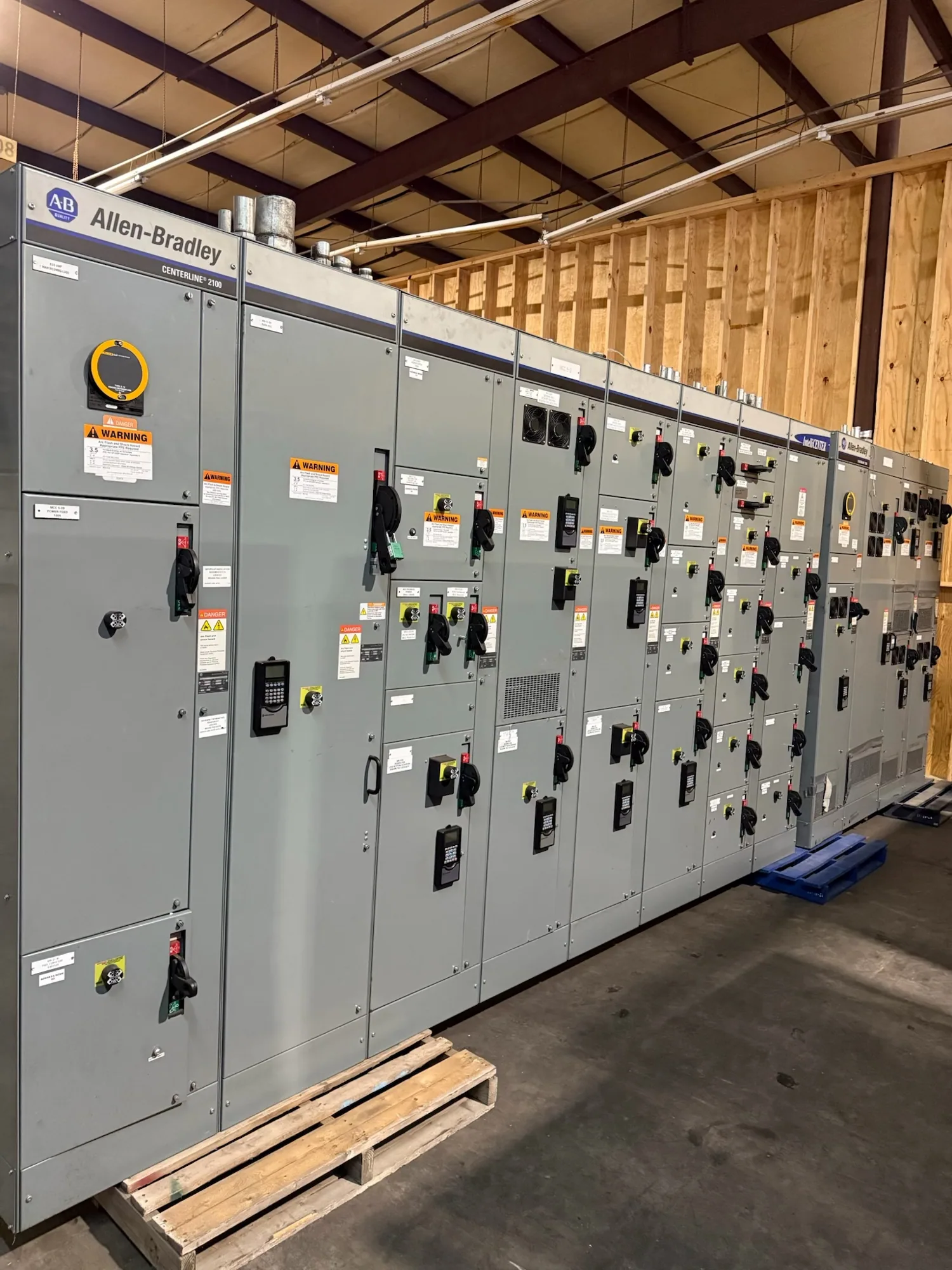
What continuous current means in metal-clad switchgear
For medium-voltage metal-clad switchgear, continuous current is the current an applicable assembly component is designed to carry under its stated operating conditions. It is not a substitute for short-circuit ratings, nor does one current value automatically describe every bus section, breaker, or connection. A useful specification identifies the rating for each relevant component and the conditions attached to it.
Start with the project’s normal and anticipated load, not simply a remembered rating from a similar lineup. The responsible engineer should establish expected demand, operating modes, load growth assumptions, and any simultaneous loads that matter. Those inputs inform equipment selection, but final ratings and application suitability must be confirmed against the actual design, component data, and applicable requirements.
Coordinate bus and switching-device ratings
The main bus, sectionalizing arrangements, feeder devices, and incoming devices may have different duties and ratings. The lineup must be evaluated as a system: a suitable bus rating does not by itself establish that every breaker or connection is appropriate for its assigned circuit. Identify the continuous current requirement at each position and ask the manufacturer to document the proposed equipment configuration.
Removable devices and compartmentalized construction shape how the equipment is arranged and maintained, but do not eliminate the need to verify current-carrying suitability. Confirm how breakers, bus connections, instrument transformers, and other specified components relate to the project’s operating profile. The exact equipment and options offered depend on the approved specification; do not infer a rating or feature from the general product category.
Account for documented operating conditions
Current capability is tied to the conditions under which the equipment is designed and evaluated. Ambient temperature, installation environment, ventilation, enclosure arrangement, elevation, and loading pattern may warrant review, depending on the design and applicable requirements. Provide actual project conditions rather than assuming a standard environment. Ask the responsible engineer and manufacturer to identify any conditions that affect the proposed ratings.
A derating factor should not be guessed or applied as a generic percentage. Its need and value depend on equipment details, relevant standards, and documented conditions. Clarify whether stated ratings apply to the complete assembly or particular components, and whether assumptions about temperature or installation are included. Rating statements should be traceable to the supplied configuration and its supporting documentation.
Think through operating profile and design trade-offs
Consider both steady operation and credible operating arrangements, such as transfer between sources, bus ties, or changing production schedules. A lineup that serves a typical operating mode may face a different loading pattern during maintenance or abnormal system configurations. The project engineer should identify which modes must be supported and evaluate current in each relevant path before the specification is finalized.
For example, an automotive manufacturing project might include production equipment, process loads, and planned expansion, but the actual demand, duty cycles, and operating arrangement are unknown until the project team provides them. Treat this as an illustration, not a rating recommendation. The qualified engineer must calculate or establish the applicable loads and review the design against project conditions and governing requirements.
Keep continuous current separate from fault duty
Continuous current describes normal current-carrying duty; short-circuit capability addresses a different electrical condition. A complete medium-voltage specification must address both independently, along with other project-specific requirements. Do not use a continuous current selection to infer fault withstand or interrupting capability. Confirm that the proposed device and assembly ratings match the system study and the duties assigned to each position.
Protection and maintenance interfaces also deserve coordination. Provide the intended protection approach, control and metering needs, operating sequence, and access constraints for engineering review. These details can affect the lineup arrangement and component selection even when they do not change the normal load calculation. Qualified personnel should handle installation, testing, and maintenance under applicable safety procedures.
Prepare a useful specification and submittal review
For a quotation and design review, assemble the one-line diagram, system voltage, source and feeder information, load schedule, demand assumptions, future provisions, and required operating modes. Include environmental and installation conditions, space or access limitations, protection and metering requirements, and any project-specific construction expectations. Clearly mark unknowns so they can be resolved rather than silently treated as established values.
Ask for proposed bus and device continuous current ratings by location, stated operating assumptions, applicable documentation, and any exclusions or design-dependent items requiring confirmation. Review submittals against the project one-line and load basis, and route discrepancies to the engineer responsible for the system. South Carolina Switchgear Builders supplies new, custom-to-specification equipment built in the United States with all-American components; availability and actual lead times depend on the order and must be confirmed. Finalize ratings and delivery expectations against the approved equipment configuration before release.