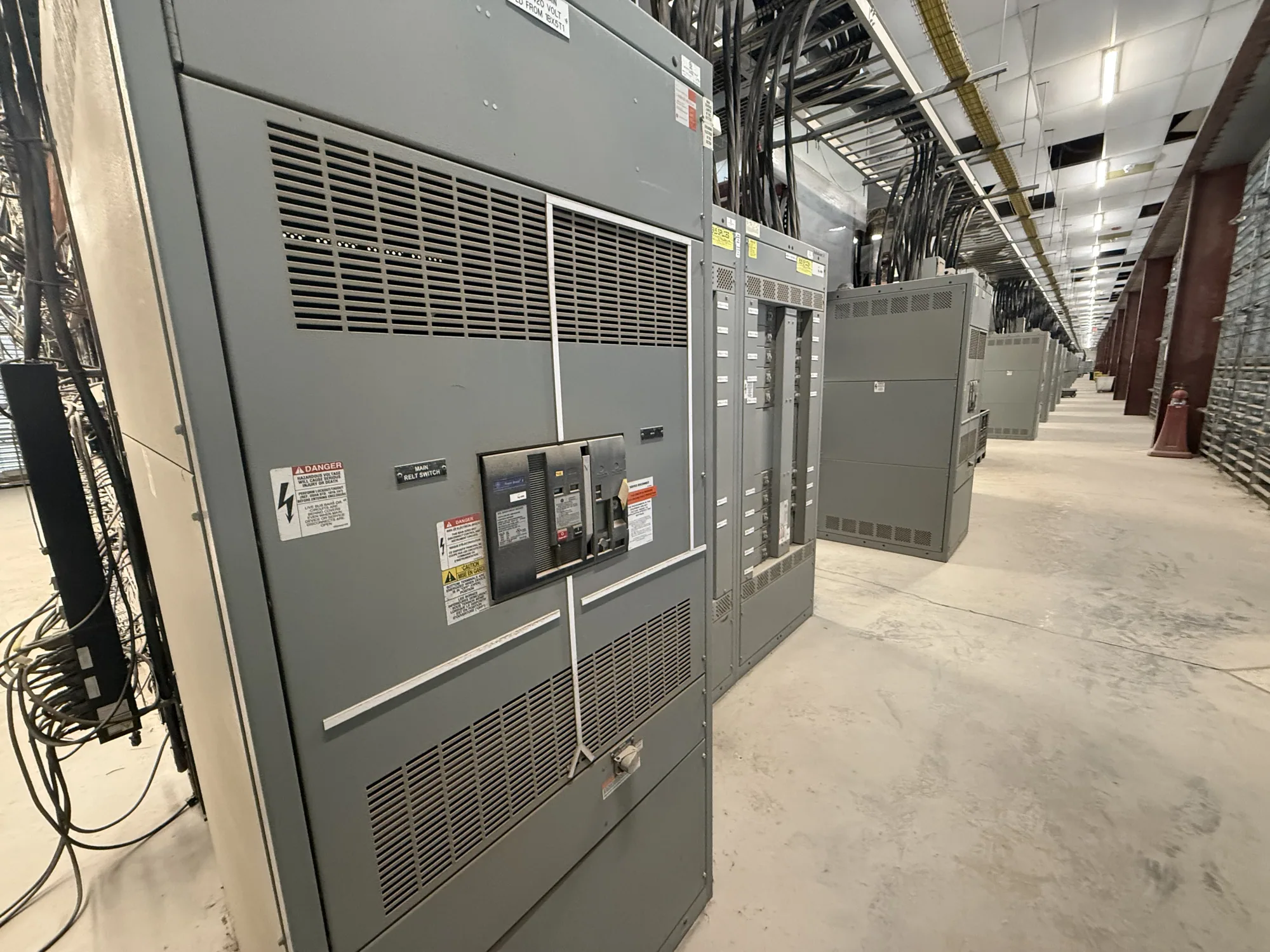
Why ratings matter in metal-clad switchgear
Short-circuit ratings describe how equipment is intended to perform when a fault produces high current. For metal-clad switchgear, the rating discussion belongs to the specific medium-voltage assembly and its switching and protective devices. It is not a single number that can be selected in isolation: the project engineer must relate the equipment ratings to calculated fault conditions at the relevant connection points.
Several terms may appear in a specification. Available fault current is the current a system can deliver at a location under defined conditions. An interrupting rating concerns a device’s ability to interrupt current within its stated application. Assembly withstand or short-circuit current ratings address the switchgear assembly’s ability to withstand specified electrical stresses for the applicable conditions and duration. The precise meaning and applicability of each value depend on the device, design, and governing requirements.
Start with the system fault study
Rating selection begins with system information, not a catalog value. A qualified project engineer determines available fault current at the switchgear location using the applicable system model and assumptions. Source characteristics, transformer data, conductor impedances, operating configurations, and changes in connected generation can influence the result. The study should identify the conditions used and the points in the system that the equipment must serve.
Where a project has multiple sources or operating arrangements, ask whether the analysis covers each relevant configuration. A bus tie, alternate feed, or future source may change the fault duty compared with a single normal operating arrangement. These are project-specific questions, not assumptions a manufacturer can resolve from a voltage class alone. Provide the study results and ask the responsible engineer to confirm the required rating basis before equipment design is finalized.
Coordinate device and assembly ratings
Do not treat an interrupting rating as a substitute for the switchgear assembly’s applicable withstand rating, or vice versa. Protective devices, buswork, connections, and the complete assembly have distinct roles in the fault response. The specification should identify the required values and conditions for each relevant component or assembly, then confirm that the offered design is suitable as a coordinated system under the project requirements.
Metal-clad construction can include separated compartments and removable devices, but construction details do not establish a fault rating by themselves. The selected arrangement, device type, bus configuration, and other design features must be reviewed against the equipment documentation. Clarify which ratings apply to the complete assembly and which apply to individual devices, including any limits or exclusions stated for the particular configuration.
Protection, operation, and maintenance interfaces
Protection settings and device selection affect how a fault is detected and cleared, while the equipment’s ratings define design limits under specified conditions. The project’s protection study should therefore be coordinated with the switchgear specification. Relay functions, instrument-transformer data, breaker characteristics, and the intended operating scheme are among the inputs the responsible engineer may need to evaluate. A rating alone does not establish that the overall protection scheme is selective or properly coordinated.
Also consider how the switchgear will be operated and maintained. Removable equipment, access arrangements, interlocks, and maintenance procedures should match the intended installation and qualified personnel’s work practices. Specify the functions and interfaces required, rather than assuming that a construction description guarantees a particular operating feature. Installation, testing, and maintenance must be performed by qualified personnel following applicable safety procedures; no rating makes energized work appropriate.
Illustrative manufacturing scenario
Consider an automotive manufacturing facility evaluating new medium-voltage metal-clad switchgear for a production area. This example has no assumed voltage, fault-current value, source arrangement, or required rating. The engineer would first establish the available fault current at the proposed equipment location and identify the normal and alternate system configurations that need review. The project team would then define the required interrupting and assembly withstand criteria from the study and applicable design requirements.
Production loads and future expansion may affect the project’s operating plan, but they do not justify guessing at fault duty. The team should document whether additional sources, planned capacity changes, or a bus-tie operating mode are included in the study. Manufacturer review can then address whether the proposed equipment configuration matches the documented specification. Any unresolved study assumptions, rating definitions, or equipment exclusions should be settled before approval of the design.
Information to include in the specification
For a useful equipment review, provide the system voltage class, one-line diagram, source and transformer information, fault-study results, and relevant operating configurations. Include protection requirements, device and relay expectations, bus arrangement, connection details, environmental and installation constraints, and the required construction features. Identify project standards and documentation needs, but have the responsible engineer confirm their applicability to this specific design.
- State the calculated available fault current at the equipment location and the study basis.
- Separate device interrupting requirements from assembly withstand or short-circuit rating requirements.
- Identify normal, alternate, and future system conditions that affect the fault analysis.
- Request equipment-specific ratings, limitations, exclusions, and supporting documentation for the proposed configuration.
- Coordinate protection, submittals, review responsibilities, and required project dates.
Review the actual equipment configuration
Before release, compare the proposed equipment documentation with the project study and specification line by line. Confirm that rating terminology, applicable conditions, device selections, and assembly configuration align; refer discrepancies to the project engineer and manufacturer for resolution. Listing, testing, ratings, and standards applicability must be verified for the actual supplied design rather than inferred from a general product description.
South Carolina Switchgear Builders manufactures new switchgear to project specifications, with US-built equipment and nationwide shipping. Configuration, documentation, availability, and delivery timing depend on the order and must be confirmed. A complete inquiry—including the fault-study basis, one-line diagram, operating scheme, and defined rating requirements—gives the manufacturer and engineering team a practical foundation for reviewing whether the proposed metal-clad switchgear fits the project.