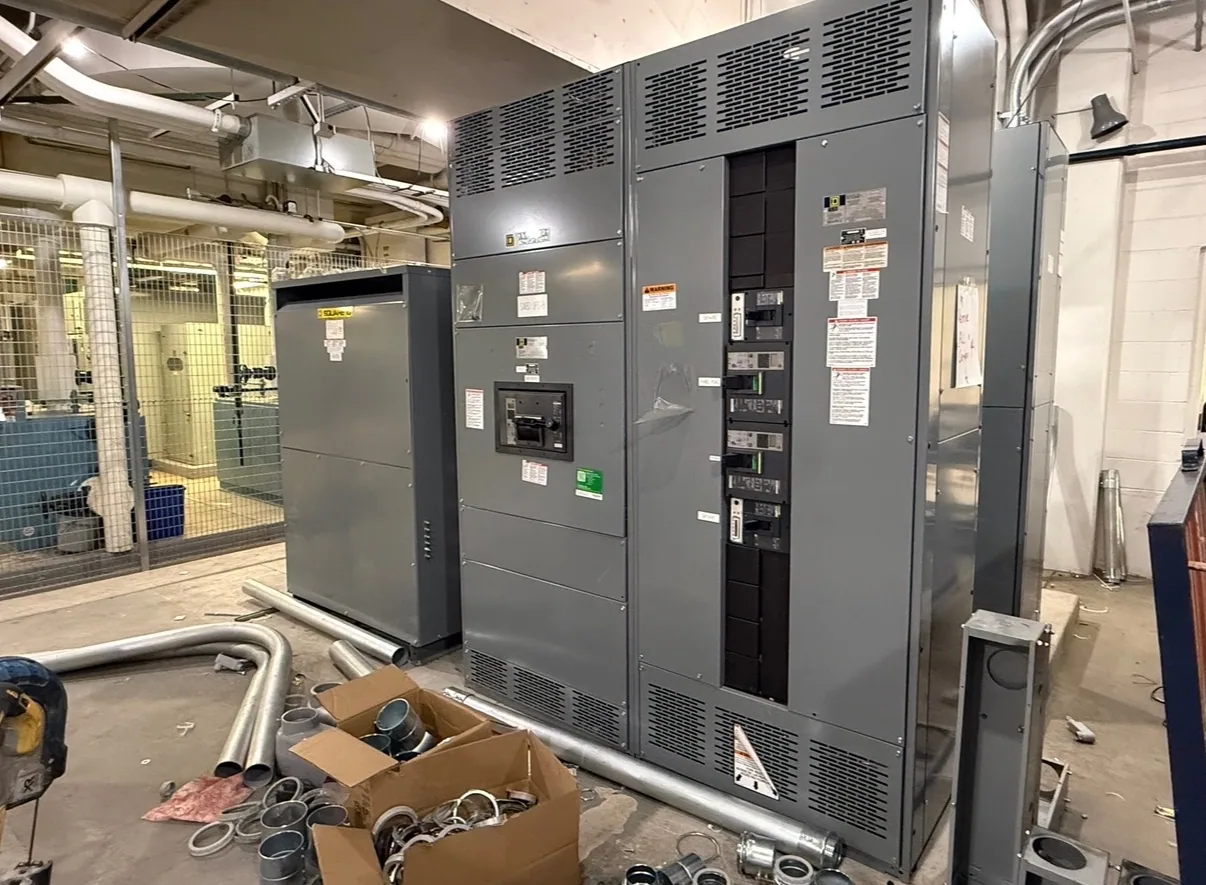
Start with the equipment class, not the enclosure name
“Metal-enclosed switchgear” describes equipment housed in a metal enclosure, but the phrase alone does not establish its voltage class, internal arrangement, switching function, or applicable product standard. The first step is to identify what the project requires: the system voltage, intended role, devices included, and the construction class specified by the responsible engineer. Those details determine which equipment requirements should be reviewed.
Do not assume that every metal-enclosed assembly follows the same standard because its exterior looks similar. Requirements may differ with equipment type, voltage class, interrupting and switching devices, and intended application. A specification should name the applicable standard and edition when the project team has established them. If those details are undecided, ask the engineer of record to resolve them before requesting a compliance statement from a manufacturer.
Separate product standards from installation rules
Equipment standards address the product’s construction and applicable performance requirements. Installation codes address how electrical equipment is selected, located, connected, and installed as part of a building or power system. Utility rules may apply at a service or interconnection point, while the authority having jurisdiction (AHJ) reviews requirements within its remit. These sources can intersect, but they are not interchangeable.
For that reason, a product-standard reference by itself does not establish that an entire installation is approved or compliant. The project team should identify the applicable code editions, local amendments, utility requirements, and review process rather than rely on a generic claim. Applicability depends on project location, system design, and equipment scope; confirm those items with the qualified project engineer, utility, and AHJ as appropriate.
Connect the standard to the specified construction
Once the equipment class is clear, review the one-line diagram and functional requirements against the proposed arrangement. Identify incoming and outgoing circuits, switching devices, protective functions, metering needs, control power, and any provisions for future circuits. Specify what each compartment or section must do, rather than assuming that a familiar lineup arrangement is suitable for every application.
Grounding details also need project-specific attention. The design team should define the grounding method, bonding expectations, and interfaces with the site grounding system, then confirm that the equipment design and installation documents address them. Service access, working space, cable entry, conduit routing, and operating clearances affect enclosure arrangement and room coordination. Have qualified personnel and the engineer resolve these constraints before the equipment layout is finalized.
Review editions, ratings, and evidence carefully
Standards change over time, and a project may specify an edition that differs from the one currently referenced elsewhere. Record the required edition and any project-specific exceptions in the procurement documents. Ask the manufacturer to identify the standard applied to the proposed equipment and explain what documentation is available for that specific configuration. Do not treat an unqualified “meets code” statement as a substitute for a defined basis of design.
Confirm electrical ratings from the approved design and equipment submittal, including values relevant to the system study and operating conditions. The responsible engineer should establish those values; neither an enclosure description nor a general product family determines them. Likewise, listing, testing, and certification depend on the actual assembly and its scope. Request evidence applicable to the proposed design, and have the engineer determine whether it meets the project specification.
Consider campus applications without assuming the answers
For example, a higher education campus planning a new building connection might evaluate metal-enclosed switchgear as part of a larger distribution design. At the outset, voltage class, available fault current, required switching functions, feeder count, and utility interface may all be unknown. Treat each as an open design input—not a value to infer from another campus building or a generic equipment description.
The project engineer can use system studies and applicable requirements to establish ratings, protection coordination, grounding, and the required construction. Campus operations may also identify access, maintenance, expansion, and outage-planning priorities. These considerations can affect arrangement and documentation, but they do not replace standards review. The manufacturer can then quote equipment against a defined specification and identify questions or deviations for the project team to resolve.
Prepare a useful specification and submittal review
Before requesting new equipment, assemble the one-line diagram, equipment class, voltage and ratings established by the engineer, circuit schedule, switching and protection requirements, enclosure and environmental needs, cable-entry preferences, and control or metering details. Include the governing standards and editions, installation-code assumptions, utility criteria, and AHJ review requirements known at that stage. Clearly mark unresolved values and identify who will confirm them.
- State the equipment scope and functions, including what is excluded from the manufacturer’s supply.
- List required drawings, rating information, applicable compliance documentation, and review milestones.
- Identify site access, room layout, cable routing, grounding interfaces, and coordination dependencies.
- Request written clarification for deviations, open design inputs, and any project-specific approval conditions.
During submittal review, compare the proposed equipment with the approved design rather than checking standards references in isolation. Resolve discrepancies in ratings, arrangement, interfaces, and documentation before release for manufacture. Delivery timing and availability depend on the confirmed order and specification, so align procurement milestones with the project schedule. South Carolina Switchgear Builders manufactures new equipment to specification and ships nationwide; project-specific configuration and applicable requirements should be confirmed before order acceptance.