Plan around the campus, not just one building
A university electrical project may serve an academic building, research laboratories, residence halls, a central plant or several of these through a campus distribution network. Each facility can have a different load profile, operating schedule and consequence of interruption. Start by defining which buildings and loads the new equipment will supply, where it connects to existing distribution, and how the project fits the campus’s long-term electrical plan.
For phased construction, clarify what must operate at each stage and what future capacity or connection points the design is intended to support. A future-building allowance is not a substitute for an engineered load forecast. The responsible engineer should establish the design basis, account for known additions and confirm whether planned sections, feeders or protective devices belong in the current scope or a later phase.
Map feeders and operating constraints
Campus feeder planning involves more than identifying a source and destination. The project team should document feeder routes, source equipment, downstream distribution, transfer or tie arrangements if applicable, and the loads affected by each planned interruption. Confirm how the new assembly interfaces with existing equipment and whether the project requires a defined sequence for cutover, temporary arrangements or coordination with separate construction packages.
Outage windows can be difficult to schedule around teaching, research, residence operations and plant demand. Identify who approves interruptions, what calendar constraints apply, and what information the contractor and commissioning team need before a window is authorized. Equipment selection alone cannot guarantee a smooth cutover: drawings, interface details, access, installation sequencing and acceptance responsibilities need alignment among the owner, engineer, contractor and equipment supplier.
Choose an assembly suited to its role
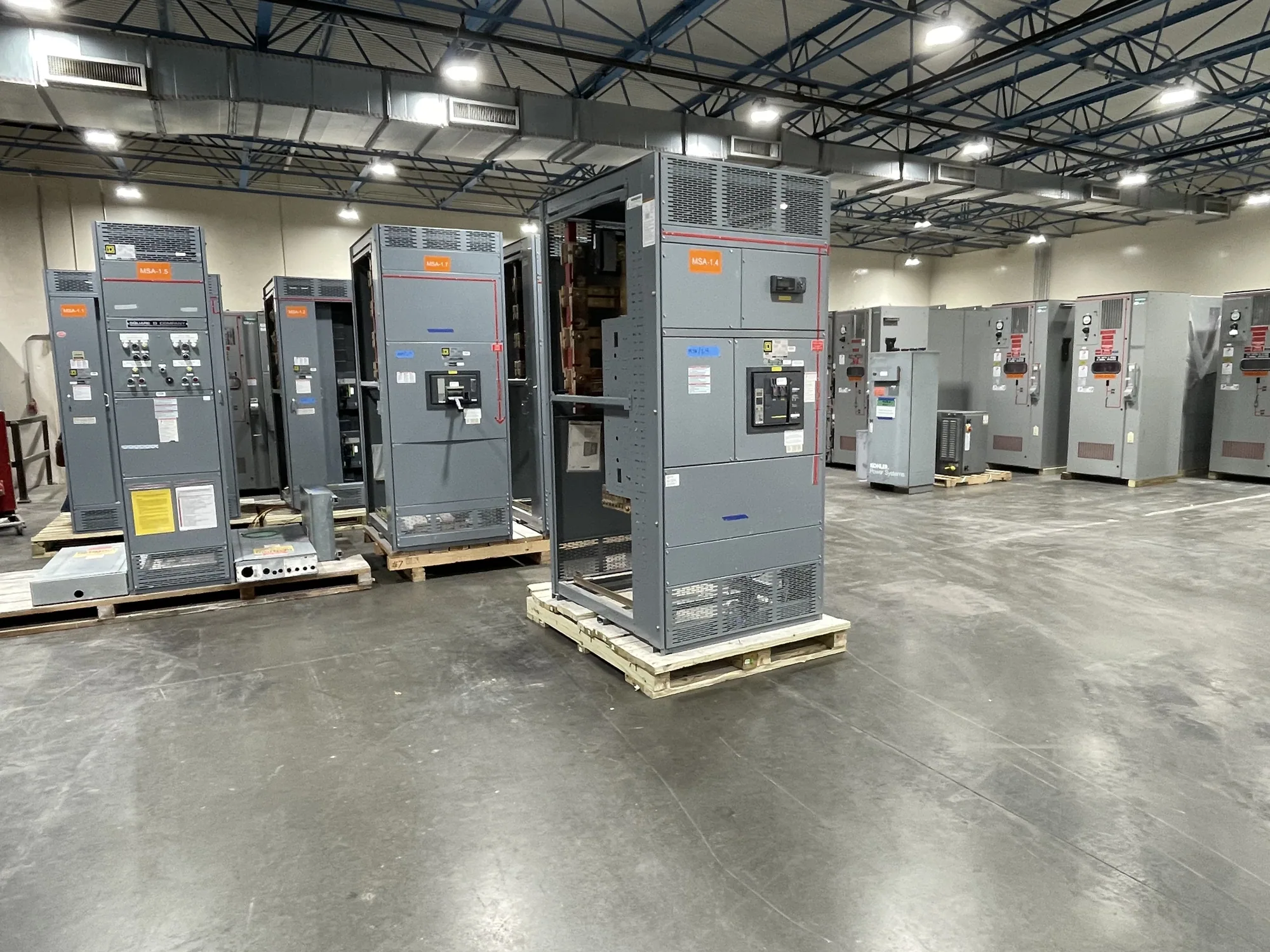
Electrical switchboards and metal-enclosed switchgear are not interchangeable labels for every application. A low-voltage switchboard may suit a distribution role when its voltage class, current ratings, configuration and specified features fit the project. Medium-voltage metal-enclosed switchgear may be considered for a different part of a campus system. The engineer should identify the intended function and required equipment type from the one-line diagram and project specification.
Compare options by the actual electrical and physical requirements: system voltage, available fault conditions, bus arrangement, incoming and outgoing connections, protective-device needs, access and installation constraints. Determine how the equipment will coordinate with upstream and downstream devices, and whether provisions for future work are required. Listing, testing, ratings and standards are design-specific; verify each requirement against the offered assembly rather than assuming it applies universally.
Set continuous-current requirements deliberately
Normal load current is a starting point, not the complete rating decision. The project documents should distinguish expected operating current from the required continuous-current rating of the bus and the relevant devices. Confirm which loads are expected to operate together, how demand is established, and what margin or future allowance the responsible engineer has selected. Do not treat a larger nominal rating as a replacement for a documented load assessment.
Operating conditions can affect equipment selection and rating suitability. Ask the design team to identify installation environment, ambient temperature assumptions, enclosure and ventilation conditions, and any project-specific derating considerations. The applicable rating depends on the actual assembly and its specified conditions. Have the supplier review the complete requirements, and have the engineer confirm the design basis; do not infer performance from a rating term without checking its scope and conditions.
Coordinate campus standards and submittals
Owner standards may address naming conventions, metering, control interfaces, labeling, preferred device features, documentation and spare provisions. Provide the current project requirements and identify any conflicts between campus standards, drawings and the project specification for resolution before release. If a campus has multiple construction phases or design teams, state which documents govern this purchase and which existing equipment interfaces must be matched.
Before fabrication, review the submittal against the one-line diagram, equipment schedules, elevations and connection details. Confirm dimensions and access, incoming and outgoing cable or bus arrangements, control and metering requirements, and any field interface responsibilities. Clarify who reviews revisions, how deviations are recorded, and what documentation is expected for installation and owner turnover. Availability and actual lead times depend on the order and must be confirmed for the specified configuration.
Prepare a useful equipment inquiry
A focused inquiry should include the project location, delivery and construction milestones, equipment type and voltage class, one-line diagram, load and rating requirements, and relevant specification sections. Add feeder destinations, source details, interface drawings, environmental assumptions, owner standards and any defined outage or phased-installation constraints. Identify open engineering decisions rather than leaving a supplier to infer them; questions about ratings or configuration should be resolved with the responsible design professional.
Ask the manufacturer to confirm which requirements its proposed new equipment can meet, what information remains outstanding, and which project-specific details affect configuration, availability or delivery timing. South Carolina Switchgear Builders manufactures new switchgear and switchboards to specification, with US-built equipment, all-American components and nationwide shipping; availability and order-specific lead times require confirmation. A complete, coordinated inquiry gives the owner, engineer, purchasing team and manufacturer a clearer basis for evaluating fit before the equipment is released.