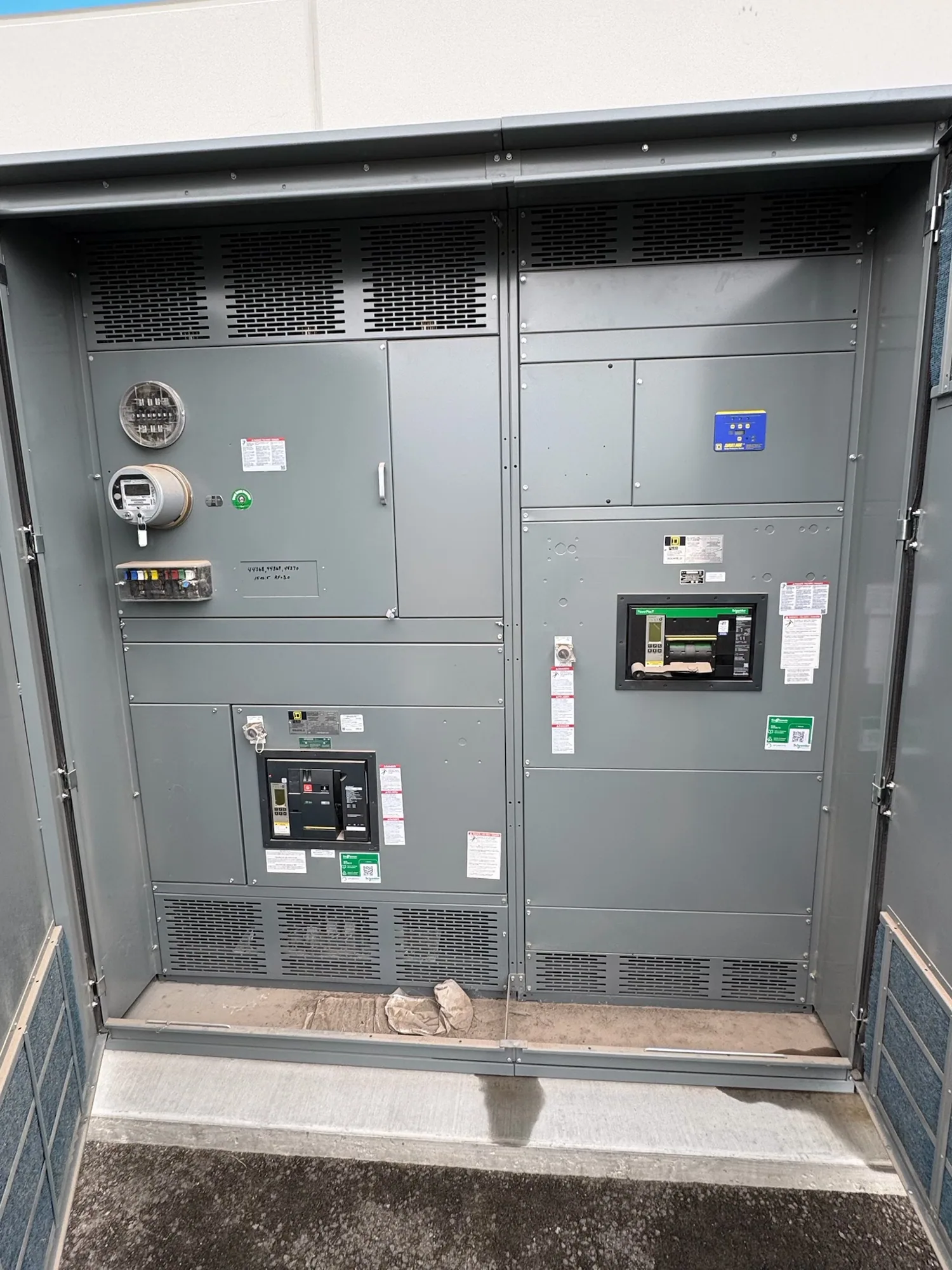
Read the rating in the context of the equipment
A continuous current rating describes current equipment is designed to carry under specified conditions without exceeding applicable temperature limits. For metal-enclosed switchgear, that figure is only useful when read with the equipment class, construction, and the components included in the assembly. Enclosure style alone does not establish a rating, nor does one number necessarily describe every bus section, switching device, or operating arrangement.
Begin with the project’s governing specification and one-line diagram. Confirm whether the requested equipment is low-voltage switchgear, medium-voltage metal-enclosed switchgear, or another assembly type. Construction requirements and applicable standards depend on that classification. Do not transfer a rating or standard from one equipment category to another based only on a similar enclosure or application.
Connect expected load to the requested rating
Specify the expected normal load current for each relevant feeder and bus section, along with how that figure was established. Useful inputs may include load calculations, operating schedules, demand information, and documented measurements from comparable existing systems. Measurements should be described with their conditions and limitations; a brief observation may not represent future production, seasonal variation, or the maximum credible operating arrangement.
Ask the responsible electrical engineer to evaluate the expected load, applicable design requirements, and any planned growth. An appropriate margin is a project decision, not a universal percentage. Oversizing can affect equipment selection, footprint, cost, and future operating flexibility; undersizing can constrain normal operation. Explain anticipated changes, such as added production lines or revised process loads, rather than relying on an unexplained allowance.
Check bus and device ratings together
The bus rating and the continuous current ratings of installed devices are related but not interchangeable. Review the specified rating for each main, tie, and feeder position, and identify the switching or protective device type required at each location. Confirm that the assembly configuration and each relevant component are suitable for the intended operating current and project conditions. The lowest applicable limitation may govern a particular path, so a single headline value is not enough to resolve every configuration.
Also document how the equipment is expected to operate: normal source arrangement, bus-tie position, simultaneous loads, and any planned transfer or alternate-feed condition. A tie that is normally open may carry current during a contingency or maintenance arrangement. The project engineer should determine which operating cases require evaluation and whether the proposed bus and devices address them. Confirm component selections against the final design, not a preliminary lineup description.
Document operating conditions and installation limits
Temperature and installation conditions can affect the rating applicable to a particular design. Provide the specified ambient temperature and any relevant indoor or outdoor conditions, ventilation constraints, altitude, enclosure requirements, and other environmental details required by the equipment specification. Do not assume that a catalog figure automatically applies to every installation. The manufacturer and engineer should confirm whether stated ratings require conditions, limitations, or design adjustments for the actual assembly.
Include room layout and service-access constraints early. Working space, cable entry, conduit routes, and access for inspection or component replacement can influence lineup arrangement and construction details, even when the required current rating is unchanged. Identify the preferred entry direction and available space, then have qualified project professionals coordinate those details with the equipment drawings. Installation, inspection, testing, and maintenance must be performed by qualified personnel following applicable safety procedures.
Use operating scenarios to test the specification
Consider an automotive manufacturing facility planning a new production area. The future line load, shift schedule, simultaneous operation of large process equipment, and backup operating arrangement are not known from the industry label alone. Treat those values as project inputs to be calculated or confirmed—not as assumptions based on a typical plant. The engineer can then identify expected current by section and define which operating cases the lineup must support.
That review should also distinguish normal load current from short-circuit requirements and other equipment duties. They are separate specification questions and should be evaluated together for coordination, but one rating does not establish another. Ask the design team to confirm applicable standards and the suitability of the complete proposed assembly for the project. Any listing, test basis, rating, or construction claim must be verified for the specific equipment and specification.
Prepare a useful equipment specification
- Identify equipment class, system voltage, one-line diagram, and the requested lineup arrangement.
- Provide calculated or measured normal loads by feeder and bus section, with assumptions, operating schedules, and measurement conditions.
- State main, tie, and feeder device requirements, expected source configurations, and any alternate or contingency operating cases.
- Document ambient and installation conditions, enclosure needs, cable entry, room constraints, and service-access requirements.
- Describe planned load growth, project standards, required drawings and submittals, and questions requiring engineering confirmation.
Separate confirmed values from estimates and identify who will resolve open items. That makes it easier to compare a proposed configuration with the intended operating cases and avoid treating a preliminary current figure as a complete equipment specification. For a new order, provide the project documentation to South Carolina Switchgear Builders for review against the requested design. The equipment is custom to specification; availability and lead time depend on the order and must be confirmed. Final ratings, construction details, and delivery timing require project-specific confirmation before purchase.