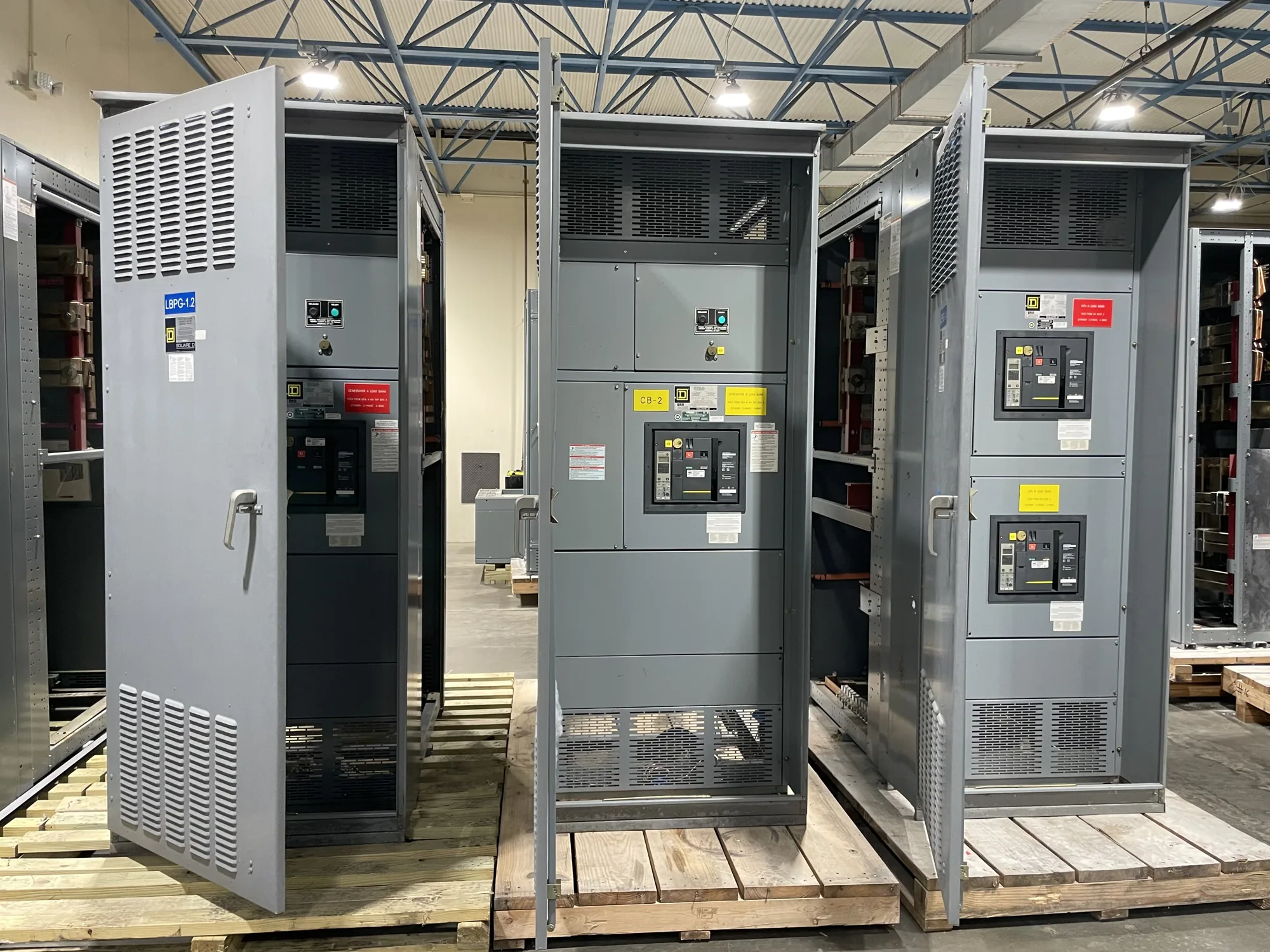
Start with the equipment class and system point
Short-circuit ratings are not a single interchangeable number for every component in metal-enclosed switchgear. The applicable ratings depend on the specified equipment class, the switching and protective devices included, and the assembly design. First identify what equipment the project requires and where it connects in the electrical system. That context determines which ratings apply and what evidence the responsible engineer should review.
Available fault current is the calculated current that could flow at a particular point under a specified fault condition. It can differ from one location to another as transformers, conductors, sources, and system configuration change. A rating selected without a clearly identified connection point can therefore be misleading. Use the project’s fault-current study and one-line diagram to associate each required rating with the specific equipment location.
Distinguish device capacity from assembly ratings
A circuit breaker or other switching device may have an interrupting rating describing its ability to interrupt a fault under specified conditions. That device rating does not, by itself, establish the short-circuit capability of the complete switchgear assembly. The assembly may have a short-circuit current or withstand rating with its own conditions and limits. The submittal should identify both device-level and assembly-level information as applicable to the specified design.
Compare the calculated available fault current with the relevant equipment ratings at the point of installation, following the project engineer’s method and applicable requirements. Do not assume that one component’s higher rating automatically raises the rating of the assembled lineup. Confirm the exact device, configuration, duration or other stated rating conditions, and any manufacturer limitations. The approved design documentation should make the intended application understandable to the engineer, purchaser, and installation team.
Coordinate rating, construction, and protection
Metal-enclosed switchgear is not one uniform construction. The equipment class and specified arrangement affect internal compartmentation, switching functions, access, and the devices available for the application. Buyers should describe the required class and service rather than relying on a generic label. Ask the manufacturer to confirm that the proposed construction and stated ratings correspond to the project specification and the actual equipment being supplied.
Protective-device selection and settings also matter. Coordination studies may examine how devices respond to faults at different locations, but settings cannot be chosen from the short-circuit rating alone. Grounding method, system sources, transformer characteristics, and downstream equipment can affect the analysis. Provide the responsible engineer’s protection requirements and request review of device types, trip or relay functions, and relevant rating conditions against the planned system.
Service access is another practical design consideration, not a substitute for electrical rating review. The project team should consider lineup arrangement, cable entry, working clearances, operating access, and the maintenance approach while confirming that the chosen equipment fits the intended room and installation. Layout changes or a different device configuration can affect the final design. Resolve these interfaces during engineering review, before approval of drawings and release for manufacture.
Consider a manufacturing application carefully
For an illustrative automotive manufacturing facility, suppose a new lineup is planned near production loads and a transformer connection. The available fault-current values are unknown at this stage, so no rating can responsibly be assigned from the example alone. The engineer would need the source and transformer data, system configuration, conductor information, and connection location to calculate the applicable fault current.
Production continuity may make protection coordination and future system changes important discussion points, but those priorities do not establish a particular rating or guarantee uninterrupted operation. The project team should ask whether planned sources, operating modes, or expansion could change fault-current conditions. A qualified engineer should perform or review the calculations and applicable standards analysis, then specify the required device and assembly ratings for the actual design.
Prepare a useful rating specification
Before requesting a proposal, assemble the latest one-line diagram, fault-current study or calculation basis, system voltage, source and transformer details, grounding information, and equipment connection point. Identify the required equipment class, switching functions, protective devices, and any known operating modes. If study results are preliminary, label them clearly and state who will confirm final values before equipment approval.
Ask the specification to distinguish available fault current, device interrupting capacity, and applicable assembly withstand or short-circuit current ratings. Include the conditions and documentation required for review, and identify any exclusions or limits that could affect application. Confirm whether the proposed configuration, ratings, listing, testing, and standards applicability meet the project’s requirements; these are specific to the supplied design and must not be presumed from a product category.
Coordinate submittals and final confirmation
Provide the manufacturer with the rating schedule, drawings, study information, protection requirements, room and cable interfaces, and requested submittal documents. Review proposed drawings and equipment data with the project engineer before approval. If fault-current calculations, system sources, or protection settings change, communicate the revisions promptly so the equipment configuration can be checked against the updated design rather than an outdated basis.
South Carolina Switchgear Builders manufactures new switchgear to specification, with US-built equipment and all-American components, and ships nationwide. Availability and actual lead times depend on the order and should be confirmed. For a sound selection, align the calculated fault current, required device and assembly ratings, construction class, and project documentation before release. Installation, testing, and maintenance should be performed by qualified personnel following applicable safety procedures.