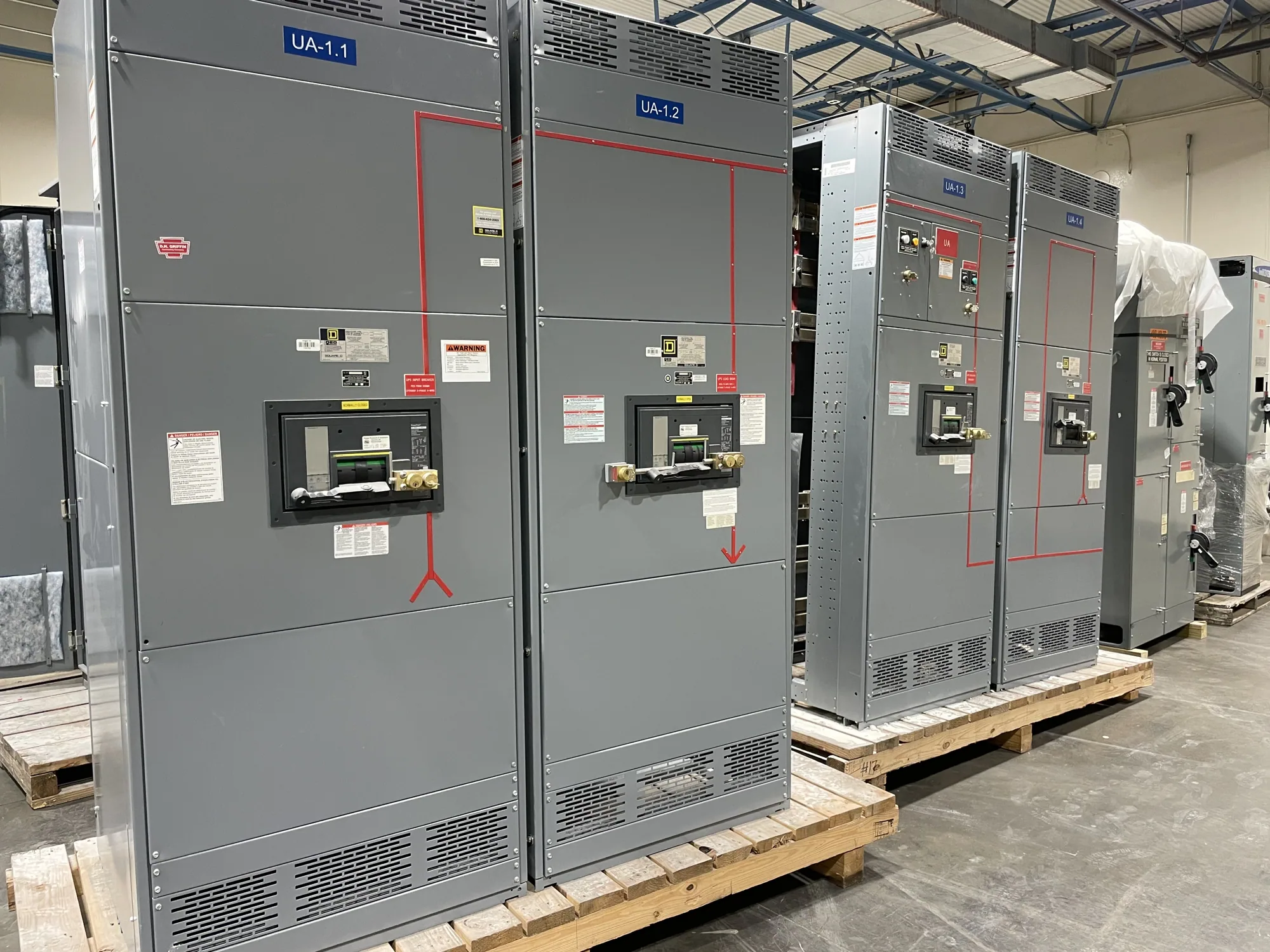
Scope: motor control centers and arc-flash risk
A motor control center (MCC) groups motor branch-circuit components and control equipment. Its arc-flash considerations belong to the complete electrical system: the source, conductors, protective devices, MCC configuration, connected motors, and the tasks people may need to perform. An MCC is not simply another name for switchgear, and a discussion of its safety should reflect its motor-control function.
Arc-flash analysis estimates incident energy under defined conditions and supports decisions about equipment, labels, and safe work practices. It does not make equipment safe to approach under every condition or replace a qualified person’s assessment. A study’s results depend on accurate system information and assumptions, including the operating configuration and protective-device settings. Project teams should confirm who is responsible for the study and how its findings will inform the equipment specification.
Study results and work practices go together
Incident energy is not a fixed property of an MCC independent of its installation. Available fault current, protective-device operation, conductor characteristics, equipment design, and working distance can affect calculated results. If project conditions or settings change after the study, the analysis may no longer represent the installed system. A qualified electrical engineer should determine the applicable analysis, assumptions, and review requirements for the project.
Equipment choices can support a broader safety approach, but no single construction feature substitutes for a risk assessment and safe work procedures. The project team should identify the tasks that may be required, such as inspection, troubleshooting, or maintenance, and determine how those tasks are to be performed under applicable safety procedures. Work on electrical equipment must be assigned to qualified personnel; planning should not presume energized work is acceptable or necessary.
Motor starters, drives, and protective coordination
MCC lineups may include different starter types, control arrangements, and, where specified, variable-frequency drives. These choices affect the equipment layout, heat management, wiring, and maintenance needs. They may also affect the system information needed for a study. For example, the engineer may need details about the source and upstream protection as well as the proposed MCC feeder and branch-circuit devices. Confirm which configurations are included in the study scope.
Protective-device coordination is a project engineering question, not a feature to assume from a product description. Settings selected for coordination or continuity objectives can influence fault-clearing behavior and calculated incident energy. Likewise, choosing a device solely to target a lower study result may create tradeoffs elsewhere in the system. The responsible engineer should evaluate protection, equipment ratings, operating needs, and safety together, then communicate approved settings and assumptions to the equipment supplier.
Heat, future loads, and operating configurations
Motor additions or changes can affect feeder loading, available spaces, and the assumptions behind an existing study. Drives and other equipment may add heat, so the specification should describe the application and environmental conditions rather than relying on a generic lineup description. Identify expected motor loads, starting or control requirements, anticipated expansion, and any constraints on the installation space. The project engineer and manufacturer can then confirm what the proposed configuration can accommodate.
Consider normal and alternate operating arrangements, including any tie or transfer conditions relevant to the installation. The engineer should identify which configurations need analysis and how operating restrictions or device settings will be documented. A future change to a motor, source, protective device, or setting may require engineering review and updated documentation. Treat the study as part of an ongoing project record, not as a permanent guarantee that every later configuration has been assessed.
Illustrative automotive manufacturing scenario
Consider an automotive manufacturing facility planning an MCC lineup for several production-area motors and possible future process equipment. No fault-current value, motor load, feeder arrangement, device setting, incident-energy result, or working distance is assumed here. The scenario is illustrative only. A qualified engineer would need actual utility or source data, system details, equipment selections, and operating configurations to perform a project-specific evaluation.
The project team can use the scenario to ask practical questions: Which motors and drives are in scope? What source and protective devices feed the lineup? Are alternate configurations possible? What study boundaries and tasks should be evaluated? The engineer should determine calculation methods and standards review applicable to the installation. The MCC specification should not promise a particular incident-energy outcome or imply that an equipment feature removes arc-flash risk.
Information to include in the equipment specification
Provide the system voltage and available project electrical data, source arrangement, feeder details, protective-device manufacturer and model information when known, proposed settings, motor list, starter or drive requirements, and requested MCC sections or future provisions. Include the installation environment and any space, access, cable-entry, or coordination constraints. Clearly mark preliminary values and identify who will verify them; incomplete or changing inputs can affect both equipment design and study results.
- State the study scope, responsible engineer, and project assumptions.
- Identify required labels, documentation, and setting records, subject to engineering review.
- Ask which equipment-specific design options are available and what information is needed to evaluate them.
- Confirm applicable ratings, standards, listing, testing, and configuration against the final specification.
- Coordinate submittal review, approved settings, schedule, and any changes before release.
Coordinate the study with the new MCC order
Share the study requirements and available system data early enough for engineering review during equipment selection. Resolve open questions about starters, drives, protection, enclosure conditions, and future capacity before the configuration is finalized. Project-specific options, ratings, documentation, availability, and delivery timing require confirmation against the actual specification; lead times depend on the order. South Carolina Switchgear Builders manufactures new motor control equipment in the United States and ships nationwide.
Before approving submittals, the project engineer should verify that the documented MCC configuration matches the assumptions used for the study and that required settings and labels are addressed. Qualified personnel should handle installation, testing, and maintenance under applicable safety procedures. When system data or operating plans change, route those changes through engineering review. This coordination keeps equipment documents, study assumptions, and work practices connected without treating any one of them as a substitute for the others.