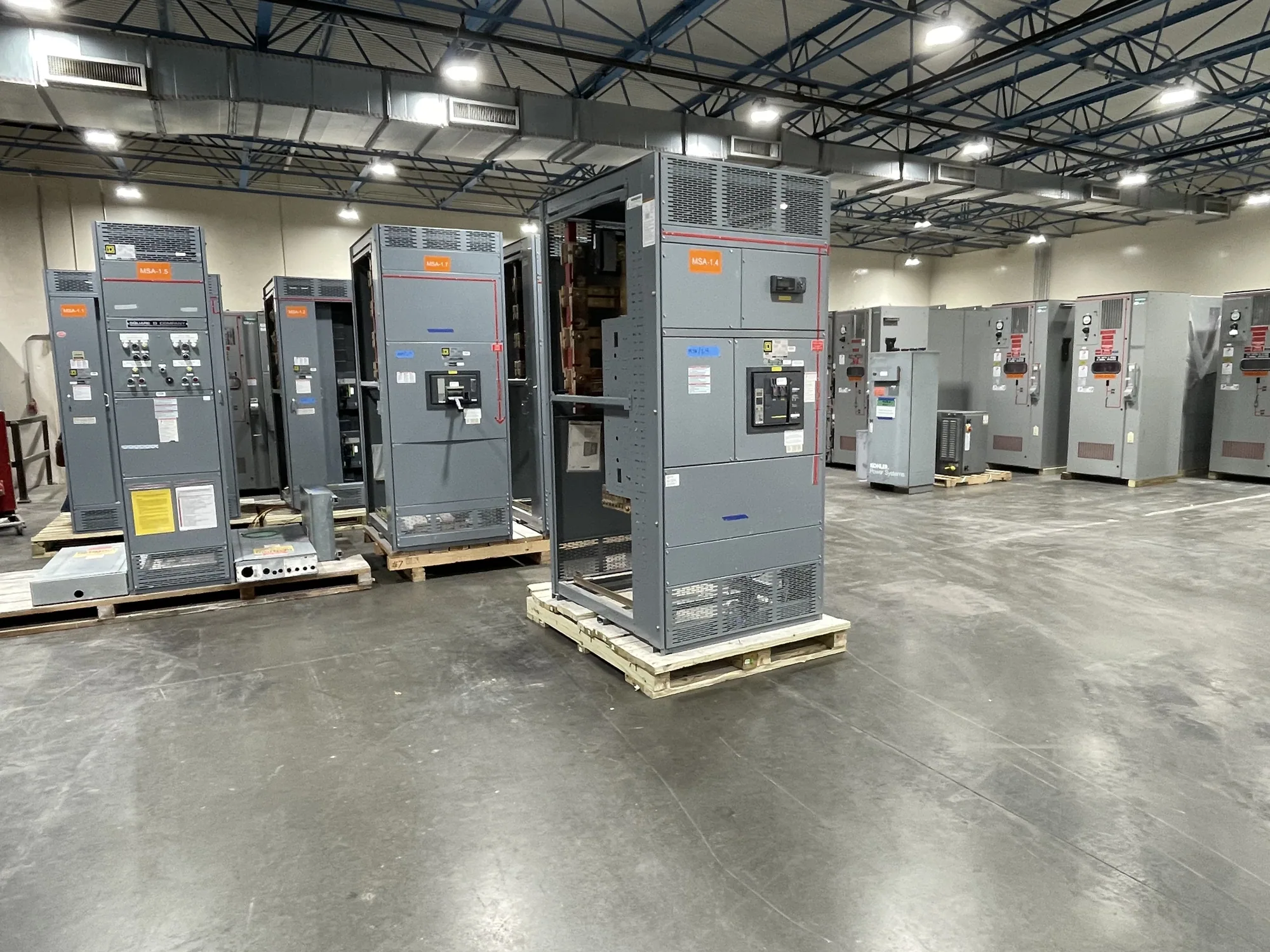
Why site conditions matter for motor control centers
A motor control center (MCC) groups motor branch-circuit equipment and control in an assembly. Its application depends on more than voltage and motor horsepower: the room or outdoor location, ambient conditions, contaminants, access and installation constraints can influence enclosure choices and internal configuration. Treating “indoors” or “coastal” as a complete specification leaves important questions unanswered.
This guide is for project teams specifying new MCC equipment. Record conditions at the intended installation location, including unusual or seasonal operating circumstances. The project engineer should determine which conditions affect the design and confirm applicable requirements for the specified assembly. Environmental information is not a substitute for the one-line diagram, motor schedule, protection criteria or equipment specifications.
Temperature, humidity and heat inside the assembly
Provide expected ambient temperature ranges and explain whether the room is conditioned, ventilated, intermittently occupied or subject to process heat. Identify relevant seasonal extremes and whether the equipment may operate during abnormal conditions. Avoid assuming that a building’s general climate description represents the air around the MCC, especially when it is installed near machinery, a boiler room or a high-heat process.
Humidity, condensation and rapid temperature changes also deserve attention. State whether moisture is expected from washdown, steam, doors opening to humid air, or equipment shutdown and restart cycles. Drives, starters, control devices and protective components have equipment-specific operating conditions; the responsible engineer and manufacturer should confirm compatibility with the stated environment. Heat generated by components and the planned loading must also be considered when reviewing arrangement and ventilation.
Moisture, salt and airborne contaminants
Describe how water could reach the equipment rather than simply calling the area “wet.” Distinguish routine cleaning from direct spray, hose-down, leaks, flooding, roof drainage or occasional splashing. Note the direction and frequency of exposure, nearby drains, and whether the MCC is elevated or placed where water could collect. These details help the project team assess enclosure and installation requirements without assuming a particular protection rating.
Identify airborne conditions such as salt-laden air, dust, corrosive vapors, oil mist or process residue. For a food and beverage facility, for example, the project team might need to evaluate a washdown-adjacent production area, cleaning chemicals and moisture migration into an electrical room. This is an illustrative scenario, not a claim about any specific facility. The engineer should identify actual substances and exposure levels where known, then confirm suitable materials, enclosure construction and maintenance provisions.
Altitude, location and installation constraints
Provide the site elevation or the project’s confirmed altitude requirement. Altitude can be relevant to equipment application and ratings, so do not assume that a standard design is suitable without review. Include the installation location—indoors or outdoors—and describe any transition between areas, nearby doors, exterior walls or unconditioned spaces. The responsible engineer should determine whether the stated conditions require design review or additional documentation.
Document the available footprint, room dimensions, ceiling height, floor and access-route constraints, and the intended lineup orientation. Include the location of columns, piping, ducts and other obstructions, along with the required working and maintenance access established by the project design. Consider how equipment will be moved into position and how units or components may be accessed later. These constraints can affect lineup arrangement, cable entry planning and coordination with the building team.
Connect conditions to motor loads and equipment selection
Environmental data matters alongside the electrical design. Supply the motor schedule with horsepower, voltage, full-load information where available, starting method, duty and any known future loads. Identify which motors use across-the-line starters, reduced-voltage starting or variable-frequency drives, if already determined. The project engineer must coordinate branch protection, feeder requirements, control functions and equipment application against the actual project documents.
Do not treat a drive or starter as an isolated device unaffected by its surroundings. Component heat, expected operating cycles, room temperature and airflow may interact, while contaminants and moisture can influence enclosure and maintenance decisions. Ask the manufacturer to identify information needed to review the specified configuration, and have the responsible engineer resolve design assumptions. Future capacity should be stated as a defined requirement rather than an informal expectation.
Prepare a useful specification package
A focused inquiry should include the one-line diagram, load and motor schedules, control requirements, system voltage and available fault information when established by the project engineer. Add location plans, elevations, room dimensions, cable-entry preferences, ambient ranges, altitude, moisture and contaminant descriptions, and any known cleaning or process conditions. Mark unknown values as unknown; do not replace them with guessed ratings or generic environmental labels.
- State whether the MCC is indoors or outdoors and describe the immediate installation area.
- Document temperature, humidity, condensation, water exposure, salt and airborne contaminants as applicable.
- Provide site elevation, available space, access route, lineup orientation and service-access constraints.
- Identify motors, starting methods, drives, protection and controls required by the project documents.
- List requested standards, submittals, testing, ratings and any project-specific acceptance criteria for confirmation.
Coordinate review, submittals and delivery
Before release, have the project engineer review the environmental assumptions, electrical requirements, layout and interface points. Confirm which items are included in the MCC and which belong to the building, process or field installation. Installation, testing and maintenance should be planned by qualified personnel under applicable safety procedures. Listing, ratings, testing and standards applicability must be verified for the specific equipment and design; they should not be inferred from a general product description.
South Carolina Switchgear Builders manufactures new motor control center equipment to specification, with US-built equipment, all-American components and nationwide shipping. Availability and actual lead times depend on the order and require confirmation. Provide complete project documents early, identify open design questions, and coordinate submittal review, approved changes, production planning and delivery requirements with the project team. That process gives the manufacturer and engineer a shared basis for confirming an MCC suited to the documented site—not an assumed one.