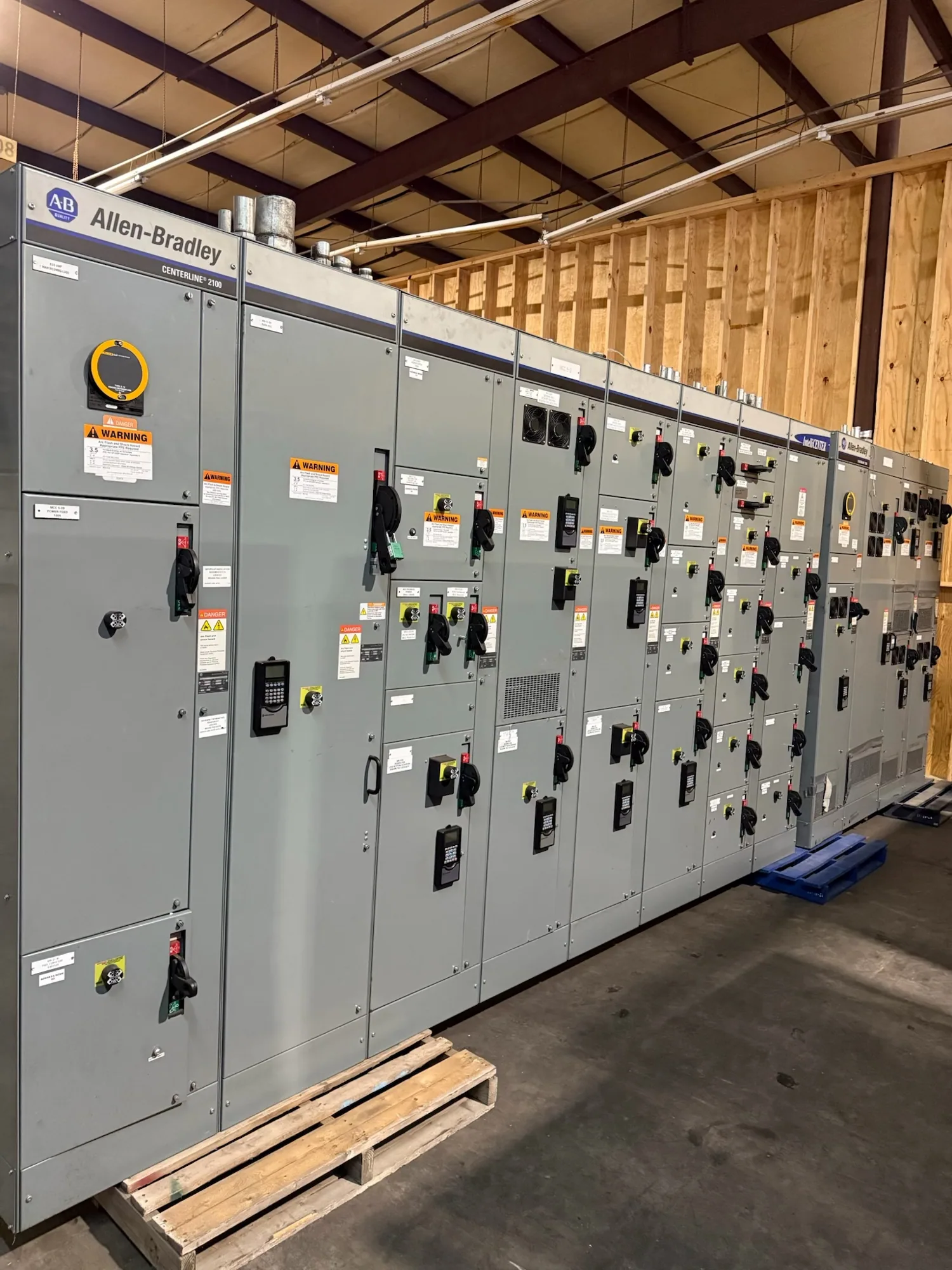
What a motor control center voltage rating describes
A motor control center (MCC) groups motor branch-circuit and control equipment in an assembly. Its voltage rating is not simply a label for the facility’s service voltage, nor is an MCC another name for switchgear. A sound specification distinguishes the system’s nominal voltage from the equipment’s rated voltage and maximum voltage, and identifies the insulation and system configuration appropriate to the installation.
Those details help establish whether the proposed assembly is suitable for the intended circuit conditions. The applicable product standard and project requirements also matter; the responsible engineer should determine which requirements govern the design. Do not assume a voltage value alone establishes suitability, or that every available MCC configuration serves every system. The equipment schedule and manufacturer’s proposal should state the relevant ratings for the specific design.
Match the assembly to the actual system
Start with the electrical documents rather than a motor nameplate alone. Confirm nominal system voltage, phase and frequency, grounding arrangement, and whether the MCC connects to a source or distribution arrangement that affects equipment selection. The project engineer should resolve any difference between existing records and field-verified conditions before the equipment is specified. A mismatch can affect not only the assembly selection but also the connected components and protection scheme.
Equipment maximum voltage and insulation coordination deserve explicit review. Maximum voltage is a characteristic of the equipment’s rating, not a substitute for documenting the system’s nominal voltage. The engineer should confirm applicable system conditions and requirements for the actual installation. Avoid carrying a rating forward from an older drawing or choosing an assembly based on a familiar nominal value without checking the complete system configuration and project criteria.
Consider starters, drives and protection together
Within the MCC, motor starters, variable-frequency drives, feeder devices and control components must be specified for the intended voltage and application. Their requirements may differ, so the assembly rating should be coordinated with the component schedules, motor data and protection design. Ask the engineer to identify which units are included, their intended functions, and any component-specific limits or exclusions that affect the proposed lineup.
Drives and other power-electronic equipment can influence heat management and layout, while starting methods and motor characteristics inform branch-circuit and feeder protection. These are linked design decisions, not reasons to infer a particular rating or performance outcome. Provide expected operating conditions and load information so the design team can evaluate component selection, spacing, ventilation and protective-device coordination for the specific assembly.
Allow for operating conditions and future loads
Voltage selection should fit the expected operating system, while the MCC’s arrangement should account for the actual motor list and any planned changes. A future motor addition may affect unit space, feeder capacity or control requirements; it does not automatically justify a different voltage rating. Identify planned loads and expansion assumptions in the specification, then have the responsible engineer assess their effect on the equipment design.
Environmental and installation conditions also belong in the review. The project team should document location, ambient conditions, enclosure expectations and any process-area requirements relevant to the equipment. For a chemical-processing facility, for example, the buyer should not assume a generic MCC configuration is suitable for a particular area. The engineer must identify applicable area classifications and project requirements, and the manufacturer should confirm what the specified design can provide.
Illustrative chemical-processing review
Consider a chemical-processing project where the buyer has a preliminary motor list but has not confirmed the system voltage, grounding arrangement or area classification. Those values are unknown and should remain open items—not be guessed from typical plant practice. Before ordering, the engineer should reconcile the one-line diagram, available system data and motor schedules, then define the required voltage rating and applicable design criteria.
The team can then review each motor unit, drive requirement, feeder protection and control interface against that defined basis. If future loads are anticipated, document them separately from confirmed loads. The manufacturer can use the approved specification to prepare a proposal for new equipment, while the engineer retains responsibility for system calculations, standards interpretation and approval of the application.
Information to include in a specification
Give the manufacturer current project documents and clearly identify unresolved items. Useful inputs include the one-line diagram; nominal system voltage and configuration; grounding information; motor list and nameplate data; starter or drive requirements; feeder and protective-device criteria; control interfaces; installation environment; and requested documentation. State the applicable standards or project specifications for engineering review rather than assuming a general requirement covers every assembly.
- Identify the required nominal voltage and the equipment rating criteria to be confirmed.
- Provide motor, starter, drive, feeder and control schedules, noting known future loads.
- Describe installation conditions, enclosure expectations and any area-specific requirements.
- Request the proposed equipment ratings, configuration, inclusions, exclusions and submittal documents.
- Ask which listing, testing and delivery details apply to the specific design and order.
Coordinate submittals and procurement
Before release, compare the proposal and submittals with the approved electrical basis, motor schedules and project requirements. Resolve discrepancies in voltage, configuration, component scope and documentation before fabrication. South Carolina Switchgear Builders manufactures new equipment to specification, is US-built with all-American components, and ships nationwide. Availability and actual lead times depend on the order and must be confirmed; project-specific ratings, listing, testing and delivery dates also require confirmation.
Installation, testing and maintenance should be performed by qualified personnel under applicable safety procedures. Clear coordination among the engineer, buyer and manufacturer helps ensure the ordered MCC matches the defined system and application. When requesting a quote, provide the latest documents and identify decisions still awaiting engineering confirmation so the proposed equipment can be evaluated against a stable, project-specific basis.