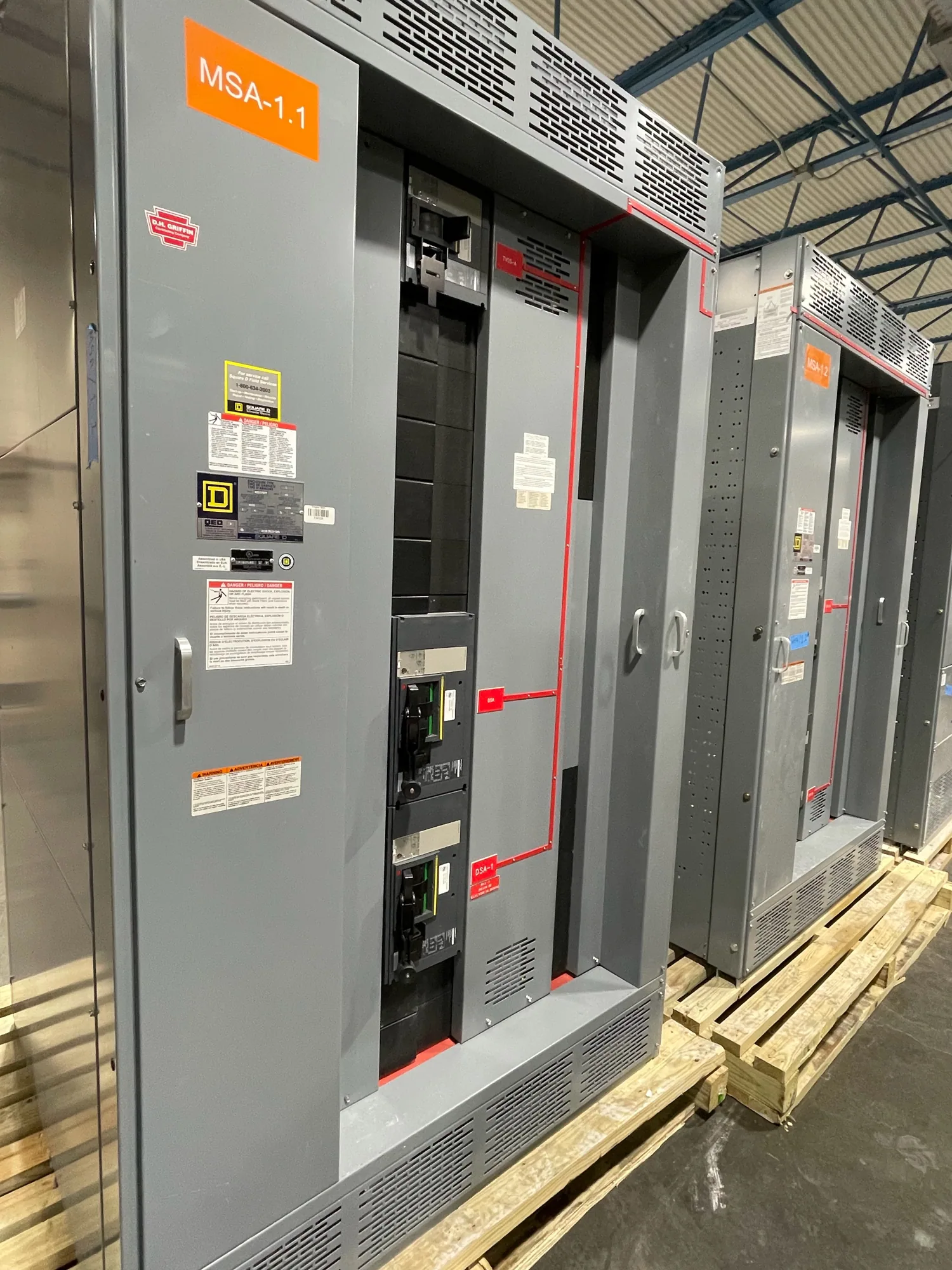
Why site conditions belong in the equipment specification
Outdoor switchgear has to suit the location where it will be installed, not a generalized idea of the regional climate. Temperature range, humidity, airborne contaminants, salt exposure, altitude, water pathways and available working space can affect equipment selection and installation planning. Recording these conditions early gives the project engineer and manufacturer a concrete basis for reviewing the proposed configuration.
Start by defining the equipment and its role. Identify whether the project calls for low-voltage switchboards, medium-voltage switchgear, or another specified assembly, along with the system information and functions established by the design team. Voltage class, arrangement and application matter: environmental details do not replace the electrical specification, and a generic outdoor designation does not establish every enclosure feature or performance characteristic.
Temperature, humidity and moisture pathways
Provide the expected ambient temperature range at the equipment location and identify unusual operating conditions, such as direct solar exposure or nearby heat sources. The responsible engineer should determine which design conditions and ratings apply. Avoid supplying only a city or a single “normal” temperature; the equipment may face conditions at the actual installation point that differ from broad weather summaries.
Describe humidity and likely condensation conditions, including whether the site experiences repeated temperature changes, washdown, process moisture or periods when equipment is unoccupied. Explain how rainwater, roof runoff, drainage, irrigation or cleaning water could reach the enclosure or foundation. These details help the design team assess enclosure choices and any specified moisture-control provisions. Do not assume a particular heater, drain, seal or enclosure rating is included unless confirmed for the exact design.
Salt, airborne contaminants and altitude
For coastal or otherwise corrosive settings, describe the exposure rather than relying on a broad label such as “near the coast.” Note likely salt-laden air, industrial emissions, dust, chemical vapors or other contaminants, and identify their sources and proximity where known. Ask the project engineer to establish the required materials, finishes and protective measures. Their suitability depends on the site and assembly; no one coating or enclosure choice should be presumed adequate for every exposure.
Provide the equipment installation altitude and ask the responsible engineer to review its effect on applicable equipment ratings and design requirements. Also identify whether the location is indoors within an outdoor shelter, directly exposed to weather, or subject to a combination of conditions. This distinction can change the environmental assumptions. Any required rating adjustment, design limitation or standard applicability must be evaluated for the specified equipment, not inferred from a general product description.
Space, water exposure and maintenance access
Show the planned equipment footprint, orientation, cable entry directions and nearby obstructions on a site plan. Include doors, walls, fences, traffic routes, adjacent equipment and overhead constraints. The project team should confirm the foundation dimensions, mounting details, cable routing and access clearances against the approved equipment drawings and applicable requirements. Do not treat a dimension on a preliminary layout as final without coordination.
Describe grading, drainage, flood or ponding concerns, and the elevation relationship between the equipment base and nearby surfaces. Identify possible vehicle impact, falling debris or other physical exposure where relevant. Provide the access route for installation and future qualified maintenance, including door swing, lifting or handling constraints, and space to safely perform planned work under applicable procedures. Site access should be reviewed with the installation team; it cannot be resolved by enclosure selection alone.
Illustrative food and beverage facility scenario
Consider a food and beverage facility planning outdoor distribution equipment near a process building. The project team has not yet established the actual temperature range, washdown boundary, chemical exposure, altitude or seasonal water level. Those values remain unknown and should be labeled as open items, not replaced by assumptions. The engineer can map washdown areas, identify cleaning agents, document drainage and determine which exposures apply at the proposed location.
The trade-offs then become project-specific: moving equipment away from a washdown zone may affect cable routing, while a more exposed location may require a different environmental design review. A foundation elevation may address a documented water pathway but must suit site grading and cable entry. The engineer should verify calculations, applicable codes and standards, and equipment requirements. This example is illustrative only; it does not establish a facility design or a required configuration.
Project information to provide for review
- Equipment type, voltage class, system data, intended function and the current electrical specification.
- Site location and installation altitude, expected temperature range, humidity and condensation concerns.
- Salt, dust, chemicals, washdown, rain, flooding, ponding, solar exposure and other known environmental conditions.
- Site plan with orientation, dimensions, foundation concept, cable routes, clearances, obstructions and access path.
- Applicable project requirements, requested documentation, desired delivery window and any unresolved engineering questions.
Ask the manufacturer to review the proposed equipment against the supplied specification and identify items that need confirmation. Confirm configuration, availability, delivery timing, ratings, testing, listing and standards applicability for the actual assembly; none should be assumed from the word “outdoor.” For eligible low-voltage switchboards, UL 891 applicability and any assembly listing must be verified for the specific design; it does not apply generally to medium-voltage switchgear.
Before release, coordinate approved drawings, site conditions, foundation and cable-entry details, transportation constraints, and responsibilities for installation and commissioning. New equipment can be built to specification, but the final suitability depends on complete project information and design review. Qualified personnel must handle installation, testing and maintenance using applicable safety procedures. Resolving environmental questions before fabrication helps align the specified assembly with the conditions it will actually face.