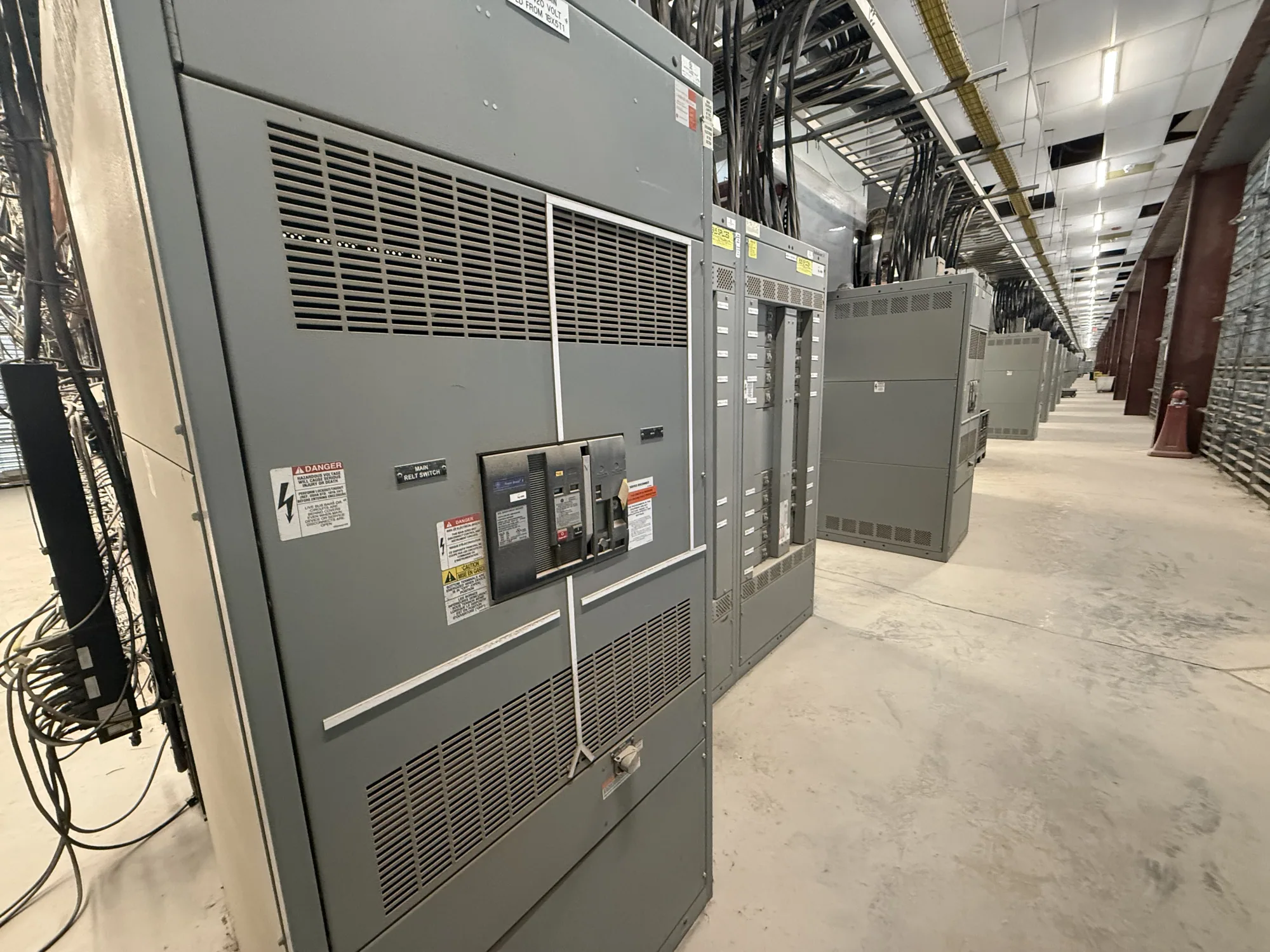
Start with the system, not the enclosure — Outdoor Switchgear: Voltage Ratings
For outdoor switchgear, a voltage rating is not a standalone label. It must correspond to the electrical system the equipment will connect to and to the design requirements established for that installation. Project teams should distinguish nominal system voltage from the equipment maximum voltage identified for the proposed design. These values serve related but different purposes, so a familiar nominal value alone is not enough to select an assembly.
System configuration matters alongside voltage: the responsible engineer should identify whether the equipment serves a particular phase arrangement, grounding method, source, and distribution role. The specification should state the system information rather than assume a supplier can infer it from a project name or site location. Switchgear voltage class also needs to be distinguished from other ratings, such as continuous current and short-circuit capability, which require their own project-specific review.
Understand voltage class and insulation together
Outdoor equipment may be specified in different voltage classes, and the class must match the intended application. For example, 480 V class equipment is low voltage, while 5 kV and 15 kV class equipment are medium voltage. Those examples do not define every system or establish a universal cutoff. The engineer should confirm the actual nominal system voltage, the equipment maximum voltage needed for the application, and the applicable product category and standard.
Insulation coordination is part of this decision. The responsible engineer must determine what insulation characteristics, clearances, and other design provisions apply to the system and the selected equipment. Do not assume that two assemblies with similar nominal voltage labels have identical insulation performance or are interchangeable. The applicable standard, system conditions, and equipment documentation should be reviewed together, with any design-dependent ratings confirmed for the particular assembly being specified.
Outdoor installation adds project interfaces
Voltage selection does not replace enclosure and site planning. An outdoor installation also calls for coordination of the enclosure arrangement, exposure conditions, cable entry, foundation interface, and access for qualified personnel. The project team should clarify what environmental conditions the equipment must accommodate and which provisions are included in the proposed configuration. Moisture management and enclosure features are design questions to document and verify, not assumptions that follow automatically from a voltage class.
Layout affects safe, practical operation and future work. Provide the available footprint, orientation, equipment access needs, and cable approach so the design can be evaluated against the site plan. Confirm foundation dimensions and connection details with the project documents and equipment drawings. Installation, testing, and maintenance should be planned for qualified personnel using applicable safety procedures; no voltage rating makes energized work appropriate.
Illustrative chemical-processing scenario
Consider a chemical-processing facility planning an outdoor distribution point. The scenario is illustrative: the system voltage, grounding arrangement, exposure conditions, fault duty, and required equipment configuration are unknown. The team should not choose a voltage class from the facility type alone. Instead, the project engineer establishes the electrical inputs and determines which equipment maximum voltage and insulation requirements are appropriate under the governing project criteria.
That review can also expose trade-offs. A project may need to balance the required electrical design with available space, cable routing, maintainability, and the installation environment. These are not reasons to reduce a rating or assume a particular construction feature. Ask the engineer to resolve the design basis, identify applicable standards, and record any assumptions requiring confirmation before a manufacturer prepares equipment to specification.
Information to provide for a sound review
For a useful specification review, provide nominal system voltage and the requested equipment voltage class or maximum voltage, if already established by the engineer. Include system configuration, grounding details, one-line information, distribution function, and relevant project standards. Identify required current and interrupting ratings separately, along with protective-device and control requirements where applicable. These inputs help prevent a voltage designation from being mistaken for a complete equipment specification.
Also provide the outdoor site conditions, enclosure expectations, cable entry and termination needs, foundation or mounting information, available dimensions, and access constraints. State which drawings and submittals are required, who reviews them, and what interfaces are supplied by others. Call out exclusions explicitly, such as cables, foundations, upstream protection, or field connections, when they are outside the equipment scope. Confirm all design-dependent ratings, listing applicability, and documentation for the specific proposed assembly.
Coordinate submittals before release
Before releasing a purchase specification, have the responsible engineer reconcile the one-line diagram, equipment schedule, applicable standards, and site requirements. Ask the manufacturer to identify the offered voltage class and relevant equipment maximum voltage in the submittal, and to flag unresolved inputs rather than silently assume them. Any listing or standard applicability must be verified for the specific design; UL 891 applies to eligible low-voltage switchboards, not medium-voltage switchgear, and its applicability should be confirmed for the assembly.
South Carolina Switchgear Builders manufactures new equipment to specification, with US-built equipment, all-American components, and nationwide shipping. Availability and actual lead times depend on the order and should be confirmed. Provide the engineering basis and installation interfaces early so questions can be resolved before the design is finalized. A coordinated specification gives the project team a clear basis to review the proposed equipment and confirm that its voltage rating fits the intended outdoor application.