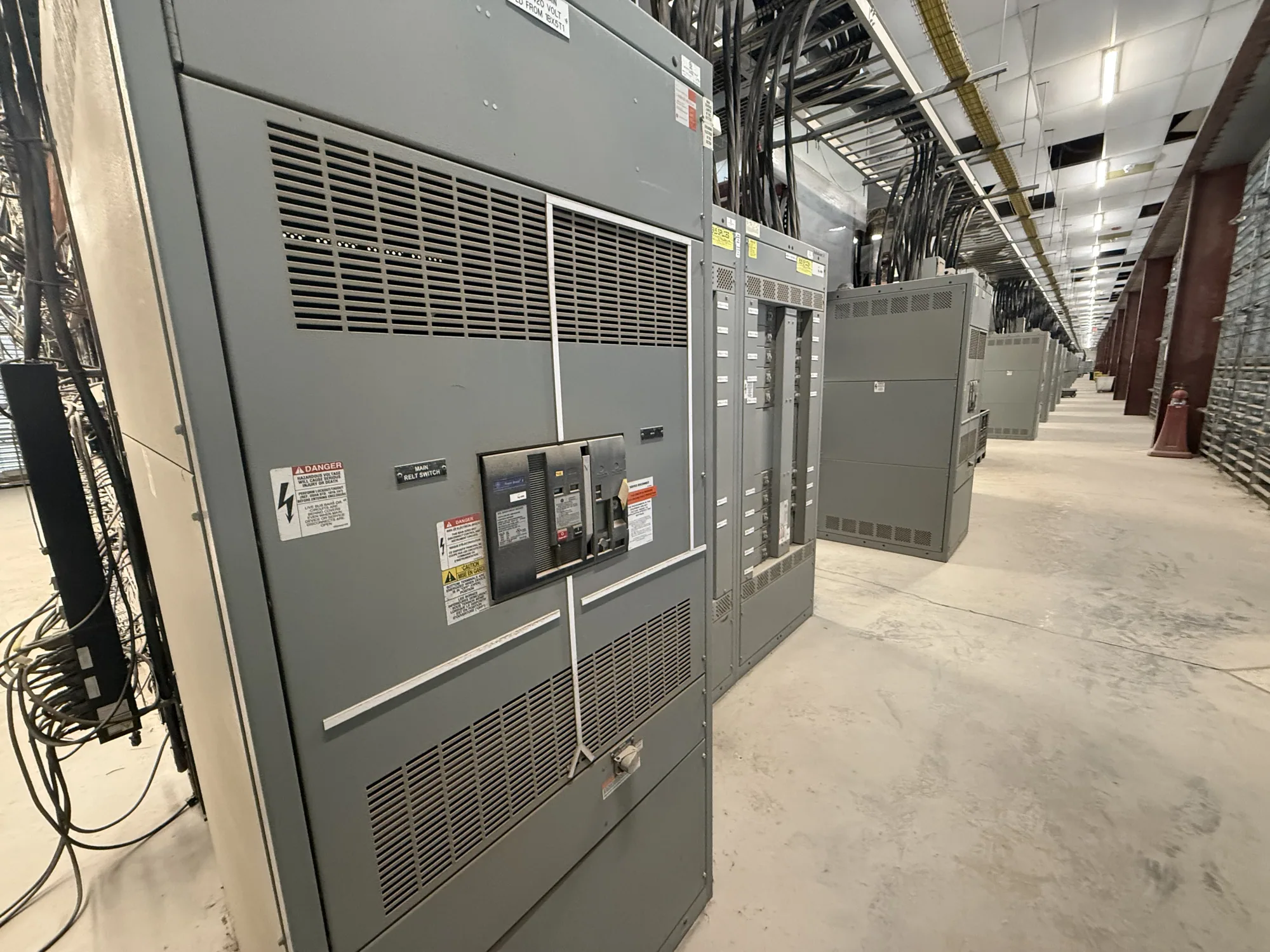
Start with the panelboard’s application
Power distribution panelboards divide incoming electrical power among branch circuits and house the associated protective devices. Their enclosure is part of the equipment specification, not a cosmetic choice: it affects how the assembly suits its installation environment, how people access it, and how the panel fits within the available space. Define the actual application before selecting an enclosure designation.
Panelboards are a distinct equipment category from switchgear. A project may include both, but their functions, construction, and applicable product requirements are not interchangeable. This discussion concerns branch-circuit distribution panelboards. Identify the exact equipment and scope in the project documents so an enclosure requirement intended for one assembly is not mistakenly applied to another.
Match the enclosure to documented exposure
Describe the location in practical terms: indoors or outdoors, sheltered or exposed, and subject to what conditions during normal operation, cleaning, or maintenance. Consider moisture, dust, corrosion concerns, temperature, impact risk, and nearby processes. These are project questions, not assumptions. The responsible engineer should establish which exposures matter and select a documented NEMA or other applicable enclosure rating for the specific design.
A rating should not be inferred from appearance or from a general label such as “weather-resistant.” Confirm the precise designation and what it means for the intended installation. A rating does not establish that every possible site condition is covered, nor does it resolve placement, drainage, chemical compatibility, or operating-temperature questions by itself. Where the environment is uncertain, clarify it before the panelboard configuration is finalized.
Coordinate enclosure and electrical design
Enclosure selection interacts with panel placement and electrical arrangement. Confirm the required circuit count, breaker or other protective-device types, incoming supply details, and available space alongside the enclosure requirement. Changes to dimensions or construction can affect access and equipment layout. The project engineer should also determine the applicable fault-current rating and verify that the proposed assembly and protective devices suit the system conditions.
Consider working clearance, door swing, approach, and the route for bringing conductors into the panel. Check for nearby piping, equipment, walls, or traffic that could obstruct safe access or inspection. If the panel is in a process area, coordinate the location with operations and maintenance personnel. Qualified personnel must perform installation, testing, and maintenance under applicable safety procedures; enclosure selection does not make an unsuitable work area acceptable.
Illustrative food and beverage facility scenario
Imagine a branch-circuit panelboard proposed near a food and beverage production area. The actual cleaning method, chemical exposure, moisture, temperature, and panel location are unknown. Do not assume that the area is routinely washed down, that a particular enclosure rating is necessary, or that a standard indoor enclosure is adequate. The facility team must describe operating and cleaning conditions for engineering review.
Then evaluate the panelboard as a complete application: required circuits and loads, supply characteristics, protective devices, fault-current conditions, access, and the chosen enclosure designation. A qualified engineer should perform the applicable calculations and review codes and standards for the project. The enclosure rating alone does not confirm electrical suitability, sanitation compatibility, or compliance. Record unresolved conditions as questions rather than silently converting assumptions into equipment requirements.
Balance protection, access, and maintainability
A more demanding enclosure specification may be appropriate when documented exposure calls for it, but the decision should consider the actual assembly and its intended use. Ask whether doors, covers, cable entry, and required operation are compatible with the chosen design. Confirm how authorized personnel will inspect and service the equipment and whether the proposed mounting location allows practical access. These details should be resolved with the equipment manufacturer and project engineer.
Avoid specifying a rating simply because it appears more protective or because another area uses it. An unnecessarily broad requirement can constrain equipment choices without addressing the real hazard, while an insufficiently considered requirement can leave important environmental conditions unresolved. The goal is a clear, supportable specification tied to site conditions, not a rating selected without context.
Information to include in the specification
- Identify the panelboard function, installation location, indoor or outdoor status, and relevant environmental exposures, including cleaning conditions if applicable.
- State the required enclosure designation and the responsible engineer’s basis for selecting it; flag any exposure or requirement still awaiting confirmation.
- Provide supply and load information, circuit count, protective-device requirements, available fault-current information, and other electrical data established for the project.
- Show mounting, access, working-space, conductor-entry, and dimensional constraints, along with relevant adjacent equipment or process conditions.
- List requested drawings, submittals, documentation, applicable standards, and any project-specific testing or listing requirements for confirmation against the actual assembly.
Coordinate the equipment before release
For a new panelboard quotation and submittal review, provide the one-line diagram, schedules, specification, site conditions, and open engineering questions. South Carolina Switchgear Builders manufactures new equipment to specification, is US-built with all-American components, and ships nationwide. Availability and actual lead times depend on the order and must be confirmed. Project-specific enclosure construction, ratings, listing, testing, and delivery details also require confirmation against the supplied design.
Use the submittal process to resolve discrepancies between drawings, environmental requirements, and available installation space before equipment release. Confirm who approves the final enclosure designation and which documents establish it. Clear coordination helps align the panelboard with its branch-circuit duties and actual location, while leaving engineering judgments and site-specific requirements with the responsible project professionals.