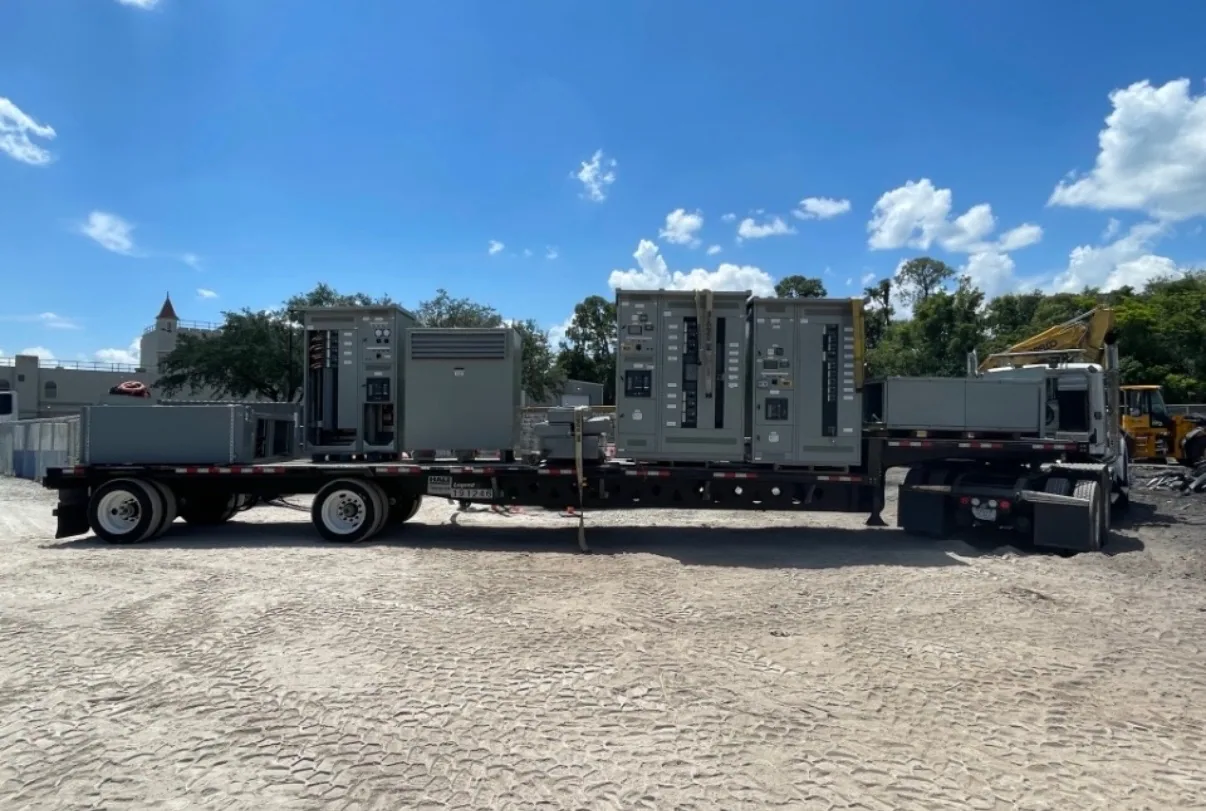
Apply grounding details to the panelboard’s role
Grounding and bonding requirements for a power distribution panelboard depend on where it sits in the electrical system and how that system is arranged. A branch-circuit panelboard is distinct from switchgear: it distributes power to downstream circuits, and its neutral and equipment-grounding provisions must match its specified function. The panelboard schedule alone may not communicate the full service or feeder arrangement.
Start by identifying whether the panelboard is service equipment, a feeder-supplied distribution point, or another defined position in the system. The responsible project engineer should establish the system configuration, applicable code requirements, and intended neutral treatment. Those decisions inform the equipment specification; they should not be inferred from a generic panel description or selected independently of the upstream and downstream design.
Coordinate neutral and bonding provisions
Specify whether the panelboard requires a neutral conductor and how that neutral is to be treated at this location. The arrangement may differ between service equipment and downstream equipment. The project engineer must determine the required neutral-to-ground relationship for the actual system and identify where bonding is intended. Do not assume that a panelboard should receive the same neutral bond as another panel in the installation.
Also define the equipment-grounding connection and the bonding provisions needed for the enclosure and associated conductive parts, as applicable to the specified assembly. The manufacturer needs clear direction on the intended configuration and terminals or provisions required by the design. If the project includes separately derived systems, multiple sources, transfer equipment, or other special arrangements, those features should be identified for engineering review rather than left implicit.
Fit the arrangement to circuits and protection
Grounding details belong in the broader panelboard design. Provide the branch-circuit count and types, expected loading, system voltage and phase, feeder information, and the protective-device requirements established by the project. The engineer should coordinate these details with the panelboard’s specified ratings and available fault-current information. Final equipment characteristics must be confirmed against the complete design and supplied configuration.
Panel location and installation conditions can affect enclosure selection, conductor routing, accessibility, and coordination with connected equipment. Where a panelboard serves a food and beverage facility, for example, the project might involve process areas, washdown exposure, or sensitive production loads—but those conditions are illustrative, not assumed. The design team should document actual environmental and operational conditions and determine suitable equipment requirements for each location.
Evaluate trade-offs and verify the design
Consider how the selected panelboard arrangement supports the installation’s maintenance plan, circuit organization, and future changes without compromising the engineered grounding scheme. More circuit spaces, spare capacity, or a different enclosure may affect dimensions and coordination, but they do not by themselves establish the correct bonding or neutral treatment. The specification should keep electrical-system decisions separate from convenience assumptions.
For an illustrative food and beverage project, suppose a panelboard is proposed near production equipment and the one-line diagram shows a feeder, but the grounding arrangement and site exposure are not yet confirmed. Those are unknown values, not design inputs. A qualified engineer should review the service and feeder configuration, calculate or verify applicable fault-current and protection information, assess the installation environment, and determine code and standards requirements before the panelboard is finalized.
Prepare a useful panelboard specification
Include the one-line diagram, panel schedule, system voltage and phase, source and feeder details, service-equipment status, and the engineer’s direction for neutral and bonding treatment. Provide the required branch-circuit devices and ratings, available fault-current information, enclosure and mounting requirements, conductor entry preferences, and documented site conditions. Identify any transfer, alternate-source, or separately derived system relationships that may affect the design.
State what documentation is needed for review, such as equipment data, configuration details, and submittals for coordination with the project documents. Call out exclusions or unresolved items plainly: for example, calculations, field installation, and system-wide code determinations may remain with the project’s qualified design professionals. Ask the manufacturer to identify any information needed to confirm the proposed panelboard against the specification.
Coordinate submittals, supply, and installation
Before release, compare the proposed equipment configuration with the approved one-line diagram, panel schedule, and grounding and bonding notes. Resolve discrepancies in writing with the responsible engineer and equipment supplier. Confirm the specified ratings, protective-device arrangement, enclosure, neutral provisions, and project documentation for the actual order; listing, testing, and standards applicability are design- and assembly-specific and must be verified rather than presumed.
South Carolina Switchgear Builders manufactures new power distribution equipment to specification, with US-built equipment, all-American components, and nationwide shipping. Availability and lead times depend on the order and require confirmation. Qualified personnel must handle installation, testing, and maintenance under applicable safety procedures. Clear system information and timely submittal review help align the panelboard with the project’s engineered design before procurement and installation proceed.