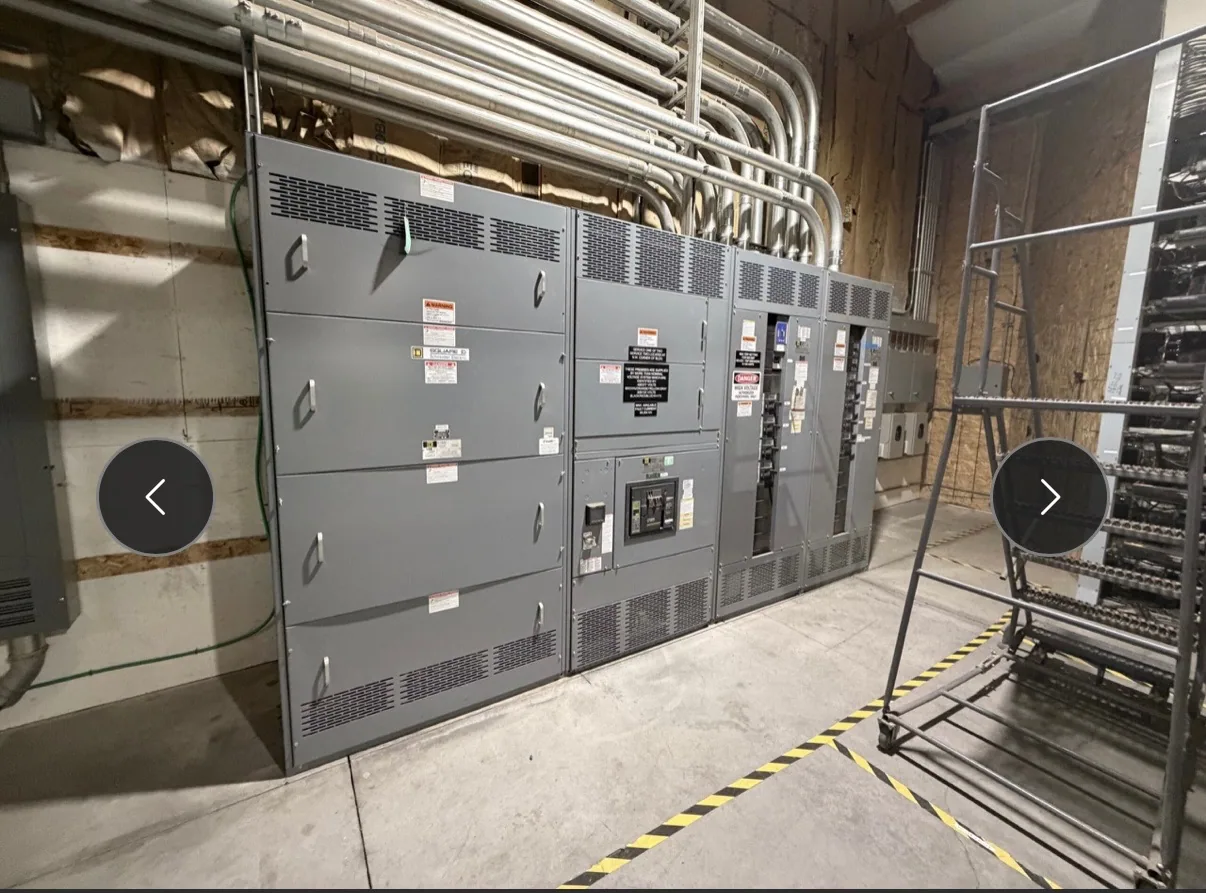
Apply the rating to the panelboard location
For a branch-circuit power distribution panelboard, short-circuit ratings are meaningful only in relation to the electrical system and the panel’s location within it. The available fault current at the line terminals depends on the upstream source and the intervening equipment and conductors. A rating suitable at one point may not be suitable at another. The responsible project engineer should establish the applicable value and confirm the equipment can be specified accordingly.
This is a panelboard topic, not a reason to treat panelboards as switchgear. Identify the actual equipment category, intended function, voltage class and configuration in the project documents. Ratings and construction details differ by product and design. A panelboard schedule or one-line diagram should make the equipment’s place in the distribution system clear enough for the manufacturer to evaluate the specified requirements rather than infer them from a general description.
Distinguish device capacity from assembly rating
Interrupting capacity applies to a protective device: it addresses the fault current that device is rated to interrupt under its applicable conditions. An assembly short-circuit current rating or withstand rating describes a different aspect of the equipment’s ability to withstand or manage short-circuit conditions. These terms are related, but they are not interchangeable. A panelboard specification should identify the required assembly rating as well as the protective-device characteristics needed for the design.
Do not assume that a breaker’s interrupting rating alone establishes the rating of the complete panelboard, or that an assembly rating automatically resolves every protective-device requirement. The precise relationship depends on the equipment design and any specified protective-device combination or conditions. Ask the manufacturer to identify the applicable rating basis, device types and limitations for the proposed configuration. The engineer of record should review that information against the design and governing project requirements.
Coordinate ratings with system conditions
Start with the calculated available fault current at the panelboard location, not a value copied from another distribution point. The upstream transformer or source, its relevant characteristics, conductor lengths and sizes, and intervening impedance can affect the calculation. Changes to the source or feeder arrangement may change the result. Record the calculation source, assumptions and date so reviewers can understand what value the specified equipment must address.
Then consider protective-device selection, branch-circuit needs and the panelboard’s location together. A design may require particular breaker types, poles, trip functions or coordination relationships; those details can constrain available configurations. Selectivity or selective coordination is a separate design objective from meeting a short-circuit rating. Where coordination is required, the responsible engineer should evaluate the specified devices and system conditions rather than assume that a higher rating ensures selective operation.
Consider placement and future changes
Panel placement affects more than convenience. A panelboard close to a source may experience different available fault current than one farther downstream, while feeder routing and system configuration can change the calculated value. If the layout is still evolving, identify which assumptions remain provisional. The design team and manufacturer can then distinguish confirmed requirements from details that must be revisited before final equipment selection or release.
Future source changes, added transformers, parallel sources or feeder modifications may affect fault-current calculations and device coordination. These are design questions, not universal outcomes; the project engineer should assess the actual arrangement. If the equipment is intended for a facility with process loads, such as a food and beverage operation, describe operating areas and continuity priorities without assuming a particular fault level. Unknown values should remain marked as unknown until documented calculations are available.
Use an illustrative scenario carefully
Imagine a food and beverage facility planning a new branch-circuit panelboard for production-area loads. At the early inquiry stage, the source details, feeder route and available fault current are unknown. No numerical rating should be selected from that incomplete picture. The engineer would establish the system inputs, calculate the fault current at the proposed panel location, and document required protective devices, branch circuits and coordination objectives.
As the design develops, the team can compare the documented requirements with equipment-specific options and exclusions. A proposed configuration may depend on particular devices or conditions, so the submittal should state what is included and what is not. A qualified engineer should review calculations, applicable standards and coordination before approval. This example illustrates a process only; it does not establish a rating, compliance result or recommended design for any facility.
Prepare a useful panelboard specification
For a new-equipment request, provide the one-line diagram, panel schedule and equipment location; system voltage and source information; calculated available fault current and its basis; feeder details; and required branch-circuit quantities and device characteristics. Also state any specified assembly rating, coordination or selectivity requirements, environmental conditions, enclosure needs and project documentation requirements. Mark unresolved inputs plainly instead of substituting assumptions.
Ask the manufacturer to confirm the offered panelboard configuration, applicable assembly rating, protective-device options, rating conditions, exclusions and any information still needed for a complete review. Include drawings and submittal milestones, approval responsibilities, shipping destination and required delivery window in project coordination. Availability and actual lead time depend on the order and must be confirmed. South Carolina Switchgear Builders manufactures new equipment to specification, is US-built with all-American components, and ships nationwide; confirm project-specific details against the proposed equipment.
Close the engineering loop before release
Before approving the equipment for manufacture, reconcile the calculated fault current, device requirements and panelboard assembly rating with the final one-line and schedules. Confirm that revisions to the source, feeder or panel location have been reflected in the engineering review. Keep the rating basis and any equipment-specific conditions with the approved submittal, so installation and later maintenance teams have a clear record to use under applicable procedures.
Short-circuit ratings are not a stand-alone catalog choice: they connect the system calculation to a specific panelboard design and its protective devices. A complete, coordinated specification gives the manufacturer a sound basis to quote new equipment and gives the project team clear items to review. Resolve open engineering questions with the responsible qualified professionals, then confirm the final configuration and delivery details before order release.