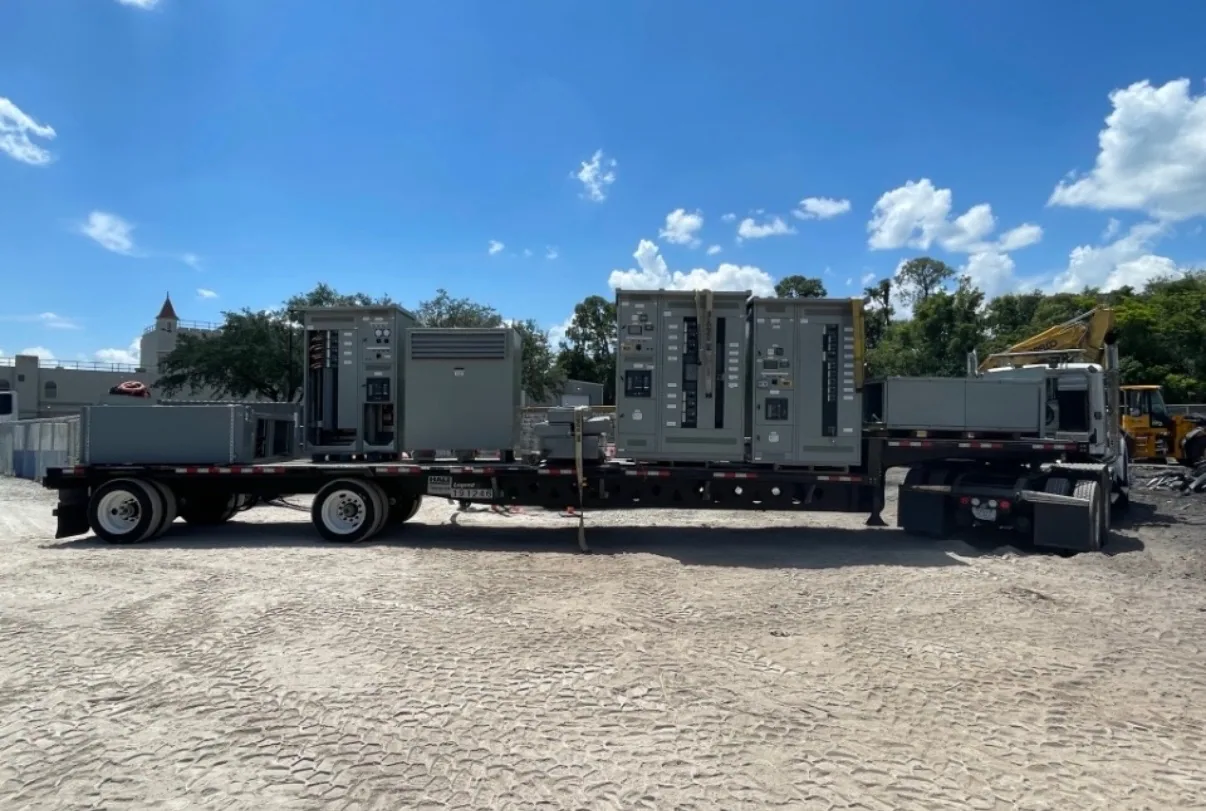
Start with the equipment and its role
Service-entrance switchgear sits at a consequential boundary: it connects a utility supply with a building’s distribution system. The applicable requirements depend on the actual equipment type, voltage class, configuration, project location, and the rules adopted or imposed by the relevant authorities. A product standard describes equipment design and construction; it does not, by itself, settle every installation, utility, or approval question.
First establish whether the project calls for low-voltage switchgear, a switchboard, or another assembly. These terms are not interchangeable, and the applicable standard depends on the equipment being specified. UL 891 concerns eligible low-voltage switchboards; whether it applies, and whether a particular assembly is listed, must be confirmed for the specific design. It should not be applied to medium-voltage switchgear.
Confirm standards and editions for the project
Specifications should identify the standard and edition required by the project documents, applicable code adoption, and approval process. An edition commonly used in one project may not be the edition accepted for another. The responsible engineer and authority having jurisdiction (AHJ) should determine which requirements govern, including any local amendments or project-specific criteria. The equipment manufacturer can then review the requested design against the actual specification.
Avoid broad statements such as “meet all applicable codes” without naming the basis for review. Ask the project team to identify the applicable equipment standard, installation-code edition, referenced sections, and any owner or insurer requirements. Where a requirement is unclear or conflicts with another document, record the question and obtain direction before the design is finalized. This reduces the risk of treating a general specification as proof of acceptance.
Coordinate the utility interface and service disconnect
The utility’s service requirements can affect the incoming arrangement, metering provisions, access, disconnecting means, and responsibility boundaries. Requirements vary by utility and project, so obtain the current written criteria for the specific service rather than relying on assumptions from another site. Confirm who supplies, owns, operates, and approves each component, and clarify where the utility connection ends and the customer’s equipment begins.
Determine how the service disconnect, overcurrent protection, and downstream distribution are intended to function together. The project engineer should resolve the one-line diagram, fault-current basis, protective-device coordination, and any required ratings from project calculations and utility information. Do not infer equipment ratings from a building name or nominal voltage alone. The final configuration and available ratings must be checked against the complete specification and actual supplied equipment.
Address grounding, bonding, and approval early
Grounding and bonding details depend on the service arrangement and applicable installation rules. The design team should define the neutral and grounding connections, bonding points, grounding-electrode interface, and any separation between service and downstream systems. These decisions need to align with the project’s electrical design and the AHJ’s interpretation; they are not a substitute for engineering review or a generic equipment description.
Approval may involve the AHJ, utility, owner, engineer, and other project reviewers. Establish who reviews drawings, what submittal documents are required, and whether comments must be resolved before manufacturing. Equipment-specific listing, testing, ratings, and standards applicability must be verified for the proposed assembly. A standard name on a specification does not establish that every configuration is listed or accepted.
Consider a hospitality project without assuming values
For a hypothetical resort expansion, the service-entrance design might need to coordinate a new building’s utility connection with existing distribution and phased construction. The service voltage, available fault current, load, utility metering rules, and governing code edition are unknown until documented. A qualified engineer would calculate and review the design using verified project data, not assumptions based on the hospitality building type.
That review could compare alternative incoming arrangements, equipment footprints, disconnect locations, and interfaces with downstream panels or backup-power systems. Each choice can affect coordination, access, construction sequencing, and approval. The team should document which requirements are fixed by the utility or AHJ and which remain design decisions. This scenario illustrates a process only; it does not establish a standard configuration or guarantee approval.
Build a useful specification and submittal package
Give the manufacturer the project location, equipment type, voltage class, one-line diagram, service arrangement, utility criteria, specified standards and editions, and required ratings as established by engineering. Include available fault-current information, conductor and termination details, metering needs, enclosure and environment requirements, space constraints, and the desired sequence of approvals. Mark unresolved items clearly so they can be reviewed rather than silently assumed.
- Identify the governing equipment standard and edition, plus any project-specific exceptions.
- Provide utility requirements, service boundaries, metering criteria, and connection responsibilities.
- State the engineer-confirmed electrical data, required functions, and installation constraints.
- List drawing, review, testing, documentation, and approval expectations for the actual assembly.
- Ask which requested features, ratings, listings, and delivery dates can be confirmed for the specified design.
Coordinate the purchase through final review
South Carolina Switchgear Builders manufactures new switchgear and switchboards to specification, with US-built equipment, all-American components, and nationwide shipping. Configuration, availability, standards applicability, assembly listing, and delivery timing depend on the order and must be confirmed; short lead times are not a substitute for a project-specific schedule confirmation. Provide complete requirements early, then review proposed submittals with the engineer, utility, and AHJ before release.
Before installation, resolve outstanding comments and confirm that delivered equipment matches the approved documents. Installation, inspection, testing, and maintenance should be handled by qualified personnel under applicable safety procedures. Clear coordination—from standards and utility criteria through engineering review and procurement—helps the project team specify service-entrance equipment that fits its documented requirements without assuming that one code reference answers every approval question.