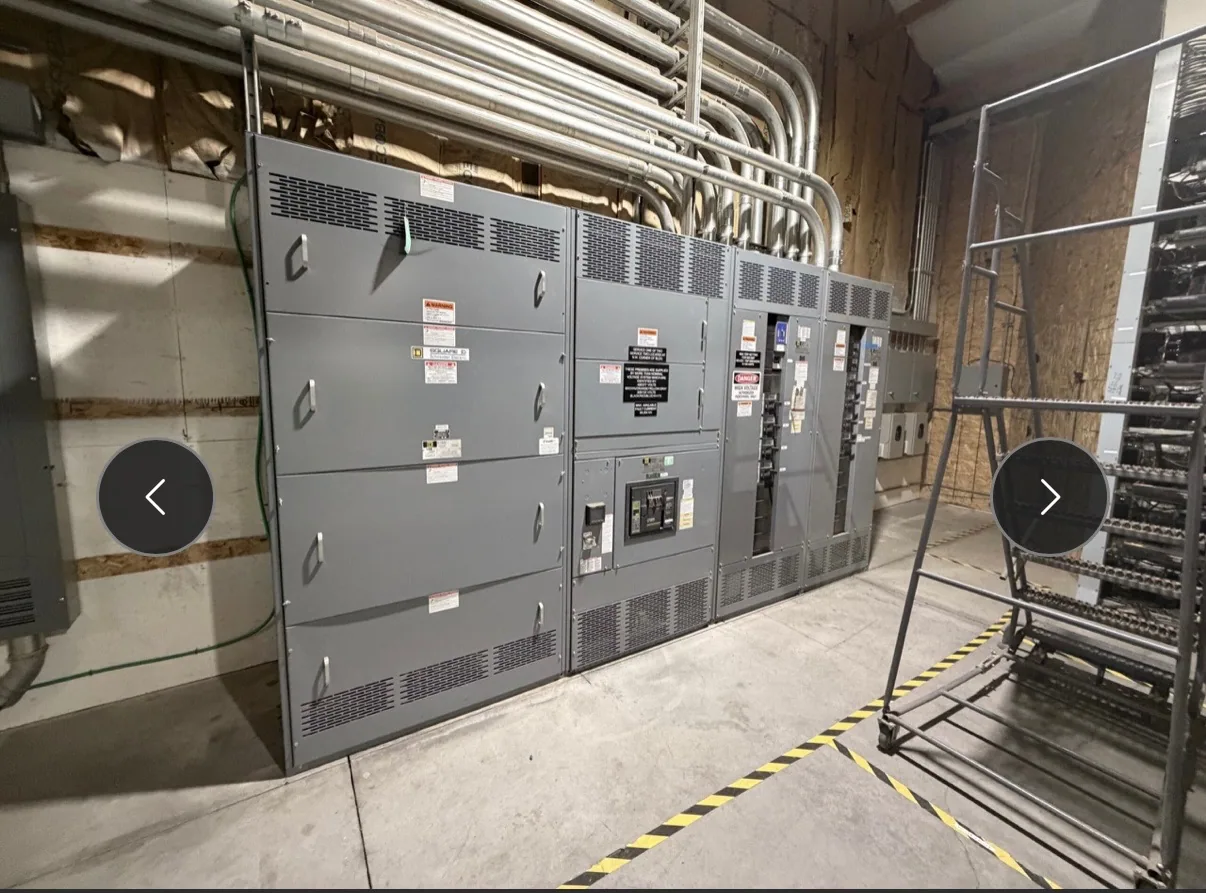
Why enclosure ratings matter at the service entrance
Service-entrance switchgear is a key point in a building’s electrical distribution, so the enclosure specification must reflect where the equipment will be installed and how it will be accessed. A rating is not simply a measure of general toughness: it identifies environmental protection characteristics defined by the applicable rating system. The project team should select and document a rating for the intended conditions, rather than assume one enclosure type fits every site.
Start by identifying whether the lineup will be indoors or outdoors, and describe the conditions around it. Relevant questions include exposure to rain, windblown dust, washdown, condensation, corrosive agents, impact risks, and temperature changes. Those conditions are not interchangeable. For example, an enclosure appropriate for ordinary indoor placement may not address direct weather exposure or a cleaning process. The responsible engineer should evaluate actual site conditions and specify the applicable enclosure type.
Translate site exposure into a documented requirement
“NEMA rating” is often used informally to discuss enclosure performance, but a purchase specification should state the exact type or other applicable rating, along with its governing basis. Do not rely on vague phrases such as weatherproof, washdown-ready, or outdoor rated without defining the required protection. The design team should verify that the chosen designation addresses the expected exposure and that it applies to the complete proposed assembly and its configuration.
Consider the surrounding installation as well as the enclosure itself. Can water collect near the equipment? Is the room ventilated, heated, or subject to condensation? Will nearby processes create airborne residue or cleaning chemicals? Are conduits, cable entries, doors, and access openings arranged in a way consistent with the specified protection? These are design questions for the project engineer and equipment manufacturer to resolve against the actual layout, not assumptions to leave until installation.
Coordinate the enclosure with the service entrance
The enclosure choice must work with the service configuration, not obscure it. Provide the service voltage class and system information, intended utility interface, service disconnect arrangement, available space, cable entry direction, and the project’s access requirements. The utility may have interface or approval requirements that affect the design; the project team should obtain and communicate those requirements rather than presume a particular utility standard. Confirm which components and compartments are included in the requested service-entrance assembly.
Access and working conditions also shape a practical layout. Identify operating-side and rear access needs, door swing clearances, aisle limitations, equipment-room entrances, and any restrictions on moving sections into place. Enclosure features can influence footprint, cable routing, ventilation, and maintenance access. A compact arrangement may suit a constrained room, but only if it remains consistent with applicable working clearances and the approved project design. Qualified professionals must handle installation and later inspection under applicable safety procedures.
Keep grounding, bonding, and approvals in scope
Enclosure ratings do not replace electrical design review. Service-entrance equipment also requires coordinated decisions about grounding and bonding, the service disconnect, overcurrent protection, and the interface to the premises distribution system. Ask the responsible engineer to identify the grounding and bonding arrangement and required documentation for the specific service. Enclosure construction, conductor entries, and compartment boundaries should be reviewed alongside those details so that separate requirements are not accidentally treated as substitutes.
Approval and listing questions are assembly-specific. Include the required standards, submittals, and acceptance process in the project documents, then confirm applicability for the proposed equipment. Do not assume that a particular rating or listing automatically follows from the enclosure designation. If the project requires a specific environmental rating, test documentation, or assembly listing, identify it early and request confirmation for the design being quoted. Changes to the layout or accessories may affect what can be verified.
Illustrative food and beverage facility scenario
Consider a hypothetical food and beverage facility evaluating service-entrance equipment near a production area. The available facts might be incomplete: the exact cleaning method, chemical exposure, airborne moisture, room temperature, and distance from process equipment are unknown. Those unknowns should remain open questions, not be converted into an assumed washdown requirement or a guessed enclosure type. The facility team should describe the expected operating and cleaning conditions to the engineer.
The engineer can then assess the exposure, access, service arrangement, applicable codes and standards, and any owner or utility criteria. If water or chemicals are present, the team should clarify where, how often, and by what process; an enclosure designation alone cannot establish suitability for every chemical or cleaning practice. The equipment supplier can review the specified requirement against the proposed construction, while the engineer retains responsibility for calculations, standards interpretation, and project approval.
Prepare a useful specification and submittal package
For a quotation and design review, provide the one-line diagram, service voltage and system details, available fault-current information when established, intended service disconnect, utility interface criteria, and required protective-device details. Add the installation location, indoor or outdoor designation, expected environmental exposures, required enclosure rating, access and clearance constraints, cable entry preferences, and any project-specific approvals. Clearly mark items that are pending so they can be resolved before the design is finalized.
- State the exact enclosure type or applicable rating and its required basis.
- Describe weather, moisture, dust, washdown, corrosive exposure, and ambient conditions as known.
- Identify access sides, room constraints, routing, and installation limits.
- List required drawings, equipment documentation, standards review, and approval steps.
- Ask which exclusions or assumptions apply to the proposed assembly and accessories.
South Carolina Switchgear Builders manufactures new switchgear and switchboards to specification, with US-built equipment, all-American components, and nationwide shipping. Availability and lead times depend on the order and must be confirmed. A clear enclosure requirement, supported by site information and coordinated service details, gives the project team a sound basis to evaluate the proposed equipment and carry unresolved conditions forward for responsible review.