Start with the service system, not a label
For service-entrance switchgear, voltage selection begins with the electrical system the equipment will connect to. A project specification may identify a nominal system voltage, but that value alone does not settle the required equipment rating. The responsible engineer must also define the system configuration, operating conditions, applicable requirements, and the particular functions assigned to the assembly.
Keep nominal system voltage distinct from equipment maximum voltage and insulation characteristics. These terms address related but different design considerations; they are not interchangeable values. The equipment must be appropriate for the actual system and its specified conditions. Do not select a rating from a brief description such as “service gear” or assume that a familiar nominal voltage establishes every required capability.
Define the equipment boundary and voltage class
First establish what the project means by service-entrance switchgear. Identify the incoming service conductors, service disconnecting means, metering or utility interface requirements, and outgoing distribution connections. The boundary matters because separate equipment in the same electrical lineup may have different functions, ratings, or approval conditions. Confirm which devices and compartments are included in the manufacturer's scope and which are furnished or controlled by others.
Then identify the voltage class from the actual design. A 480 V class assembly is low voltage; 5 kV and 15 kV class equipment are medium voltage. Those examples are not substitutes for project-specific engineering or a universal voltage cutoff. Confirm the system voltage and the equipment class together, and make sure the specified assembly type fits the service arrangement. A switchboard and medium-voltage switchgear are not interchangeable labels.
Account for configuration, insulation, and interface
Document whether the service is single-phase or three-phase, the conductor arrangement, and the grounding method as established by the project engineer and utility information. These details affect how the incoming service and equipment are designed and connected. Neutral treatment, grounding and bonding provisions, and the location of the service disconnect must be resolved for the particular system rather than inferred from a generic product description.
Insulation coordination also requires project-specific review. Ask the engineer to define the required insulation characteristics and any applicable system conditions for the selected voltage class. For medium-voltage applications, the specified equipment maximum voltage and insulation requirements must correspond to the system and applicable standard. For low-voltage assemblies, verify the intended application and the complete equipment specification. The manufacturer should confirm what the offered design can meet; do not infer capability from nominal voltage alone.
Coordinate utility and approval requirements
The utility interface can affect the service arrangement, metering provisions, incoming termination space, and other specified details. Obtain the utility's project requirements where applicable and identify any approvals or reviews required before equipment design is finalized. The project engineer should coordinate those conditions with the service disconnect, grounding and bonding design, and downstream distribution. Requirements vary by project, so no single arrangement should be presumed to apply.
Standards and listing questions must be tied to the actual equipment. UL 891 applies to eligible low-voltage switchboards; whether it applies and whether a particular assembly is listed must be verified for that design. It does not establish a rating for medium-voltage switchgear. Ask what standards, ratings, tests, and documentation are included in the proposed equipment, and require confirmation against the project specification rather than relying on a broad product-category claim.
Consider a healthcare project without assuming values
For example, a hospital or healthcare facility project might be evaluating new service-entrance equipment while the final utility voltage, system configuration, and equipment boundary remain unconfirmed. Those unknowns must stay open items—not guessed values. The facility's design team should obtain the applicable service information, establish the intended distribution arrangement, and identify the loads and interfaces that the equipment must serve.
A qualified engineer can then review system calculations, applicable standards, grounding and bonding, and approval requirements before selecting the equipment voltage class and specifying insulation. Healthcare occupancy does not by itself establish a particular voltage rating or equipment configuration. The example illustrates why an early equipment choice based only on a building type or nominal-voltage shorthand can create avoidable revisions as service details become known.
Prepare a specification that can be reviewed
Provide the manufacturer with the confirmed nominal system voltage, phase and conductor configuration, grounding method, voltage class, and equipment scope. Include available utility criteria, service-disconnect requirements, metering and termination details, and the design documents that define incoming and outgoing connections. Flag unresolved values explicitly, identify who will confirm them, and state which project requirements govern the final equipment selection.
Also ask for equipment-specific information: proposed assembly type, applicable ratings, insulation details where relevant, listing or standards expectations, included devices, and exclusions or interfaces furnished by others. Separate required values from preferences, and request clarification where a specification could be interpreted in more than one way. Availability and actual lead times depend on the order and must be confirmed; delivery dates and design details likewise require project-specific confirmation.
Coordinate the order through final design
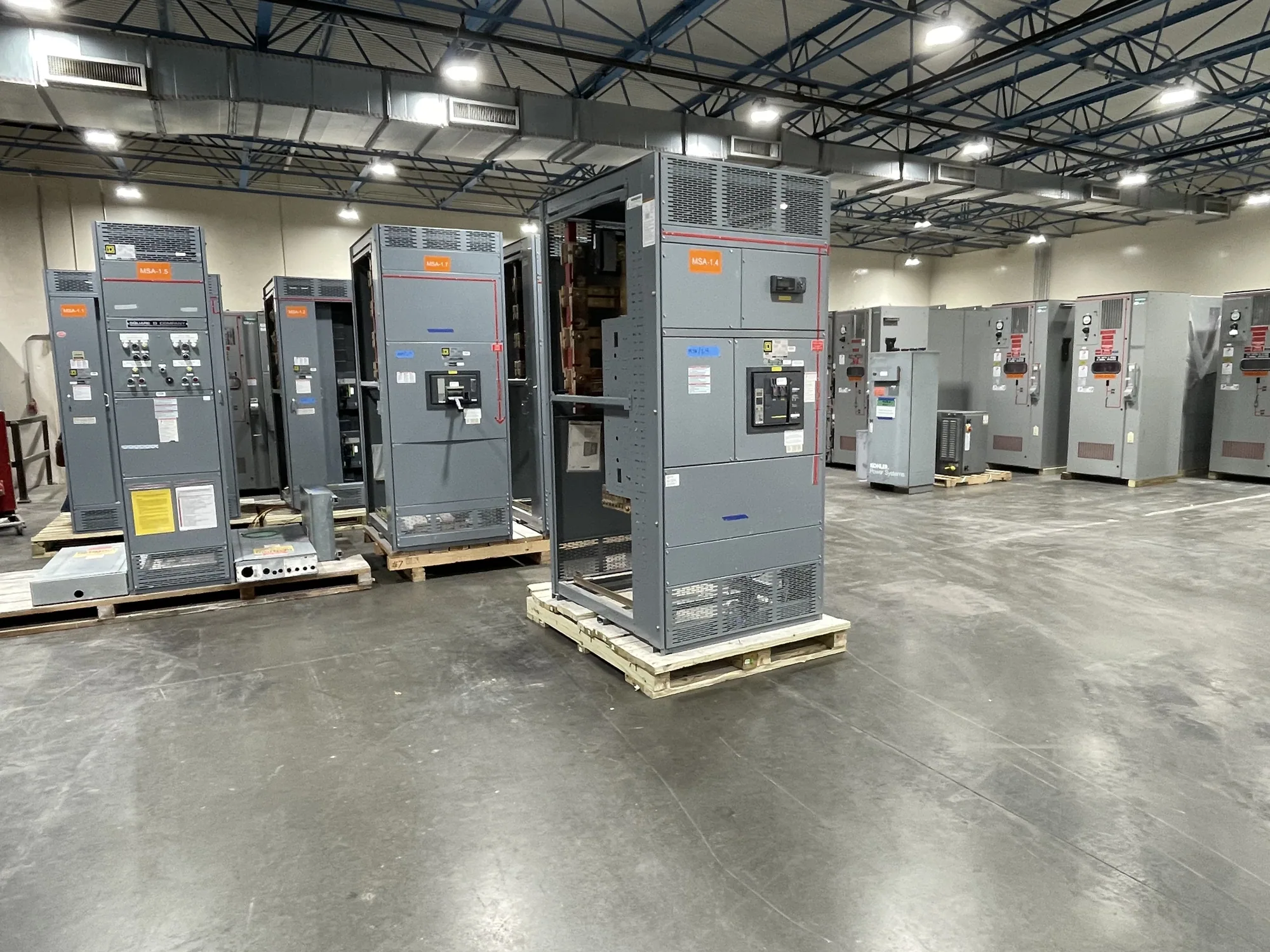
South Carolina Switchgear Builders manufactures new switchgear and switchboards to specification, with US-built equipment, all-American components, and nationwide shipping. Share the project documents early enough to identify information gaps and align the proposed configuration with the engineer's requirements. Short lead times may be available, but timing depends on the order and must be confirmed rather than assumed.
Before release, have the responsible project team review the equipment submittal against the approved system data, utility interface, ratings, and scope. Resolve discrepancies before fabrication and coordinate installation, testing, and maintenance through qualified personnel following applicable safety procedures. A well-defined voltage specification is not just a number: it connects the service system, equipment design, and project approvals in a form that can be checked before the new assembly is built.