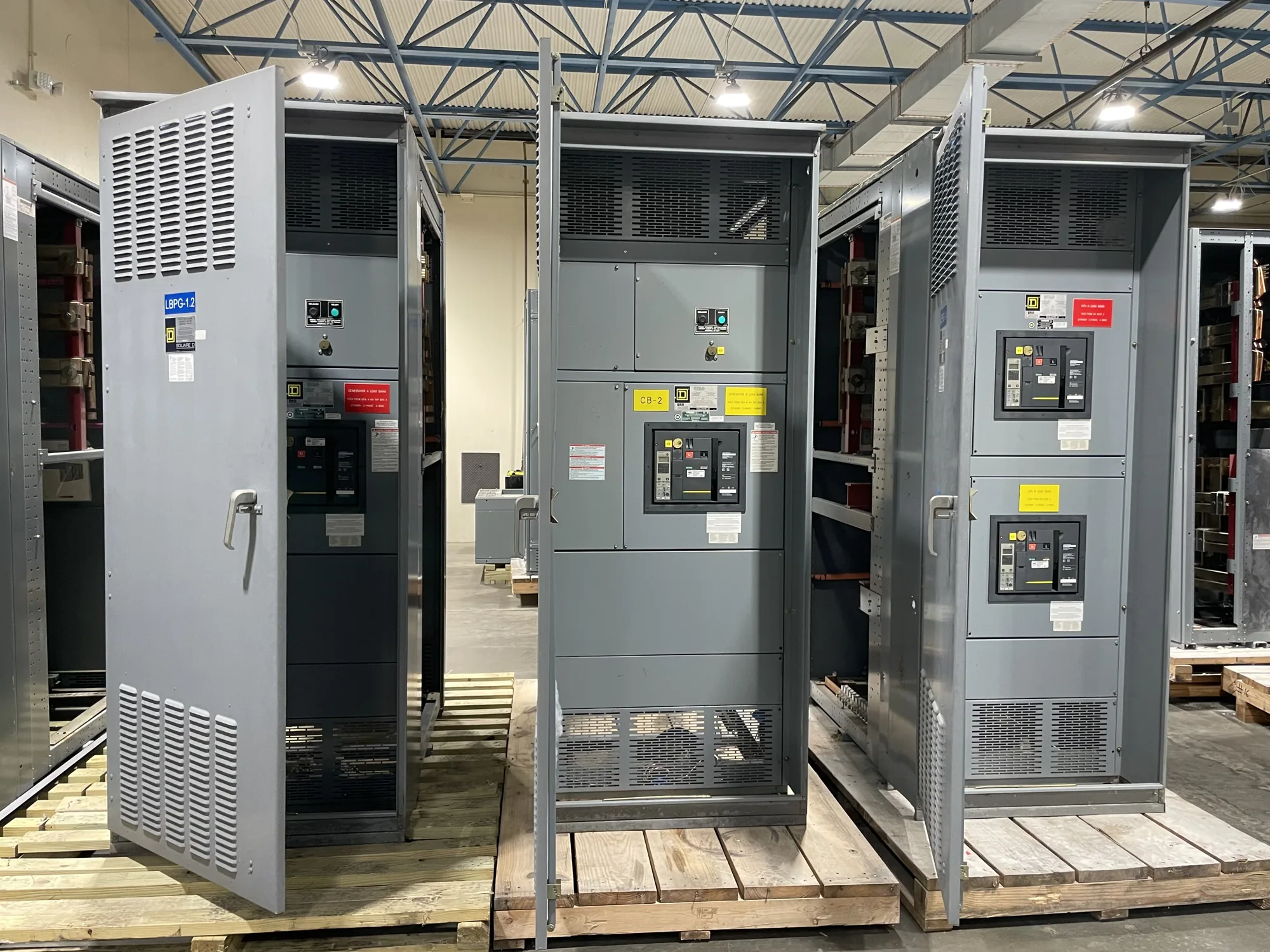
Start with the equipment and project scope — Electrical Switchboards: Codes and Standards
Codes and standards are not interchangeable labels for a switchboard. Equipment standards address the assembly and its construction or evaluation; installation codes govern how equipment is selected and installed within a building or electrical system. Utility service requirements and the authority having jurisdiction (AHJ) can add project-specific conditions. The responsible project engineer should identify the governing documents and editions for the location, application, and procurement schedule.
This distinction matters in low-voltage service and feeder distribution. A new switchboard may contain service or feeder devices, bus, metering provisions, and other specified components, but the applicable requirements depend on how the assembly is used and configured. The project drawings, one-line diagram, utility information, and written specification should agree on the intended function. A generic reference to “current code” is not enough to settle which edition applies.
Confirm the product standard and edition
For eligible low-voltage switchboards, UL 891 may be relevant, but applicability and any assembly listing must be verified for the particular design. Do not assume every switchboard is listed, or that a component's individual certification establishes the status of the complete assembly. Ask the manufacturer to identify the proposed assembly's applicable product standard, edition, and listing status in the submittal, if required by the project.
Then distinguish the product standard from the installation code and local adoption. The project team should confirm which code editions have been adopted by the relevant jurisdiction and whether amendments or project conditions affect the design. Utility rules may address service entrance arrangements, metering, access, or other interface details. These are not universal assumptions: obtain the applicable utility's current written requirements and resolve conflicts with the engineer and AHJ before finalizing the equipment specification.
Translate requirements into switchboard design inputs
Standards review must connect to actual selections. Identify whether the switchboard is intended for service or feeder distribution, the system voltage and configuration, the incoming arrangement, and the number and function of outgoing circuits. Device types and ratings, metering, enclosure, access, and physical layout should follow the approved one-line diagram and project requirements. Confirm each value with the responsible engineer; do not infer missing ratings from a building type or a prior project.
Fault-current information is especially consequential. The available fault current and required assembly withstand or short-circuit ratings must be established for the installation and coordinated with the specified protective devices. The engineer should verify the calculation basis and protective-device relationships; the manufacturer needs clear, approved inputs to configure the equipment. Dimensions also affect compliance and constructability: room clearances, cable entry, routing, and access must be coordinated with drawings and the installation plan rather than left to an assumed standard footprint.
Consider editions, interfaces, and design trade-offs
Changing a standard edition or a utility requirement late in design can affect components, layout, documentation, and schedule. Resolve the governing edition early, then record it in the specification and submittal review criteria. If the project has a specified approval path, identify who reviews the drawings, who confirms code interpretation, and who accepts utility interface details. The manufacturer can build to confirmed specifications; it cannot replace the engineer's code analysis or the AHJ's decision.
Design choices may compete for space, access, and coordination. More outgoing circuits or additional metering provisions can influence section arrangement and enclosure dimensions. A compact layout may need closer review against cable-bending space, working clearances, maintenance access, and the equipment's specified construction. Ask the engineer to resolve those priorities on project documents and ask the manufacturer to flag any conflicts before release. Listing, testing, ratings, and delivery timing remain specific to the confirmed assembly and order.
Illustrative hospitality project review
Consider a hypothetical hospitality or resort project with a new low-voltage switchboard serving a main distribution point and several downstream loads. The voltage, load, available fault current, service arrangement, jurisdiction, and utility conditions are unknown here and must remain open design inputs. The engineer would determine system requirements, protective-device coordination, and applicable code editions; the utility and AHJ would clarify their respective requirements for the actual site.
The buyer can help by supplying current drawings, the one-line diagram, load and circuit schedules, site constraints, and written project specifications. The team should ask whether the board is service equipment or feeder equipment, which product standard and edition are specified, what evidence of listing is required, and which party resolves utility or AHJ comments. These questions turn a broad standards reference into reviewable requirements without treating an illustrative building type as a design basis.
Prepare a useful specification and submittal package
Before requesting a quotation or approving submittals, provide the required voltage and system configuration, service or feeder function, incoming and outgoing device schedule, metering requirements, available fault-current information, required ratings, enclosure and environmental conditions, dimensions, cable entry, and applicable drawings. State the project location, governing code editions if established, utility criteria, AHJ conditions, and required product-standard or listing documentation. Mark unknowns for engineering resolution rather than filling them with assumptions.
- Identify the responsible engineer, utility contact, AHJ review process, and approval responsibilities.
- Specify the required standard and edition, while asking the manufacturer to confirm applicability to the proposed assembly.
- Request drawings, equipment data, and listing or test documentation applicable to the actual design.
- Coordinate room layout, access, cable routing, construction milestones, and submittal review before release.
South Carolina Switchgear Builders manufactures new switchboards to specification, with US-built equipment and all-American components, and ships nationwide. Availability and actual lead times depend on the order and must be confirmed. A complete, consistent project package gives the manufacturer a sound basis to develop the proposed assembly and helps the project engineer, utility, and AHJ review the details that belong to them. Confirm all design-dependent requirements before authorizing production.