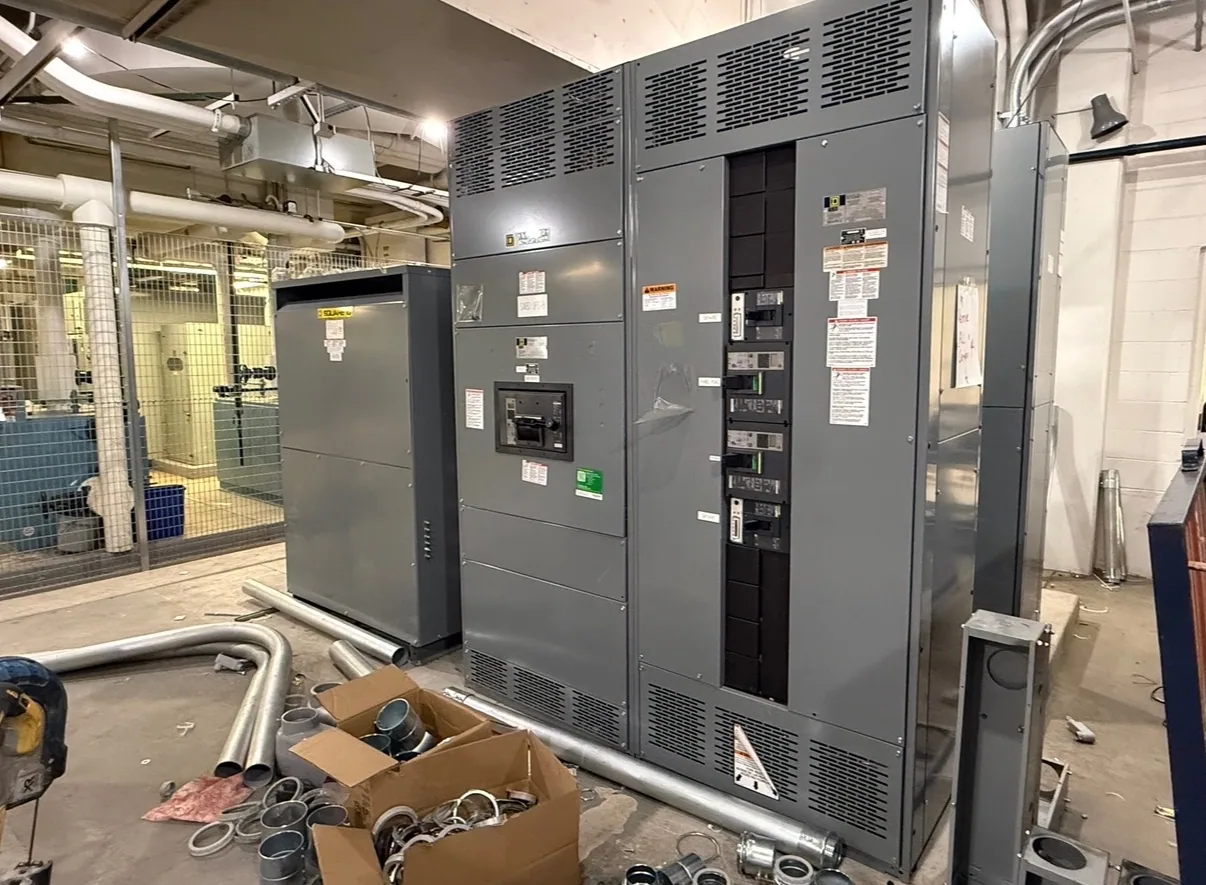
Where continuous-current ratings matter
In a low-voltage switchboard, continuous-current ratings describe the current the specified assembly components are intended to carry under their stated conditions. They are relevant at service entrances and feeder distribution points, where bus conductors and overcurrent devices connect sources with downstream loads. A rating is not a prediction of everyday demand; it is a design value that must be evaluated alongside the project’s load calculation and equipment configuration.
Keep the related values distinct. Normal load current reflects expected operating demand based on the engineer’s analysis. Bus rating identifies a capability of the bus assembly, while service and feeder device ratings apply to the specific devices selected. These values are coordinated, but they are not interchangeable. The project documents should make clear which rating applies to each point in the distribution path and under what conditions it is specified.
Start with the engineered load
Switchboard sizing should begin with documented loads, not a guess based only on a building’s area or a nameplate total. The responsible engineer can assess connected equipment, expected demand, operating schedules, planned expansion, and any applicable load calculations. For an existing facility, measured data may help characterize actual operation, but it does not replace review of future loads or the assumptions required by the project.
Compare the resulting design current with the proposed service and feeder devices and the bus configuration. A larger device rating does not automatically establish that every bus section or connection is suitable for that current. Conversely, selecting a bus value in isolation does not establish that the protective devices and distribution arrangement meet the design intent. The complete one-line diagram and equipment schedule provide the context for those decisions.
Account for actual operating conditions
Current-carrying capability depends on the equipment design and its specified conditions of use. Enclosure arrangement, ambient temperature, ventilation, installed devices, conductor layout, and component placement can affect the evaluation. Project documents should state relevant conditions rather than assume that a rating published for one configuration applies unchanged to another. Any required derating or other adjustment must be confirmed for the actual design by the responsible engineer and manufacturer.
Operating temperature is especially important as a documented design condition, not a standalone number to infer from a general description. Confirm what temperature assumptions apply to the proposed assembly and whether the project’s location and installation environment differ from them. Also identify unusual heat sources, restricted ventilation, or other constraints early. Their effects are configuration-specific and should be resolved against the equipment design rather than addressed by an informal rule of thumb.
Coordinate bus, devices, and fault requirements
Continuous-current selection is only one part of a switchboard specification. Service and feeder devices, bus sections, neutral arrangements, and physical dimensions must fit the electrical design and available installation space. Short-circuit requirements are a separate consideration: the project engineer must establish the applicable fault-duty criteria and verify that the specified assembly and devices are appropriate. A satisfactory continuous-current value by itself does not establish short-circuit suitability.
These choices may affect the overall lineup and its interfaces with cables, upstream equipment, and downstream distribution. Provide the intended source arrangement, system details, service and feeder schedule, and space constraints so the design can be reviewed as a whole. If the project calls for future capacity, identify what is expected to be reserved and what must be operational at initial installation. Do not assume spare positions or unused bus capacity without specifying and confirming them.
Illustrative manufacturing scenario
Consider an automotive manufacturing facility planning a new low-voltage switchboard for production loads. The scenario supplies no verified current values, operating profile, temperature conditions, or fault-duty data, so none should be assumed. The project team would gather the engineer’s load calculation, identify major production equipment and expected operating patterns, and document the proposed service and feeder arrangement before specifying bus and device ratings.
If production schedules, equipment additions, or environmental conditions could change, the engineer should decide how those factors influence the design basis. The manufacturer can review the requested configuration against the supplied specification, while the project engineer remains responsible for load calculations, applicable code and standards review, and system coordination. Any proposed adjustments, ratings, listing applicability, or operating limits must be confirmed for the particular assembly.
Prepare a useful specification package
Before requesting a design review or quotation, assemble the one-line diagram, load calculations, system voltage and phase information, service and feeder requirements, fault-duty criteria, and available equipment dimensions. Include ambient and installation conditions, operating temperature assumptions, and any expected future loads. Clearly flag values that remain preliminary, and identify who will resolve them. This helps distinguish confirmed design inputs from open questions instead of embedding guesses in the equipment request.
Ask the project team to state the intended continuous-current basis for each bus section and device, the conditions behind any derating decision, and the documents needed to verify the final configuration. Confirm how equipment interfaces, enclosure details, and applicable listing or testing requirements will be addressed for the proposed design. A switchboard can be custom to specification, but availability and actual lead times depend on the order and must be confirmed.
Coordinate review through delivery
Resolve rating questions before release for manufacture, then keep approved drawings and schedules aligned with the electrical design. Identify responsibility for drawing review, site connections, and any project-specific documentation so revisions are captured in the correct place. Installation, testing, and maintenance must be performed by qualified personnel following applicable safety procedures; equipment selection does not replace those responsibilities.
South Carolina Switchgear Builders manufactures new switchboards in the United States using all-American components and ships nationwide. For a project-specific review, provide the current specification and clearly mark unresolved load, environmental, and fault-duty inputs. Confirm the proposed ratings and configuration against the final project requirements before ordering, so the delivered equipment is based on documented conditions rather than assumptions.