Where voltage ratings fit in switchboard design
A switchboard voltage specification must describe more than a familiar nominal number. The project team needs to identify the electrical system the assembly will serve, then verify that the selected equipment is suitable for that system. Nominal system voltage, equipment maximum voltage, insulation characteristics, and system configuration are related, but they answer different design questions.
In low-voltage service and feeder distribution, the switchboard organizes incoming power and distributes it through service or feeder devices. Its voltage class informs the selection of the assembly and compatible devices; it does not, by itself, establish that every component or the complete design is appropriate. The responsible engineer should review the actual one-line diagram, system grounding, and applicable requirements alongside the manufacturer’s design documentation.
Distinguish nominal voltage from equipment limits
Nominal system voltage is the value used to identify the electrical system in project documents. Equipment maximum voltage describes the upper system voltage for which particular equipment is designed, as stated in its applicable documentation. These terms should not be substituted for one another. A specification that lists only nominal voltage may leave the equipment suitability question unresolved.
Insulation and dielectric design relate to how equipment is designed for electrical stress, while system configuration describes features such as the number of phases, conductors, and grounding arrangement. Those details influence whether the proposed assembly and devices match the intended application. The actual values and acceptable combinations depend on the specific system and equipment; have the project engineer and manufacturer confirm them rather than infer them from a shorthand voltage label.
Coordinate voltage with devices and assembly design
Matching the voltage class is one part of selecting a switchboard. Service and feeder devices must also suit their assigned functions and the system shown in the design. Confirm device type, poles, control or accessory needs, and how incoming and outgoing conductors are arranged. These choices can affect section layout, bus arrangement, compartment space, and the physical dimensions required for the installation.
Voltage selection does not determine the available fault current or the equipment’s short-circuit capability. Those are separate engineering checks that should be based on project calculations and the specific assembly and device ratings. Likewise, current rating, temperature considerations, enclosure, and environmental conditions require their own review. A complete specification coordinates these requirements instead of treating one voltage value as proof that the entire board is suitable.
Apply standards to the specific switchboard
Identify the standards and project requirements that apply to the proposed low-voltage switchboard, and ask that their applicability be verified for the actual design. UL 891 applies to eligible low-voltage switchboards; whether it applies and whether a particular assembly is listed must be confirmed for that specific configuration. Do not assume a standard or listing from a product category alone, or apply switchboard requirements indiscriminately to other kinds of switchgear.
Ask for documentation that makes the proposed equipment’s voltage information, system assumptions, and relevant assembly details clear. If the project has a required listing, standard, or submittal format, identify it before design review. The manufacturer can confirm what is available for the specified configuration. Project-specific ratings, testing, standards, and delivery details require confirmation against the actual order; they should not be inferred from general product descriptions.
Illustrative healthcare project questions
Consider a hospital renovation where the project team is planning new low-voltage service and feeder distribution. The nominal system voltage, grounding arrangement, available fault current, and existing interface details are not provided here and must not be assumed. The engineer would establish these values from verified project information, then determine the appropriate equipment maximum voltage and review compatible devices and assembly requirements.
Healthcare work may involve coordination across electrical design, facility operations, construction sequencing, and equipment procurement. Clarify which loads the switchboard serves, what continuity or phased installation constraints the project imposes, and which interfaces must align with existing distribution. A qualified engineer should perform the relevant calculations and standards review. This example is a planning scenario, not a claim about a particular facility or a substitute for project-specific design.
Information to include in a specification
- State the nominal system voltage and identify the source of that project value.
- Describe phase, conductors, and grounding configuration; identify any uncertainty for engineering review.
- Provide the one-line diagram, service or feeder functions, device requirements, and control needs.
- Include calculated available fault current and the required equipment ratings as established by the responsible engineer.
- Specify enclosure, installation environment, dimensions or space constraints, and conductor entry details.
- Identify applicable standards, listing expectations, submittal requirements, and any project-specific testing requirements.
Also identify scope boundaries: what the new switchboard must include, what interfaces are by others, and what existing conditions remain unverified. Provide drawings and revisions early enough for review, and ask the manufacturer to flag discrepancies or missing information before the configuration is finalized. Clear inputs reduce avoidable assumptions during engineering and procurement.
Confirm the design before ordering
When requesting a new switchboard, send the project specification, one-line diagram, required ratings, and schedule information for review. Ask the manufacturer to confirm the proposed voltage class and equipment maximum voltage against the stated system, along with device compatibility, assembly configuration, and documentation available for the order. Resolve deviations through the responsible engineer before approval; a nameplate value alone cannot settle system suitability.
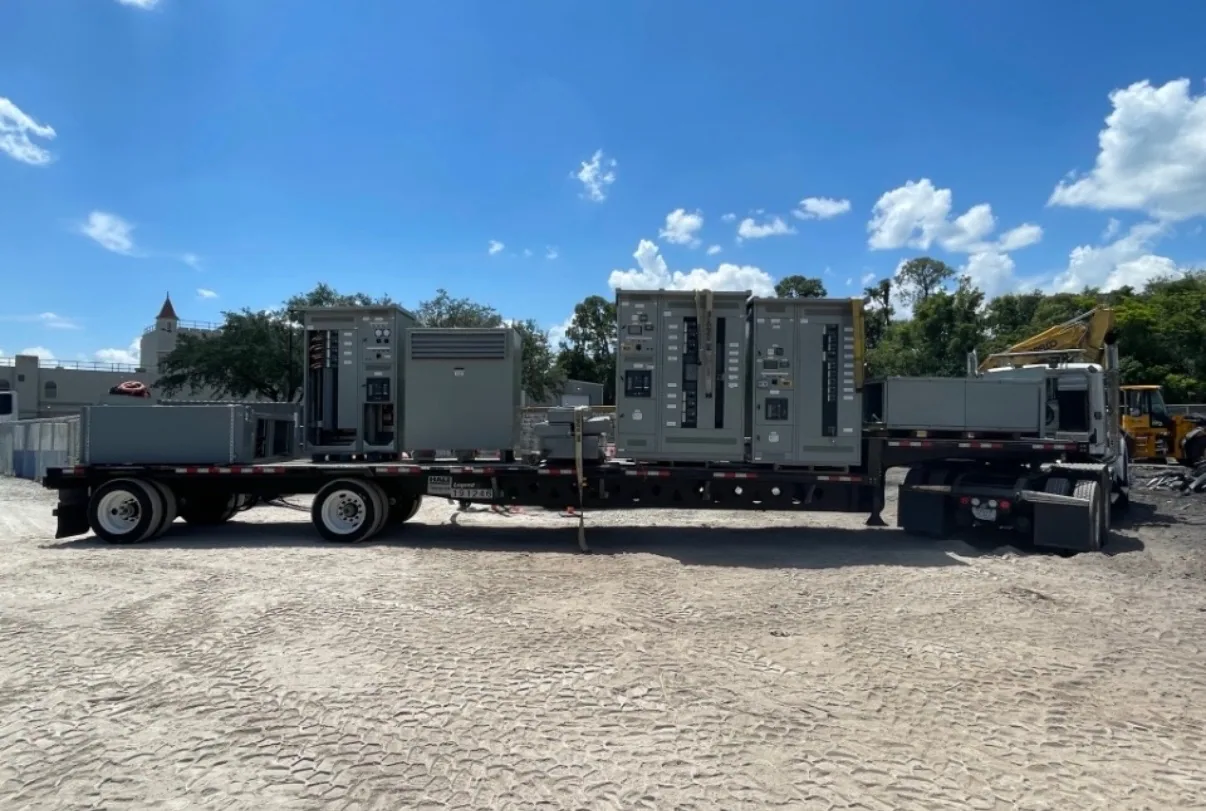
Availability and lead time depend on the order and must be confirmed for the specified design. Nationwide shipping is available, while delivery timing and project coordination should be established for the actual order rather than presumed. A well-defined voltage specification, paired with verified system data and coordinated equipment requirements, gives the project team a sound basis for reviewing and procuring the right new switchboard.