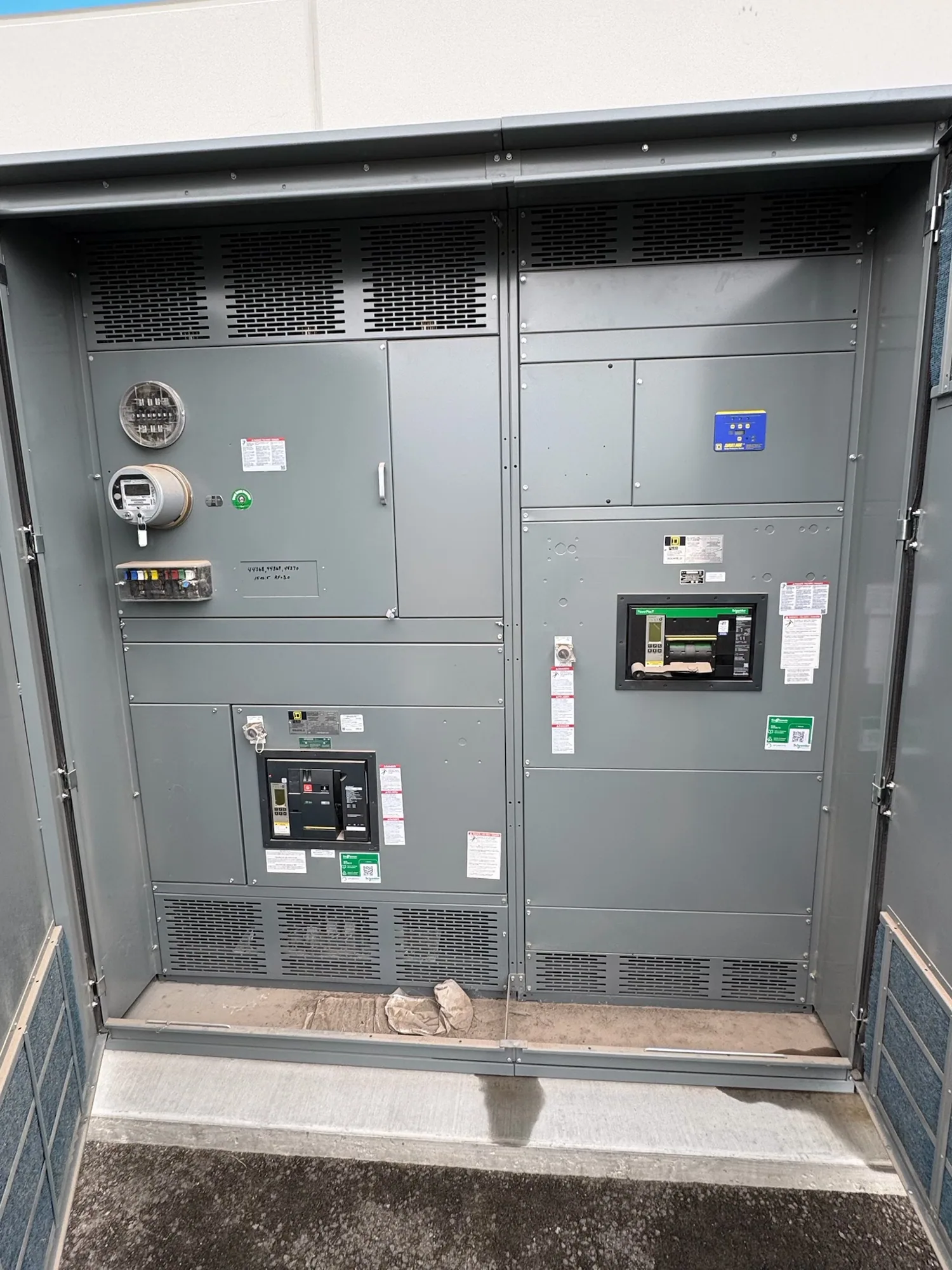
Start with the project, not a citywide assumption
New switchgear for a Charleston-area project should be selected around the electrical design and the actual installation site. Coastal location can prompt questions about salt exposure, humidity, flooding, and delivery routes, but these conditions are not identical across the region. A sheltered interior electrical room and an exposed outdoor installation may need very different equipment and enclosures, even when both serve the same facility type.
Begin by defining the equipment’s role: what system it serves, where it will be installed, and how it connects to upstream and downstream equipment. Identify whether the project calls for low-voltage switchboards or a particular class of medium-voltage switchgear. Have the responsible electrical engineer confirm voltage class, ratings, fault-duty requirements, and system arrangement from the project documents rather than relying on a broad regional description.
Describe coastal and environmental exposure precisely
Salt air should be treated as a site-specific design question, not an automatic product selection. Tell the manufacturer whether equipment will be indoors or outdoors, how close it is to the coast or salt-bearing operations, and whether it is exposed to wind-driven moisture, washdown, or corrosive materials. Ask which enclosure materials, finishes, hardware, and protective measures are available for the documented conditions, and have the engineer confirm that the proposed configuration is suitable.
Document temperature, humidity, altitude, water exposure, and ventilation conditions where they apply. For outdoor equipment, provide the expected mounting location and any exposure to direct sun, rain, standing water, or airborne contaminants. Flood elevation and drainage deserve particular attention if the site lies in an area with a defined flood-risk requirement. The project team should establish the required elevation and installation details; do not assume a standard enclosure alone resolves flood exposure.
Balance enclosure protection with operation and maintenance
Greater environmental protection can affect access, ventilation, footprint, and maintenance procedures. Review the proposed enclosure and equipment arrangement against available room or pad dimensions, working clearances, cable entry paths, conduit locations, and lifting or removal needs. Confirm who will need routine access and how qualified personnel can safely inspect and maintain the assembly under applicable procedures. Any access, clearance, or safety requirement should be established by the responsible project professionals.
For equipment exposed to moisture or corrosive conditions, ask how the specified design addresses the stated environment, and what limitations or maintenance considerations apply. Avoid choosing an enclosure by a label alone: the complete assembly, openings, accessories, installation orientation, and site conditions all matter. Request confirmation of project-specific ratings, listing applicability, testing, and standards against the actual design and supplied equipment.
Consider outdoor equipment for logistics facilities
Imagine a warehouse or logistics facility evaluating outdoor switchgear to preserve indoor floor area or serve an electrical distribution point near a loading or service area. The concept may be practical, but it introduces questions about weather exposure, vehicle clearances, security, cable routing, drainage, and the path equipment must follow from delivery vehicle to final position. Outdoor switchgear is not automatically the best choice simply because a site has limited indoor space.
Compare an outdoor arrangement with an indoor installation using the project’s operational priorities and site constraints. Identify whether the equipment must remain accessible during facility activity, whether nearby truck movements or loading operations create exposure risks, and how maintenance access will be managed. Provide a site plan or dimensioned layout when available. The engineer and equipment manufacturer can then discuss feasible configurations without assuming that a hypothetical warehouse represents a particular Charleston installation.
Plan delivery around site access
Port-oriented or industrial locations may have access constraints, but the buyer should report the actual delivery conditions rather than presume a standard route. Share the delivery address, receiving hours, gate or security requirements, unloading equipment, turning and staging limits, and any restrictions on vehicle size or arrival timing. Confirm who is responsible for unloading and moving the equipment, and whether the planned route accommodates the specified assembly dimensions and handling requirements.
Coordinate delivery planning with construction sequencing, site readiness, and electrical-room or pad completion. Ask for the expected shipping configuration, approximate shipping dimensions and weight when available, and any handling instructions relevant to the order. Availability and lead time depend on the final specification and order details, so confirm current timing and delivery arrangements with the manufacturer before building them into a project schedule.
Prepare a complete request for quotation
A useful RFQ includes one-line diagrams, equipment schedules, applicable specifications, voltage class, system ratings, configuration, and required accessories. Add indoor or outdoor location, site environmental conditions, enclosure requirements, cable entry preferences, available space, and relevant clearances. Include drawings that show the equipment’s position relative to walls, doors, roads, loading areas, drainage, and delivery access. Identify any project-required listing or testing so its applicability can be reviewed for the proposed assembly.
State the project location, requested delivery window, purchasing contact, engineer of record, and who will review submittals. Call out unresolved questions instead of filling gaps with assumptions. South Carolina Switchgear Builders manufactures new equipment to specification, is US-built with all-American components, and ships nationwide; confirm the specific design, availability, and lead time for the order. A clear RFQ gives the manufacturer and project team a sound basis to evaluate fit, coordination, and next steps.