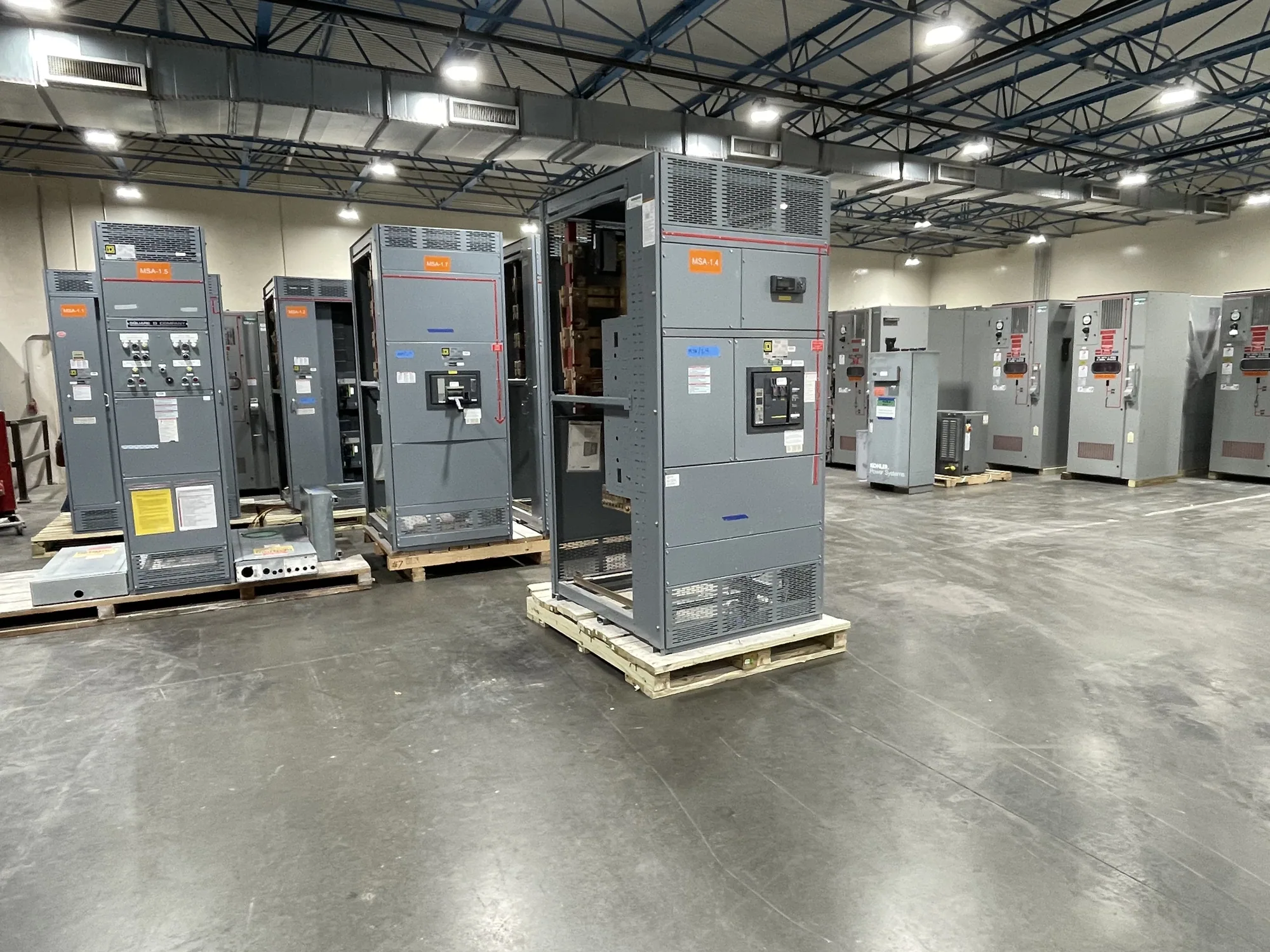
What continuous current rating means for a food facility
Continuous current rating describes the current an electrical assembly or component is designed to carry continuously under specified conditions. It is not simply the sum of motor nameplate currents, nor does one rating automatically describe every part of a distribution system. Bus, breakers, switches and connected equipment each have defined ratings and application limits that the responsible engineer must evaluate together.
Food and beverage facilities can combine process motors, refrigeration, pumps, conveyors, packaging lines, lighting and building services. Load profiles vary: refrigeration may operate for extended periods, while production equipment can start, stop or change duty with the process. Continuous-current planning therefore begins with the actual and anticipated operating profile, not an assumed generic food-plant load.
Build the load picture around real operating conditions
Provide the equipment supplier and project engineer with a current one-line diagram, load schedule and available nameplate or manufacturer data. Identify normal and peak operating scenarios, planned production changes, motor starting methods, variable-frequency drives, simultaneous operation assumptions and any loads expected to run continuously. Clarify whether figures are measured, calculated or preliminary, and document the source and date for each important value.
Motor nameplate current alone may not represent the facility’s demand at a particular distribution point. The engineer should account for how loads are grouped, their operating schedules and applicable design requirements. Ask the project team to explain its assumptions for diversity, growth and future equipment so that the selected ratings follow a documented basis rather than an unexplained allowance.
Coordinate bus and device ratings
Review the continuous-current rating of the assembly bus alongside the ratings and intended application of its protective and switching devices. A bus rating does not, by itself, establish that every breaker or feeder is suitable for every connected load. Confirm the project-specific ratings, configuration and applicable conditions for each component with the responsible engineer and equipment manufacturer.
Environmental exposure can affect equipment selection and allowable operating conditions. A food facility may have washdown areas, temperature variation, airborne moisture, cleaning chemicals or nearby heat-producing process equipment. Describe where the assembly will be installed and what environmental conditions it may encounter. The project team should determine the appropriate enclosure, location and any rating adjustments from verified equipment information rather than assuming that a general-purpose selection suits a sanitation area.
Account for motor control and sanitation interfaces
Motor-control arrangements can influence the equipment layout and the way loads are represented in the project documents. Identify whether motor control is integral to the distribution assembly or provided separately, and note drives, starters and other major equipment that affect the electrical design. Confirm interfaces, feeder quantities and space needs with the engineer; do not infer that a switchgear or switchboard configuration includes functions that were not specified.
Coordinate electrical equipment locations with sanitation practices, process piping, access routes and maintenance clearances. A washdown procedure in one room does not establish that switchgear belongs in that room or can be exposed to the same cleaning conditions. The owner, facility designer and electrical engineer should resolve placement and environmental protection before equipment is specified, including any separation between production zones and electrical spaces.
Consider continuity without oversizing by assumption
Production interruptions can have operational consequences, but choosing a larger continuous-current rating alone does not guarantee continuity. Discuss which loads are critical, whether process lines can restart together, and how refrigeration or essential services behave during a planned or unplanned interruption. The engineer can use that operating context to assess distribution arrangements and load assumptions; equipment ratings and system resilience are related questions, not substitutes for one another.
Medium-voltage switchgear may be relevant where the facility’s distribution architecture calls for medium-voltage equipment, but it is not required for every food and beverage project. Establish the system voltage class and division of responsibility from the project design. Where medium-voltage equipment is considered, provide the applicable system information and confirm the complete specification with the engineer and manufacturer; do not treat it as interchangeable with a low-voltage switchboard.
Prepare a useful specification and supplier request
Before requesting a manufacturer’s proposal, assemble the one-line diagram, load schedule, system voltage, required equipment type, preliminary ratings, installation environment and project milestones. Identify what is confirmed and what remains under engineering review. Include the expected operating conditions, future load plans, required interfaces and any project-specific standards or listing expectations for verification against the actual design.
Ask the supplier to identify assumptions, exclusions and configuration-dependent items in its response. Confirm which ratings apply to the bus and individual devices, what environmental conditions the design assumes, and what technical information is still needed to complete the proposal. South Carolina Switchgear Builders manufactures new equipment to specification and ships nationwide; availability and lead times depend on the order and must be confirmed.
Bring stakeholders together before release
A focused review among the facility owner, electrical engineer, process team and equipment supplier helps catch mismatches before equipment details are finalized. Verify load data, operating scenarios, installation location, sanitation interfaces, future capacity assumptions and the intended equipment scope. Have the responsible professionals resolve applicable standards, ratings and testing requirements for the specific assembly rather than relying on broad industry assumptions.
Use the resulting records as the basis for purchase and coordination, and update them when process loads or project conditions change. Clear, documented operating assumptions help the team select appropriate continuous-current ratings without treating a single number as a complete design. Final equipment selection, availability and delivery timing should be confirmed against the project’s approved specification.