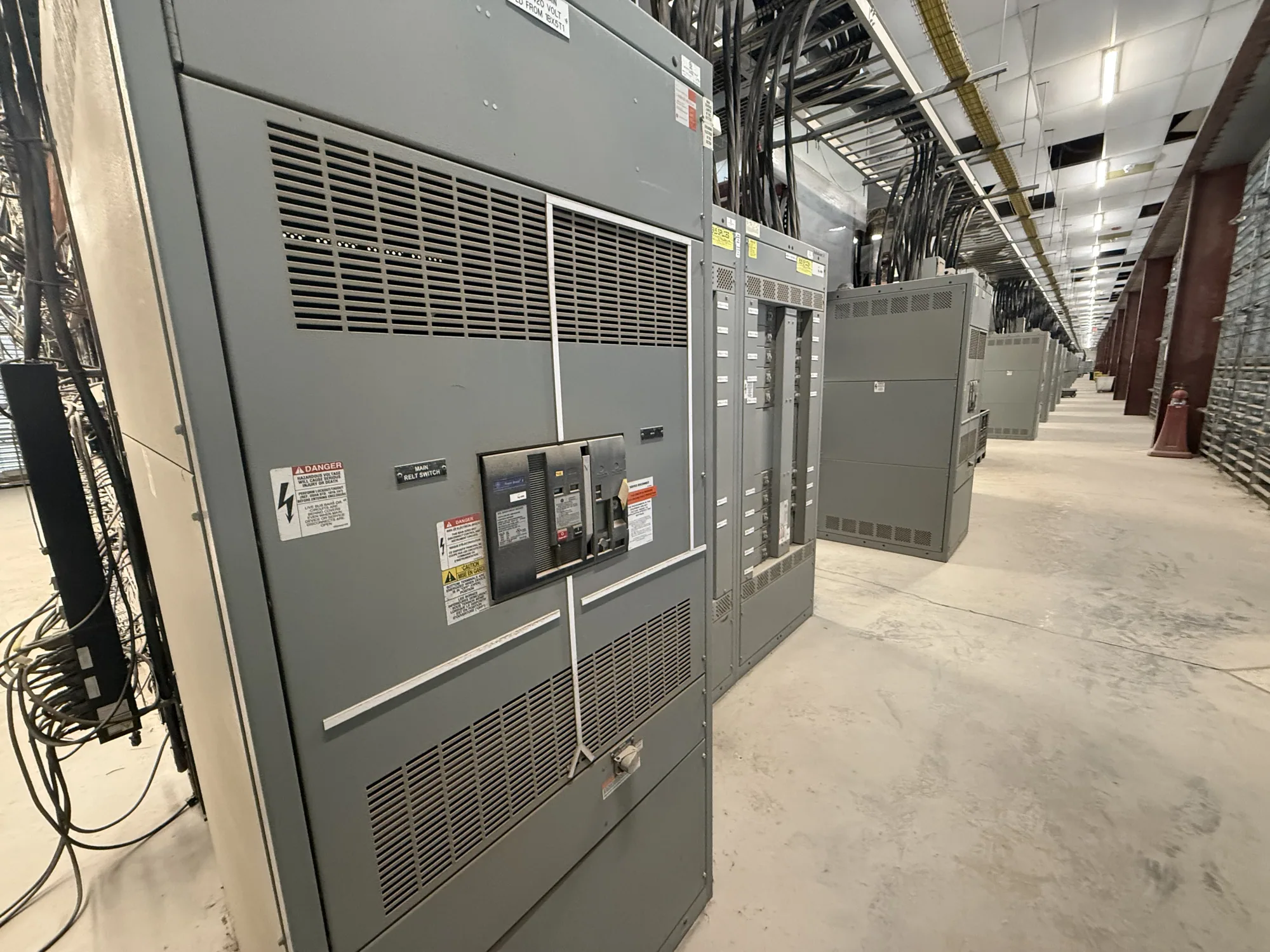
What a 3000 A rating tells you
For a specified assembly, 3000 A identifies a nominal continuous-current rating when the manufacturer’s documentation assigns that rating to the equipment. It is not, by itself, a promise that any collection of loads can operate at 3000 A under every installation condition. The assembly design, bus, main device, connections, enclosure, and stated operating conditions all matter.
Start by confirming which part of the equipment carries the 3000 A designation. A switchgear lineup may have a rated main bus, a particular main device, and multiple feeder devices, each with its own ratings and limitations. Those values are related but not interchangeable. Review the complete proposed assembly documentation rather than relying on a shorthand description or a single component label.
Translate demand into an equipment specification
Consider a hypothetical project whose preliminary load calculation suggests demand near the 3000 A range. That estimate does not settle equipment selection. The responsible project engineer should validate connected loads, demand assumptions, operating schedules, growth expectations, and applicable code requirements. Load diversity may affect calculated demand, but it should be supported by the project’s actual operating profile and engineering analysis.
Large loads deserve particular attention. Motors, HVAC systems, process equipment, and other substantial loads may have operating patterns or starting characteristics that affect device selection and coordination. Provide the load schedule and relevant equipment data so the design team can assess the main and feeder arrangement. Do not assume the bus rating alone determines whether the proposed devices and loads are suitable.
Coordinate bus, main, and feeder ratings
Specify the main bus rating and identify the intended main-device type and rating separately. Then provide a feeder list showing each outgoing circuit’s intended protective device, load, and connection requirements. The manufacturer and project engineer can use this information to review the proposed arrangement against the applicable equipment specification. Ratings and availability depend on the actual design and must be confirmed for the order.
Check how the main device and feeder devices fit the protection and coordination approach for the installation. A 3000 A bus designation does not establish a short-circuit rating, interrupting capability, or protective-device coordination result. Those decisions depend on system conditions and the selected components. Provide the project short-circuit study or the confirmed fault-current information, and have the responsible engineer verify the equipment ratings and protection design.
Account for environment and installation conditions
State the installation environment and any project conditions that could affect the equipment design, arrangement, or documentation. Identify whether the gear will be indoors or outdoors, the available space, access constraints, and relevant ambient or site conditions. The project specification should make any required operating conditions explicit; the manufacturer must confirm what the proposed assembly supports rather than relying on an assumed standard configuration.
Voltage class also needs to be explicit. A 3000 A figure does not identify system voltage or establish that a particular product type is appropriate. Specify the system voltage and grounding arrangement, then confirm the applicable equipment category and design with the project engineer. Listing, testing, ratings, and standards applicability must be checked against the exact assembly and its supplied documentation.
Plan shipping splits as part of the lineup
A high-current lineup may need to be divided for transport or to suit access and installation constraints. Treat each proposed shipping split as an engineering and coordination input, not simply a packaging decision. Share room dimensions, delivery access, handling limits, installation sequence, and the intended lineup arrangement early enough for review. Confirm how the proposed sections and their interfaces are represented in the equipment documentation.
Splitting a lineup can affect how sections are arranged and connected at the site. Confirm responsibilities for receiving, placement, assembly, connections, and any field work with the project team and equipment supplier. The approved design and instructions govern the actual installation. Installation, inspection, testing, and maintenance should be performed by qualified personnel following applicable safety procedures; no work should be planned on energized equipment.
Information to provide for a useful review
Prepare a package that includes the load schedule, system voltage, preliminary demand calculation, feeder list, short-circuit study or confirmed fault-current data, and environmental conditions. Add the required bus and main-device intent, protection and coordination criteria, physical layout, access constraints, and shipping or handling limits. Flag assumptions and unresolved design questions so reviewers can distinguish confirmed requirements from preliminary planning values.
Ask for manufacturer documentation that identifies the proposed assembly and its applicable ratings, configuration, and any relevant listing or testing information. For eligible low-voltage switchboards, UL 891 applicability and assembly listing must be verified for the specific design; it should not be assumed for all equipment. A qualified project engineer should confirm the final selection and code review. South Carolina Switchgear Builders manufactures new equipment to specification; availability and delivery timing depend on the order and require confirmation.