Start with the project’s voltage context
A 347/600 V designation should be treated as a description of the project’s nominal system voltage or voltage pair—not as a complete equipment specification. It does not, by itself, establish the switchgear’s maximum voltage, phase arrangement, conductor count, grounding method, or suitability for a particular installation. Those details must come from the electrical system design and the equipment documentation.
Before selecting new switchgear, identify where the equipment sits in the distribution system and what it must connect to. A facility’s service, transformer secondary, distribution bus, and downstream loads may involve different voltage relationships. Confirm which values apply at the proposed switchgear terminals, and avoid carrying a voltage label forward from an early drawing without checking it against the current design.
Verify the system arrangement and interfaces
Ask the responsible project engineer or electrical designer to document the source configuration, including phase, number of conductors, neutral requirements, and grounding arrangement. Do not infer these from “347/600 V.” The equipment must be specified for the actual system and connection scheme, including any required neutral bus, bonding provisions, or incoming and outgoing arrangements. Confirm how the switchgear interfaces with upstream protection and downstream distribution.
Source data matters as much as the nominal voltage. Identify whether supply comes from a utility, transformer, generator, or another system, and provide the relevant one-line diagram and transformer information when available. If the project has alternate sources or transfer equipment, show their relationships and operating modes. The design team should reconcile these interfaces so the proposed assembly is not based on an incomplete or inconsistent system description.
Separate nominal voltage from equipment ratings
Do not assume that equipment described for a nominal 600 V system has the required maximum-voltage rating or insulation characteristics for the project. Request the manufacturer’s documentation for the specific proposed design and have the engineer verify that its applicable ratings suit the system. This is a project-specific review; the nominal voltage pair alone cannot establish equipment suitability.
Voltage compatibility is only one part of the selection. The available fault current at the switchgear location, required short-circuit rating, protective-device characteristics, and coordination approach must also be evaluated. Provide the study or source information used by the electrical engineer, and confirm that the proposed equipment documentation addresses the specified duty. Do not treat a voltage designation as evidence of a particular short-circuit capability.
Understand availability and design boundaries
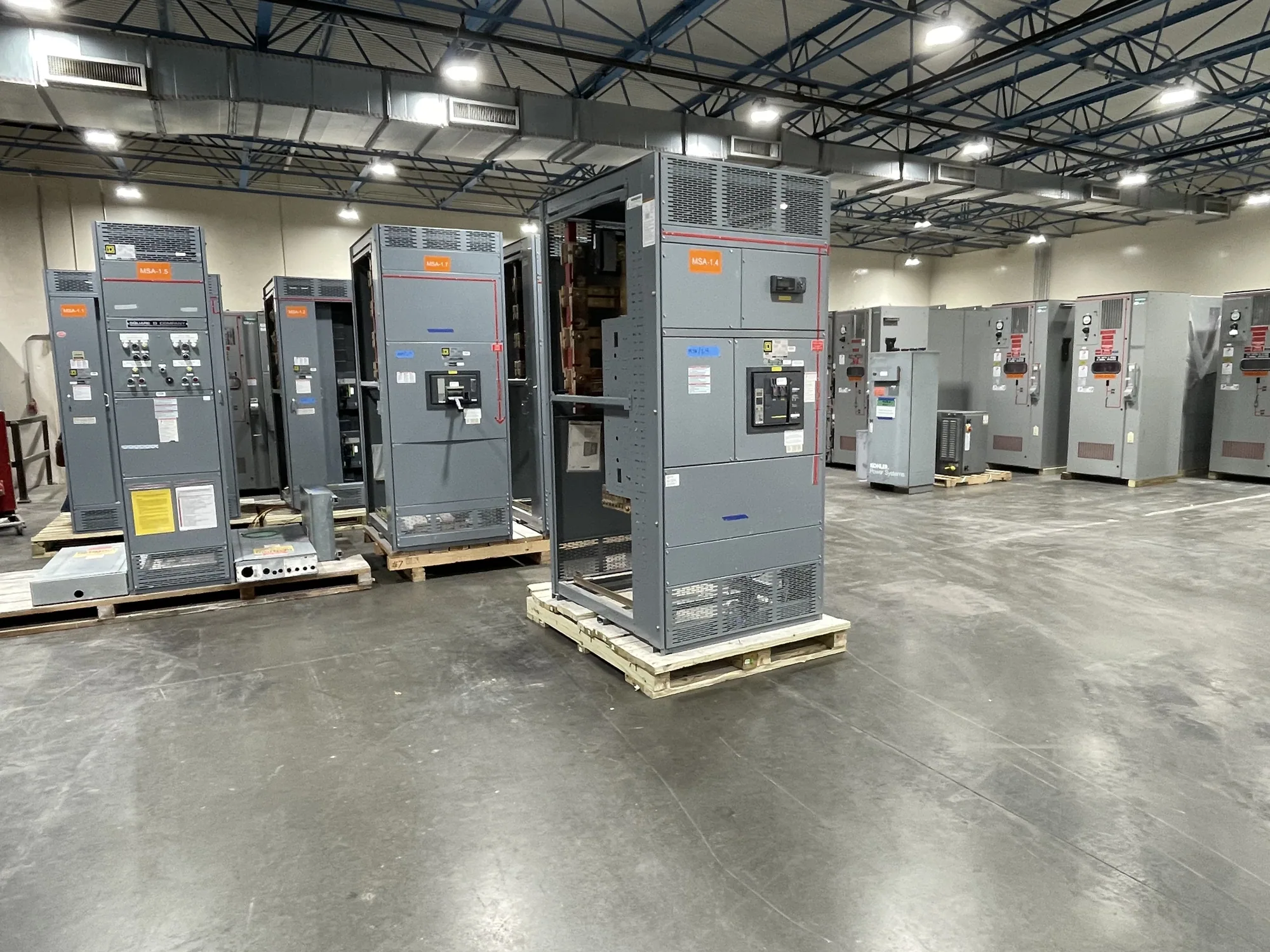
A 347/600 V label should not be taken to mean that a particular configuration is a standard or universally available offering. Configuration, ratings, applicable standards, listing status, testing, and delivery timing depend on the actual design and order. South Carolina Switchgear Builders manufactures new equipment custom to specification, with US-built equipment and all-American components; the requested voltage arrangement and exact configuration must still be reviewed for feasibility and confirmed.
There may be tradeoffs in how the project is arranged, including source selection, transformer use, distribution architecture, and the compatibility of connected equipment. Those are engineering decisions, not assumptions to resolve from a product label. Ask the project engineer to identify any constraints and to confirm the intended equipment class and applicable requirements. Do not substitute another voltage class or system arrangement without formal design review.
Prepare a useful equipment specification
For a quotation or design review, provide the current one-line diagram, nominal system voltage, phase and conductor configuration, grounding details, source and transformer data, and the equipment’s location in the distribution system. Include available fault-current information and the required short-circuit duty, along with the applicable equipment standard identified by the project team. State whether the neutral is required and describe incoming and outgoing connections.
Also identify functional requirements that affect the assembly: main and feeder arrangements, protective devices, metering, controls, enclosure conditions, and any physical or operational constraints. Provide drawings or schedules that clarify these requirements rather than relying on a brief voltage label. For a structured request, prepare the information typically needed for a switchgear RFQ and flag any unanswered engineering items for resolution before final selection.
Coordinate review before ordering
Before an order is finalized, have the responsible engineer compare the specified system with the manufacturer’s proposed equipment documentation. Confirm the voltage and maximum-voltage ratings, system configuration, fault-duty requirements, applicable standards, and connection details against the actual design. Any required listing or testing must be verified for the specific assembly; do not assume it applies solely because the nominal voltage is stated.
Availability and actual lead time depend on the order and must be confirmed, along with configuration and delivery expectations. Nationwide shipping is available, with dates confirmed for the specific project. Installation, inspection, and testing should be planned by qualified personnel using applicable safety procedures. Clear source data and a documented engineering review give the project team a sound basis to determine whether the proposed new switchgear fits the 347/600 V system.