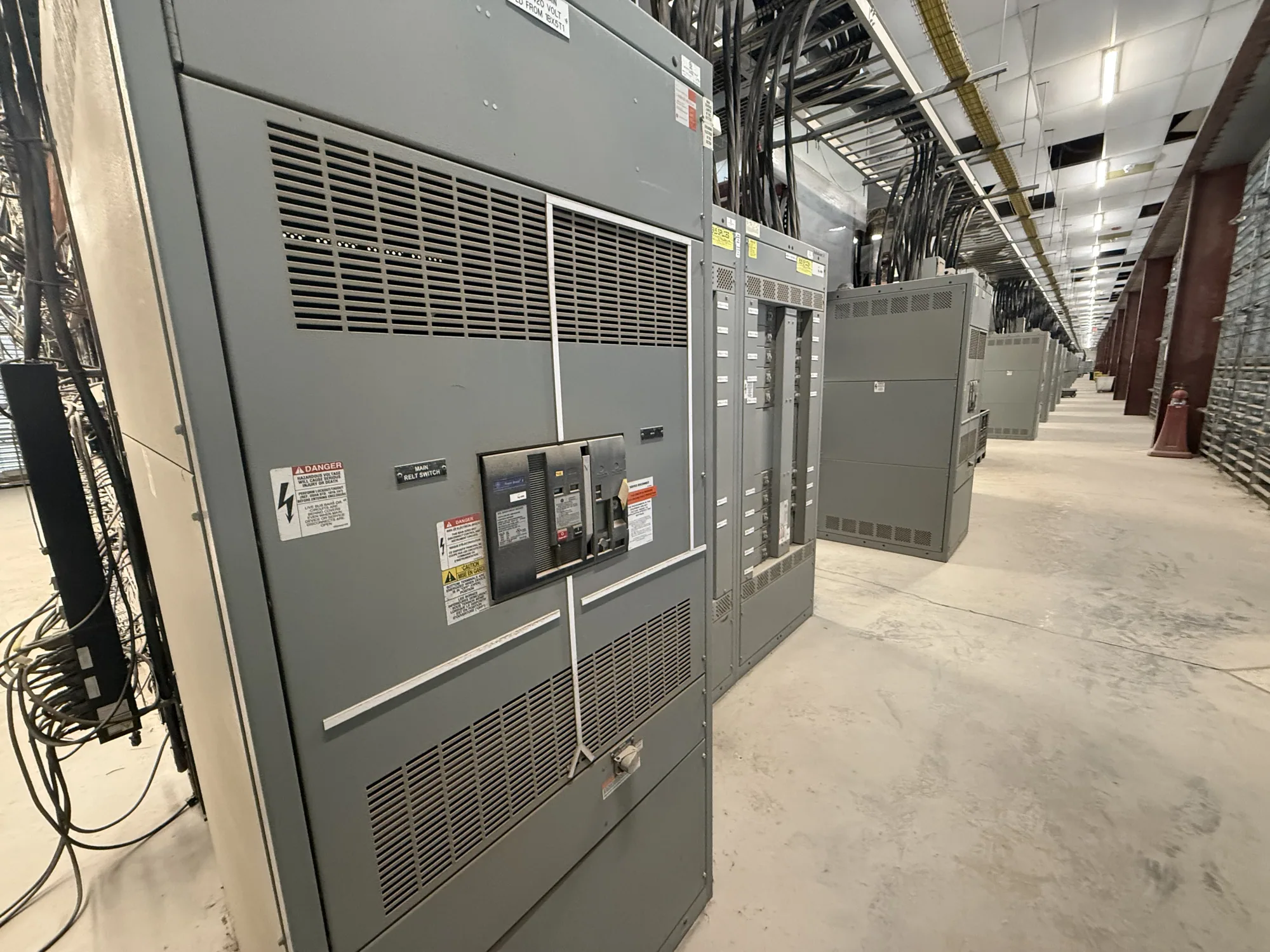
Coordinate generation with the property’s operating needs
For a hotel or resort, a generator-paralleling system may need to coordinate several sources with distribution serving guest areas, kitchens, elevators, water systems, and mechanical plant. The exact loads depend on the property and its operating plan. Paralleling switchgear provides a point for specified source-control, synchronization, protection, and distribution functions; it does not by itself determine which services the owner considers essential.
Start with the intended operating scenarios. A resort may see different occupancy, cooling, heating, or event loads by season, while an outage can occur during a full guest schedule or a quieter period. Ask the project engineer to identify which loads must operate together, which may be delayed or shed, and how the system should respond when a generator is unavailable. Avoid treating a single peak estimate as a complete operating sequence.
Define source sequence, synchronization, and protection
Document how normal and emergency sources are expected to interact. The design team should specify the sequence for generator starting, readiness checks, synchronization, breaker operation, load acceptance, and return to the preferred source, as applicable to the project. Confirm whether parallel operation is intended only among generators or also with another source, and establish the permitted operating modes. These decisions shape the required controls and switchgear interfaces.
Protection settings and coordination require the actual generator, transformer, distribution, and fault-current information. Provide available studies or the data needed for the responsible engineer to complete them, and identify the protective devices and interfaces within the supply scope. Discuss how the system should respond to a failed start, an abnormal source condition, or loss of a control signal. Equipment configuration, protection functions, and applicable ratings must be confirmed for the specific design.
Set load priorities for guests and operations
Prepare a load schedule that distinguishes life-safety and other required loads, operational priorities, and loads that can be shed, following the project’s codes and engineering direction. Guest-room services, kitchen equipment, refrigeration, pumps, elevators, and comfort systems may have different restart or continuity needs. Do not assume every load should transfer at once: simultaneous demand can affect generator capacity, starting behavior, and the sequence the controls must manage.
Seasonal assumptions deserve explicit review. Cooling demand during high occupancy may differ substantially from shoulder-season operation; future additions, temporary event loads, and equipment cycling can also change the expected profile. Provide operating schedules, motor-starting information, and any known demand-management strategy. The engineer can use these inputs to establish load blocks, priorities, and response logic, while the manufacturer can evaluate the switchgear scope against the approved sequence and equipment specification.
Resolve continuous-current ratings and conditions
Continuous-current selection is not a label chosen independently of the installation. Compare expected normal load current with the specified bus and device current ratings, and review how current is distributed among sources and outgoing sections during each intended mode. Provide the one-line diagram, load calculations, generator data, and any credible future expansion. The responsible engineer should confirm the governing operating case and account for applicable design and installation conditions.
Temperature, enclosure arrangement, ventilation, altitude, and other site conditions may affect equipment selection or allowable operation. For coastal properties, describe the actual location and exposure rather than relying on a general “coastal” designation; the project may need to address salt air, moisture, wind-driven rain, or a protected indoor setting differently. Confirm environmental requirements, enclosure details, and any derating considerations against the actual design. No rating or environmental suitability should be presumed without that review.
Coordinate controls and facility interfaces
List the signals and communication interfaces required between paralleling equipment, generators, transfer equipment, building controls, and operator annunciation. Clarify which party provides each control panel, interface, cable, programming function, and point-to-point connection. Identify the intended operator actions and alarms, including any remote monitoring requirements, but have the project team define what information is essential. Clear interface boundaries help prevent gaps between equipment supply, generator packages, and building systems.
Outage timing is another practical constraint. Ask the facility team when existing distribution can be interrupted, what temporary operating arrangements are acceptable, and whether phased replacement or tie-in work is being considered. The manufacturer’s equipment scope should be coordinated with the engineer’s drawings and installation plan; procurement alone does not establish a safe outage sequence. Installation, commissioning, testing, and maintenance belong to qualified personnel working under applicable safety procedures.
Prepare a focused purchasing package
For a useful quotation, assemble the one-line diagram, voltage class, generator count and data, load schedule, desired operating sequence, protection requirements, controls interfaces, current ratings, environmental conditions, and physical constraints. Include specified standards or listing requirements for the actual assembly, plus project schedule needs and shipping destination. If any item is unresolved, identify it as an open question rather than allowing an assumption to become a purchase requirement.
South Carolina Switchgear Builders manufactures new switchgear and switchboards, including equipment custom to specification, and ships nationwide. Availability and actual lead times depend on the order and must be confirmed. Review the proposed scope against the project documents before release, including exclusions and responsibility for engineering, generator controls, field installation, and commissioning. A well-defined package gives the project team a clearer basis for comparing configurations and coordinating delivery with the property’s operating plan.