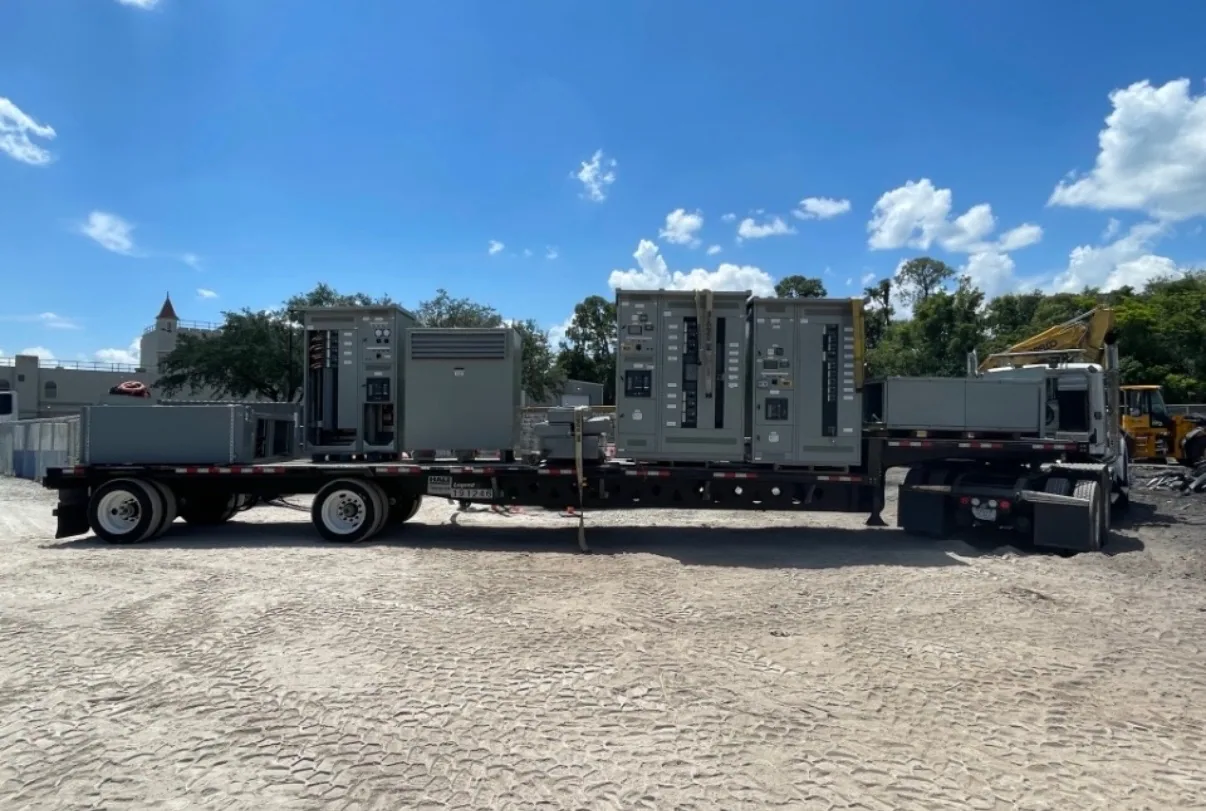
Where indoor switchgear fits in aerospace manufacturing
In an aerospace manufacturing facility, indoor switchgear can distribute and control electrical power for production areas, test equipment, building systems, and process support loads. Locating the assembly inside a dedicated electrical room can help organize distribution equipment, but the room and its interfaces must be planned around the actual installation. Equipment selection should follow the project’s one-line diagram, operating needs, and electrical design—not assumptions based on industry alone.
Precision machining, assembly, inspection, and testing may place different demands on electrical distribution. Some loads operate steadily; others may be intermittent or added in later phases. The responsible engineer should identify which equipment is supplied by each section, how loads are expected to operate together, and which operations require continuity during planned changes. These details help determine the switchgear arrangement and inform protection and coordination studies.
Room fit, access, and heat management
Before requesting a quote, check the proposed lineup against the equipment-room plan. Confirm available floor space, ceiling height, doorway and corridor dimensions, route from receiving to final position, and any turns or obstructions along the path. The equipment must be capable of reaching its intended location and being assembled or positioned as specified. Review required working space and access with the project engineer and applicable project requirements.
Indoor placement does not remove environmental considerations. Room temperature, ventilation, equipment heat rejection, dust control, and nearby process conditions can affect the design and operating environment. Provide the manufacturer with known room conditions and identify any expected changes over the equipment’s life. The responsible design team should confirm that the specified arrangement and room provisions suit the selected equipment; do not treat an assumed temperature or clearance as universally acceptable.
Connect production needs to the electrical design
For quality-sensitive operations, understand how distribution changes could affect production and test schedules. Identify critical loads, planned shutdown windows, and whether the project involves a new building, a room expansion, or replacement within an operating facility. If work is phased, describe the intended sequence and temporary or future interfaces for the engineer to evaluate. Manufacturer equipment supply should be distinguished from facility engineering, installation, and field work.
Protection coordination depends on the system design and the protective devices serving connected equipment. Share available utility or upstream information, transformer data, downstream equipment details, fault-current study assumptions, and the project’s coordination requirements when available. The responsible engineer determines protection settings and verifies coordination for the actual system. A switchgear quotation is not a substitute for that engineering review, and no assumed arrangement should be treated as a confirmed study result.
Specify continuous current ratings carefully
Start with the calculated load and the expected operating profile, then confirm the required continuous current rating for each relevant bus and device. These are related but distinct specification items; selecting one nominal value does not establish that every component is suitable. Ask the electrical engineer to define the required ratings from the design basis and identify any future capacity, redundancy, or operating conditions that should influence the equipment scope.
Temperature and installation conditions also matter. The buyer should disclose the anticipated ambient conditions, enclosure and room details, and any project-specific requirements that could affect equipment application. Ask which assumptions the proposed ratings rely on and whether any specified conditions require design review. Avoid estimating a rating from production descriptions alone. Actual ratings and any applicable derating considerations must be confirmed against the project specification and the supplied assembly.
Prepare an aerospace-specific RFQ
A useful request for quotation includes the one-line diagram, system voltage, available fault-current information, load and continuous-current requirements, and the intended indoor arrangement. Include the equipment-room drawings, access route, required working clearances, environmental conditions, protection-device requirements, and applicable project specifications. If drawings or studies are still in progress, clearly mark their status and identify decisions that remain open rather than presenting preliminary values as final.
Also describe production phasing, target project milestones, required submittals, and the requested delivery location. Note any interface with existing distribution equipment and identify who will verify those connections. Confirm which scope items are manufacturer-supplied and which are by others, including engineering studies, installation, commissioning, and field services. Clear responsibility boundaries help the project team compare quotations accurately and plan procurement without assuming that every site activity is included.
Coordinate the purchase through delivery
South Carolina Switchgear Builders manufactures new switchgear and switchboards to specification, with US-built equipment, all-American components, and nationwide shipping. Configuration, availability, ratings, listing applicability, testing, and delivery dates must be confirmed for the actual order; lead times depend on the project and should be verified during procurement. If a low-voltage switchboard is under consideration, ask whether UL 891 applies to that specific design and assembly. That standard does not apply to medium-voltage switchgear.
Before release, reconcile the approved drawings and specification with the quoted scope, ratings, interfaces, and project schedule. Assign qualified project personnel to coordinate installation, testing, and maintenance under applicable safety procedures; these are not energized-work instructions. A well-defined indoor switchgear package gives the aerospace facility team a clearer basis for room preparation, procurement, and phased execution while leaving engineering and site responsibilities with the appropriate project professionals.