Plan around the campus distribution role
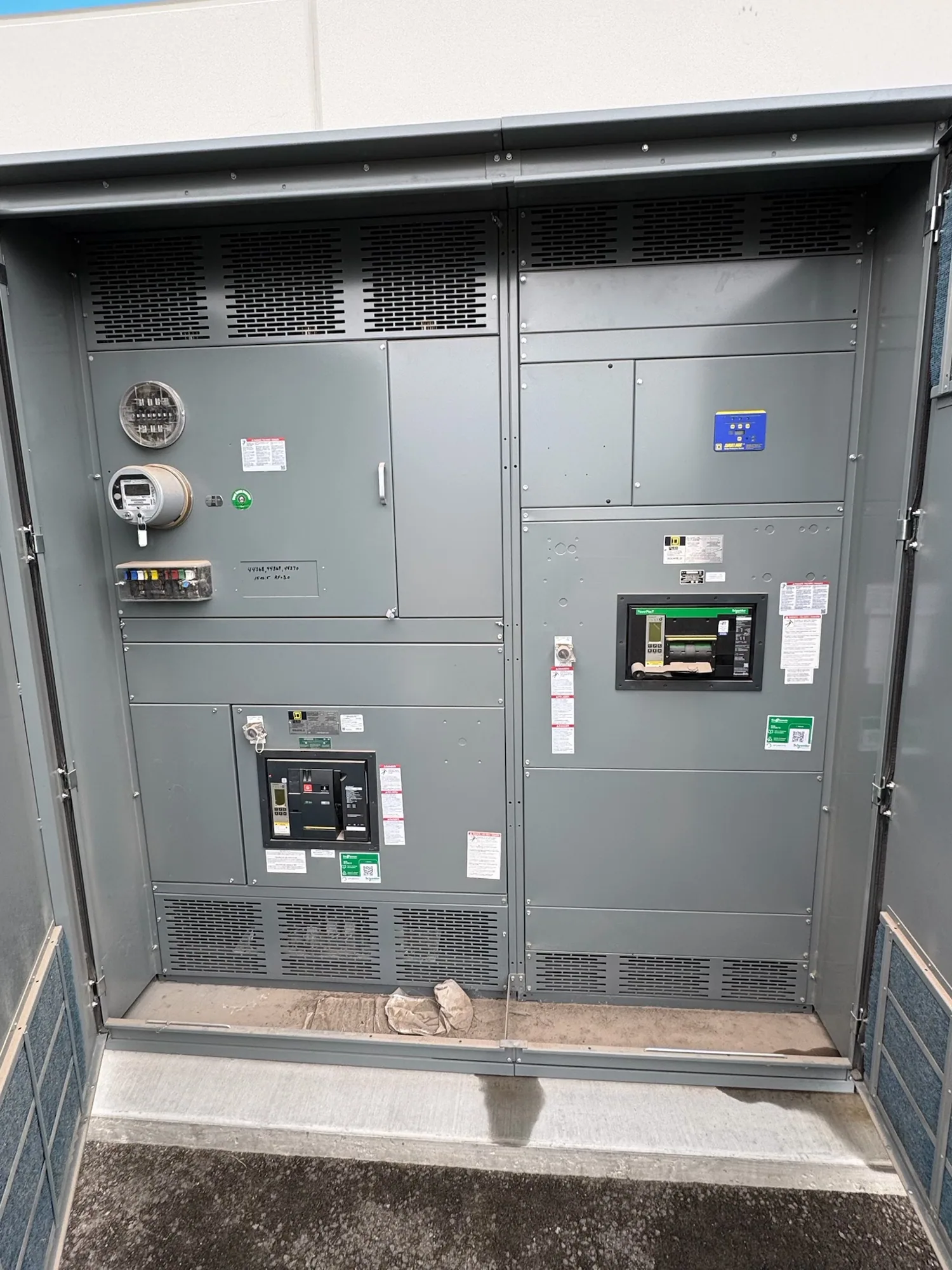
Higher education campuses often combine academic buildings, laboratories, residence halls, and central plants, each with distinct electrical demands and operating schedules. Indoor switchgear can serve as a distribution point within a building or equipment room, connecting incoming supply to outgoing feeders. The right configuration depends on the project’s electrical design, the equipment served, and how the campus intends to operate and expand the system.
For a new building, a replacement project, or a phased expansion, begin by defining the equipment’s role in the campus network. Identify the source, the downstream loads, the buildings or systems served, and any ties to existing distribution. A manufacturer can build equipment to a confirmed specification, but the campus electrical engineer or other responsible design professional must establish system requirements and resolve coordination with existing infrastructure.
Make the equipment room part of the specification
Indoor equipment must fit the actual room and the route used to bring it there. Provide room dimensions, door and corridor widths, ceiling height, floor conditions, and any turns or obstructions along the delivery path. Include access limits such as loading-dock hours, elevator dimensions, security protocols, and restrictions on moving equipment through occupied academic spaces. These details can affect the practical arrangement and delivery plan.
Working clearances, access for operation, and space for future maintenance should be confirmed by the project team against applicable requirements and the selected design. Consider how doors, removable panels, cable entries, and connections will be reached after installation. Equipment losses produce heat, so room ventilation and heat rejection also matter; the engineer should evaluate expected conditions and confirm any equipment limitations with the manufacturer rather than assuming a room is suitable.
Coordinate feeders across buildings and phases
Campus projects can involve feeders between a central plant, a main distribution point, and several buildings. Give the manufacturer the one-line diagram and identify which feeders are included in the new assembly, their destinations, conductor entry direction, and termination requirements. Confirm whether the scope includes incoming connections, outgoing feeder devices, metering provisions, control wiring, or interfaces with equipment supplied by others. Mark anything that remains outside the manufacturer’s supply.
Phased construction adds coordination questions. The project team should define which sections are installed now, what future connections are anticipated, and whether expansion provisions are required in the initial design. For work involving existing campus systems, identify planned outage windows, operational constraints, and the parties responsible for switching, removal, installation, testing, and return to service. The manufacturer’s equipment supply does not itself include engineering approval, field installation, or campus outage execution.
Resolve continuous current ratings from project data
Continuous current selection should follow the system design, not a rule of thumb based only on building type. The responsible engineer should establish expected load, load characteristics, feeder duties, and the required current ratings for bus and switching devices. Provide the specified operating conditions and any anticipated load growth so the design can be evaluated as a whole. Continuous current ratings must be confirmed for the actual proposed configuration and equipment.
Room temperature, ventilation, enclosure arrangement, device selection, and other design conditions may affect suitability or require additional review. Ask how the proposed ratings apply to the intended operating environment and whether any project-specific conditions need to be reflected in the specification. Do not treat a nameplate or component rating as proof that every part of an assembly is suitable for a particular campus duty; the responsible engineer must confirm the complete design.
Check standards and project interfaces
Campus owner standards may specify preferred arrangements, labeling, metering, control interfaces, documentation, or construction details. Provide the current project requirements and identify conflicts or unanswered items before equipment is finalized. If a particular listing, test, rating, or standard is required, state it explicitly and have its applicability confirmed for the proposed assembly. Requirements differ by equipment type and design; no general statement should substitute for project-specific verification.
Also identify interfaces with protective devices, upstream supply, downstream distribution, and any monitoring or building systems. The design team should determine coordination and protection requirements and provide approved settings or related information where applicable. Clear responsibility for drawings, submittal review, approvals, and revisions helps avoid late changes, especially when campus construction proceeds in separate packages.
Prepare a useful purchasing scope
A quote request is more useful when it includes the one-line diagram, equipment location, system information, required continuous current ratings, feeder schedule, room and access constraints, and owner specifications. Add the desired configuration, cable-entry details, control and metering needs, applicable project standards, documentation expectations, and requested delivery window. Identify the project phase and explain whether the equipment must interface with existing campus distribution.
South Carolina Switchgear Builders manufactures new indoor switchgear to specification, with US-built equipment and all-American components, and ships nationwide. Availability and lead times depend on the confirmed order and must be verified for the project. The buyer’s engineering and construction teams remain responsible for design decisions, site preparation, installation, field testing, and safe work by qualified personnel under applicable procedures. A complete scope gives those teams and the manufacturer a sound basis for resolving the equipment configuration and coordinating the campus project.