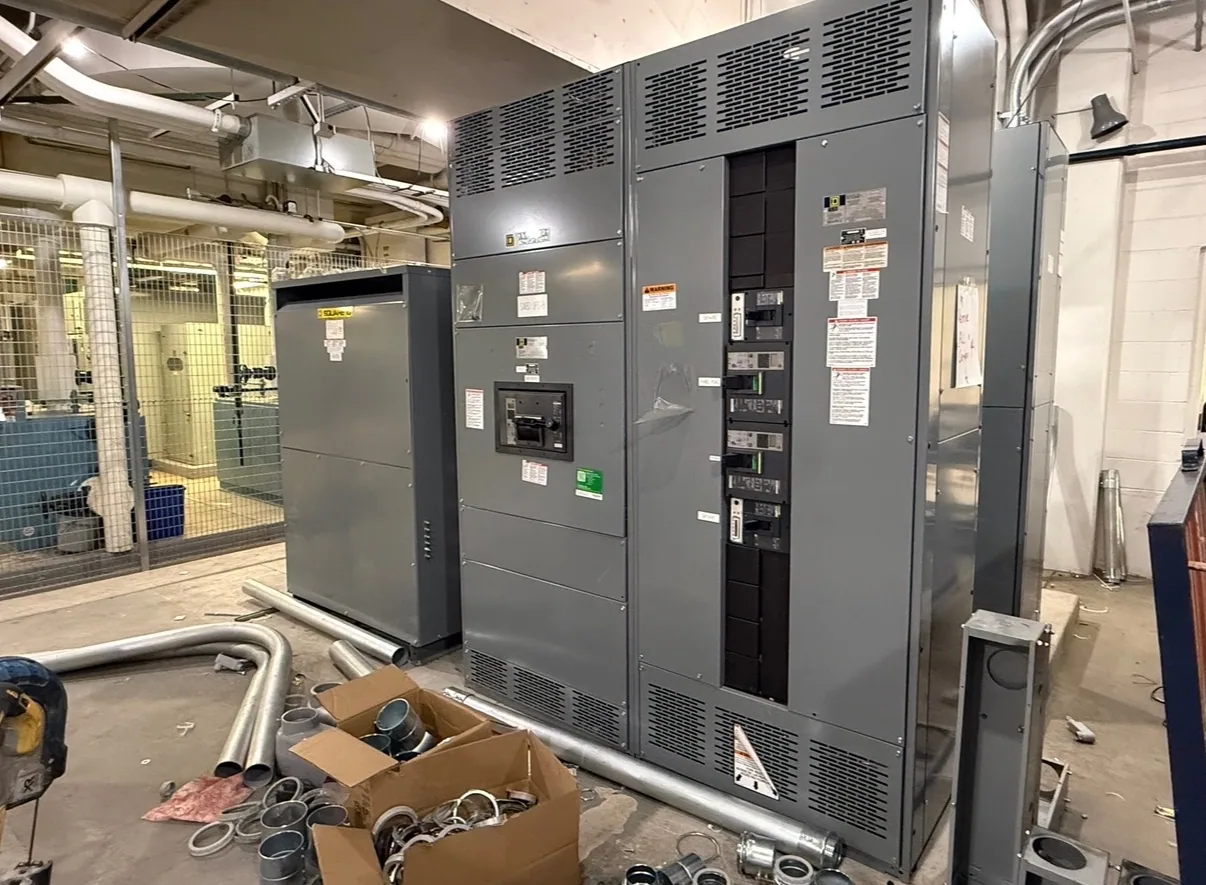
Distribution inside a controlled facility
Pharmaceutical and biotech sites can rely on electrical distribution for process utilities, environmental controls, laboratories, production equipment, and building systems. Indoor switchgear or switchboards are installed in an electrical room or other designated building space to distribute power and support the project’s operating scheme. The appropriate equipment depends on the system design, loads, and specification—not simply on the facility’s industry.
For a new project, a useful starting point is to identify what the assembly must connect, what it must control or protect, and how operators will access it. Process continuity and regulated operations make clear equipment boundaries and reliable documentation especially valuable. They do not, by themselves, establish a particular configuration, rating, redundancy approach, or compliance claim; those decisions belong to the responsible project team.
Fit the equipment to its room
Room layout affects both selection and installation. Provide the manufacturer with room dimensions, door and corridor widths, floor and access constraints, equipment locations, and the planned route from delivery point to final position. Confirm working clearances and access requirements with the project’s electrical engineer and applicable project documents. Also identify nearby piping, ducts, other equipment, and any restrictions on moving or positioning sections.
Heat rejection deserves attention where the room’s temperature or ventilation conditions may affect equipment selection or operating limits. Share the expected room conditions and relevant design requirements rather than assuming a standard room environment. Ask the project engineer to confirm any environmental limits and required provisions. Equipment arrangement, access for inspection, and planned maintenance windows should be coordinated early so that doors, removable components, and work zones do not conflict with building systems or operating procedures.
Resolve voltage and system details
Specify the nominal system voltage and the equipment maximum voltage as separate, explicit project requirements. They are related but are not interchangeable labels. Identify whether the application is low-voltage or medium-voltage equipment, and have the responsible engineer confirm the insulation and equipment requirements for the system. For example, 480 V class is low voltage, while 5 kV and 15 kV classes are medium voltage; do not infer a required rating from those examples alone.
Include the system configuration and relevant source information, such as the intended arrangement of incoming supplies, bus, and outgoing feeders. Provide available fault-current information and protection requirements when established by the project design. Clarify grounding, metering, control, and interlocking interfaces where they apply. The manufacturer can use the specified design basis to prepare a suitable proposal, but ratings, construction details, and standards applicability must be confirmed for the actual assembly and project documents.
Plan for change control and records
In regulated operations, equipment changes may require documented review, approvals, and coordination with site procedures. Establish who owns electrical design decisions, who approves equipment submittals, and how revisions will be tracked. A change to a feeder, interface, control point, or physical arrangement can affect related drawings and project approvals. Provide the current approved requirements and identify open items instead of relying on informal assumptions or outdated room plans.
Agree on the documents needed for review and turnover. Depending on the project scope, these may include equipment drawings, connection information, bills of material, and applicable product documentation. Confirm the required document formats, review sequence, revision process, and delivery milestones. Requirements vary by project, so list them in the purchase specification and resolve exceptions before release. Traceable, consistent documentation helps the project team coordinate equipment with its electrical and facility interfaces.
Coordinate installation and operating windows
Discuss outage constraints and planned maintenance windows during procurement, even when the new equipment will serve a new building or future expansion. Identify the installation sequence, temporary arrangements, tie-in boundaries, and the parties responsible for coordinating any interruptions. Confirm whether the equipment can be delivered and moved into place within the proposed construction sequence. Delivery timing and availability depend on the specific order and must be confirmed; do not base a shutdown plan on an unverified schedule.
Manufacturer supply is distinct from engineering of the facility, installation, commissioning, and field services. Define which party provides each activity, including rigging, electrical connections, system studies, testing, and site acceptance where required. Installation, testing, and maintenance must be performed by qualified personnel following applicable safety procedures. Clear responsibility assignments help prevent gaps between the equipment package and the work performed at the site.
Prepare a focused purchasing package
Before requesting a quote, assemble the one-line diagram, equipment schedule, voltage requirements, system configuration, load and feeder information, fault-current and protection criteria, room layout, environmental conditions, and interface requirements available to the project. Add required options, documentation, applicable standards, and any verified listing requirements. For a low-voltage switchboard, UL 891 may apply to eligible assemblies, but applicability and the specific assembly listing must be verified; it does not apply as a blanket claim to all switchgear.
South Carolina Switchgear Builders manufactures new equipment to specification, with US-built equipment and all-American components, and ships nationwide. Short lead times may be available, but actual availability and timing depend on the confirmed scope and order. A complete request should also state the desired delivery location, project milestones, submittal expectations, and unresolved design questions. With those details, the project team and manufacturer can clarify scope, confirm the proposed equipment against the specification, and coordinate a purchase that fits the facility’s documented requirements.