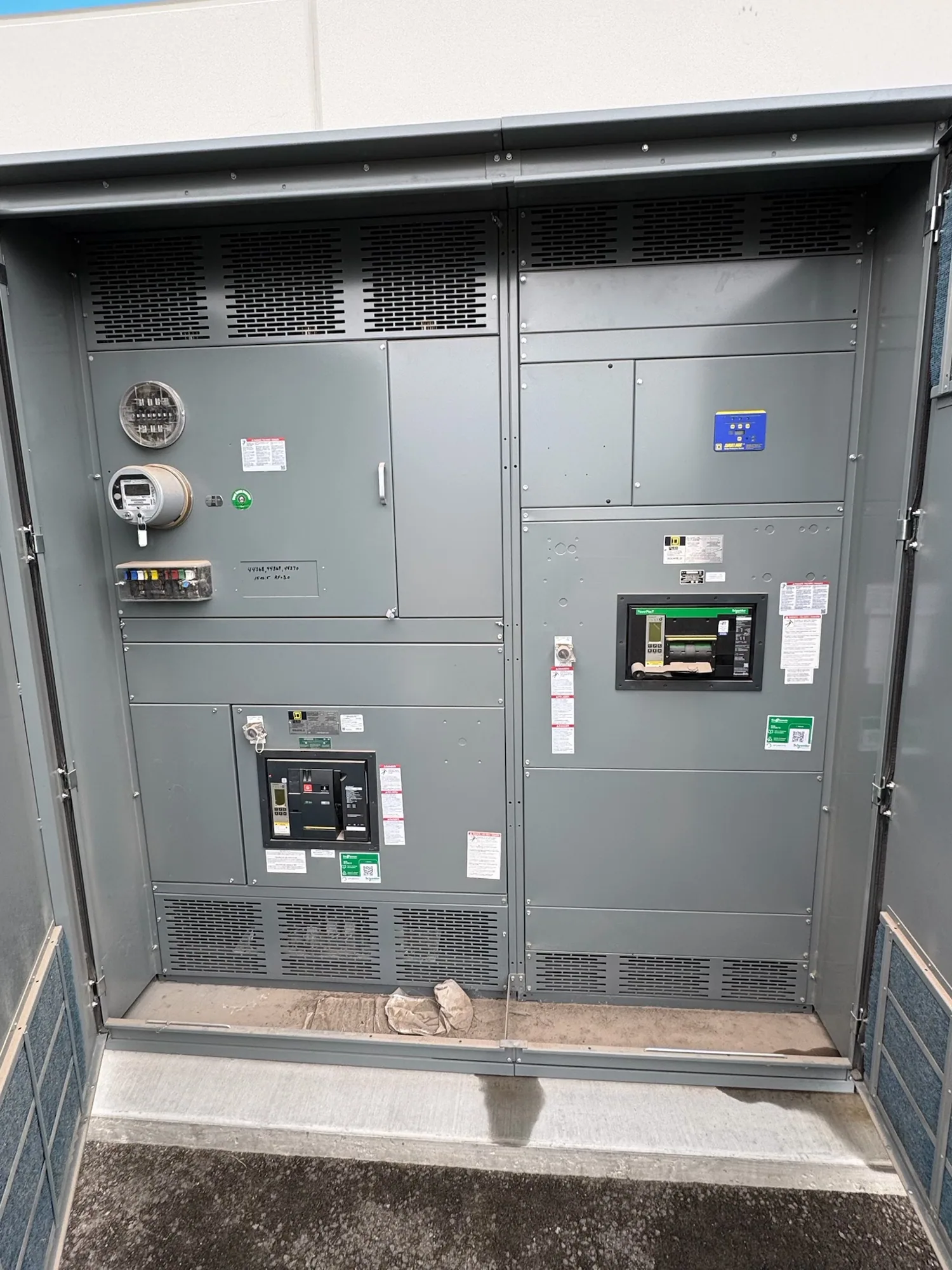
Where low-voltage switchgear fits in a process facility
In a chemical processing facility, low-voltage switchgear can serve as a central point for distributing power to process areas, motor-control equipment, utility systems, and building loads. The right arrangement depends on the facility’s one-line diagram and the role assigned to the assembly. A buyer should clarify whether the project calls for switchgear, a low-voltage switchboard, or another distribution assembly before requesting a proposal.
Process loads may include pumps, compressors, mixers, heaters, and supporting systems, but their starting methods and operating patterns differ. Gather motor and feeder information rather than estimating the required arrangement from facility type alone. Identify essential loads, planned expansion, and any loads that must be isolated during maintenance. This context helps the responsible engineer define the equipment scope and helps the manufacturer assess the specified configuration.
Hazard boundaries and equipment placement
Chemical processing sites may include classified locations, but classification is determined by the project’s hazard assessment, not by the industry label. Confirm the area classification, boundary drawings, and applicable equipment-location requirements with the responsible design team. The switchgear location should be selected against those project documents; do not assume a standard assembly is suitable for a classified area or that every part of a facility has the same hazards.
Placement also affects access, cable routing, environmental exposure, and safe maintenance. Provide room plans showing working space, doors, egress paths, equipment access, and incoming and outgoing cable routes. Explain whether the assembly is proposed for a dedicated electrical room or another location and identify relevant environmental conditions. The design team must determine suitable installation details; the manufacturer can review the requested equipment scope against the supplied requirements.
Ratings, fault duty, and protective coordination
Interrupting and withstand ratings must be evaluated against the actual electrical system and available fault-current information. Share the source and transformer data, system configuration, and any project calculations or specified fault-duty requirements. The responsible engineer should confirm that the selected protective devices and assembly ratings suit the application. Do not choose ratings by copying a value from an unrelated plant or treating nominal voltage as a substitute for fault analysis.
Protective coordination is another project-specific decision. The design team should define the intended relationship among upstream and downstream devices, including requirements for selective operation where applicable. Provide the coordination study criteria or device specifications if available, and identify any operational priorities that affect the design. The equipment proposal can then be reviewed against those inputs; coordination results, performance, and compliance must be confirmed for the actual system and supplied design.
Voltage class and system information to resolve
For low-voltage equipment, state the nominal system voltage and configuration, including phase, frequency, grounding arrangement, and available sources. Also identify the project’s required equipment maximum voltage and insulation requirements rather than assuming these are interchangeable with nominal voltage. Voltage class alone does not define every rating or construction detail. The responsible engineer should establish the applicable requirements, and the manufacturer should confirm whether the proposed assembly can meet the project specification.
Describe normal and alternate operating modes, source transfer arrangements, bus ties, and any planned future connections. Explain whether the switchgear will interface with transformers, generators, drives, or other distribution equipment, and provide interface drawings or schedules when available. These details can affect bus arrangement, device selection, controls, and physical layout. Confirm any required listing, testing, and standards against the exact assembly; applicability should not be presumed from a product category.
Maintainability, space, and outage planning
Compare the available room with the proposed lineup dimensions, access requirements, and cable-entry plan early. A compact arrangement may reduce space demands but can constrain access or future modifications, depending on the design. A larger lineup may provide room for additional sections or separation of functions, but it requires suitable floor space and routing. Ask the project engineer to resolve these tradeoffs using the facility layout and operational priorities.
Identify installation windows, shutdown limits, and any sequence constraints that affect delivery coordination. New equipment procurement does not itself include installation, commissioning, or field engineering unless separately stated in an agreed scope. Qualified personnel must handle installation, testing, and maintenance under applicable safety procedures. South Carolina Switchgear Builders manufactures new equipment in the United States and ships nationwide; availability and actual lead times depend on the order and must be confirmed.
Prepare a useful chemical-processing RFQ
A focused request for quotation should include the one-line diagram, equipment schedule, voltage and system data, fault-duty requirements, protective-device criteria, and applicable drawings. Add the area-classification documents and proposed equipment location, plus environmental conditions and room dimensions. State cable-entry preferences, control and monitoring interfaces, source arrangements, spare or future provisions, and any required documentation or inspection points. Mark unresolved items clearly so assumptions can be identified before design is finalized.
Also define the supply boundary: what assembly is requested, what interfaces are by others, and which project decisions remain with the engineer or installing contractor. Include the required standards and listing expectations for review, without assuming applicability. South Carolina Switchgear Builders can quote new switchgear custom to specification, subject to confirmation of design, availability, and delivery details. A complete scope gives the project team a sound basis for evaluating fit, technical exceptions, and next steps before placing an order.