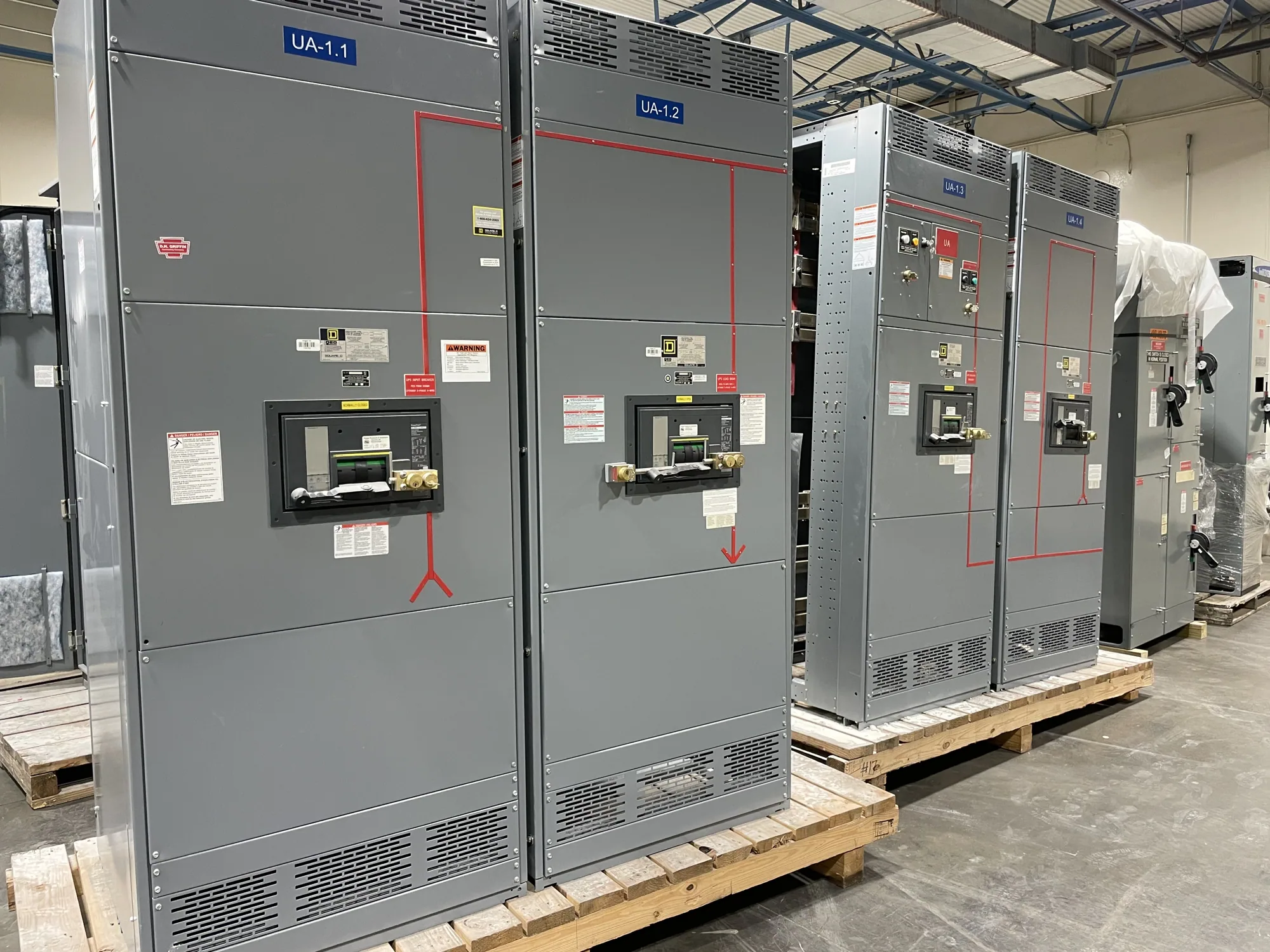
Plan around production power needs
Automotive manufacturing facilities bring together production lines, motor-driven equipment, material handling, utilities, and support areas. A new metal-enclosed switchgear assembly may form part of the distribution system feeding these loads, but its appropriate construction and configuration depend on the project’s electrical design. Start by identifying the equipment’s role, the source and downstream circuits it serves, and the plant conditions the assembly must accommodate.
Consider both current operations and planned changes. A new line, added process equipment, or revised production layout can alter feeder needs and outage constraints. Map the loads and operating areas affected by each section of distribution, then identify which circuits need to remain available during planned work. This context helps the project team decide how to divide feeders and coordinate equipment boundaries without assuming that one arrangement fits every plant.
Confirm equipment class and construction
“Metal-enclosed switchgear” describes an enclosure approach, not a complete electrical specification. The project team must establish the equipment class, system voltage, applicable switching devices, and the assembly’s intended function. Manufacturer selection and construction details should follow the approved one-line diagram and project requirements. A 480 V class system is low voltage; 5 kV and 15 kV class systems are medium voltage. Do not transfer assumptions about one class to another.
Review how the proposed sections, barriers, and access arrangements relate to the specified equipment class and operating practices. Ask what switching and protective devices are required, how feeder compartments are arranged, and what access is needed for inspection or replacement. Grounding provisions and interfaces must also match the design. The responsible electrical engineer should confirm the grounding scheme, system grounding method, and any project-specific requirements before the equipment configuration is finalized.
Coordinate feeders, outages, and access
Production continuity makes feeder segregation and service access practical design questions, not just layout preferences. Identify which loads share a feeder, which processes cannot be interrupted together, and whether the project will connect to existing distribution in stages. The team should document planned outage windows, switching boundaries, temporary operating arrangements, and required interfaces. These constraints inform the equipment scope but do not replace a qualified project engineer’s switching or installation plans.
Check room dimensions, cable entry and exit direction, access clearances, equipment handling routes, and the location of adjacent gear. Confirm who is responsible for providing and verifying the site dimensions and connection details. If the plant will expand, explain the anticipated scope and ask whether the design can accommodate the intended additions. Future capacity or spare provisions should be specified explicitly; they should not be presumed from enclosure space alone.
Resolve continuous-current requirements
Continuous-current selection begins with the expected load, but the assembly and each relevant component must be reviewed against the project’s operating conditions. Provide the normal and anticipated operating current, load characteristics, system information, and any known periods of sustained high demand. Identify the bus and switching-device ratings required by the design. The responsible engineer should evaluate the complete path rather than selecting a value from a single load estimate.
Ask whether ambient temperature, enclosure conditions, installation location, grouping, or other specified conditions affect the applicable ratings. Confirm any required derating assumptions with the equipment manufacturer and project engineer. Share available information about the electrical room, ventilation, nearby heat sources, and expected operating environment. Actual ratings and design suitability depend on the specified assembly and must be verified for the order; a generic rating cannot establish performance at a particular plant.
Prepare a useful purchasing scope
A focused request for quotation should include the one-line diagram, system voltage and frequency, equipment class, required switching devices, bus and continuous-current requirements, grounding details, and feeder schedule. Include fault-duty and protection information established by the responsible engineer, along with cable termination preferences, enclosure and environmental requirements, and any applicable project specifications. Mark unresolved items clearly so they can be reviewed rather than silently assumed.
For an automotive project, also describe production areas served, outage phasing, line expansion plans, space limitations, connection points, and the expected division of supply among project parties. Identify required submittals and the schedule milestones that affect equipment review and delivery. New equipment can be custom to specification, with availability and actual lead times confirmed for the order. Listing, testing, ratings, and standards applicability must be verified against the specific design and supplied assembly.
Coordinate supply with the project team
South Carolina Switchgear Builders manufactures new switchgear and switchboards in the United States, using all-American components, and ships nationwide. The manufacturer’s scope should be distinguished from project engineering, site preparation, installation, commissioning, and field services. Define those responsibilities in the procurement documents, including who approves drawings, confirms interfaces, and coordinates shipment with the construction schedule. Delivery dates and configuration remain subject to order-specific confirmation.
Before release, have the responsible project professionals reconcile the approved drawings, equipment schedule, connection requirements, access needs, and purchasing scope. Qualified personnel must perform installation, testing, and maintenance under applicable safety procedures; equipment procurement does not establish a field work plan. With production priorities and technical assumptions documented early, buyers can request equipment that fits the intended distribution role and coordinate decisions before they affect plant outage planning.