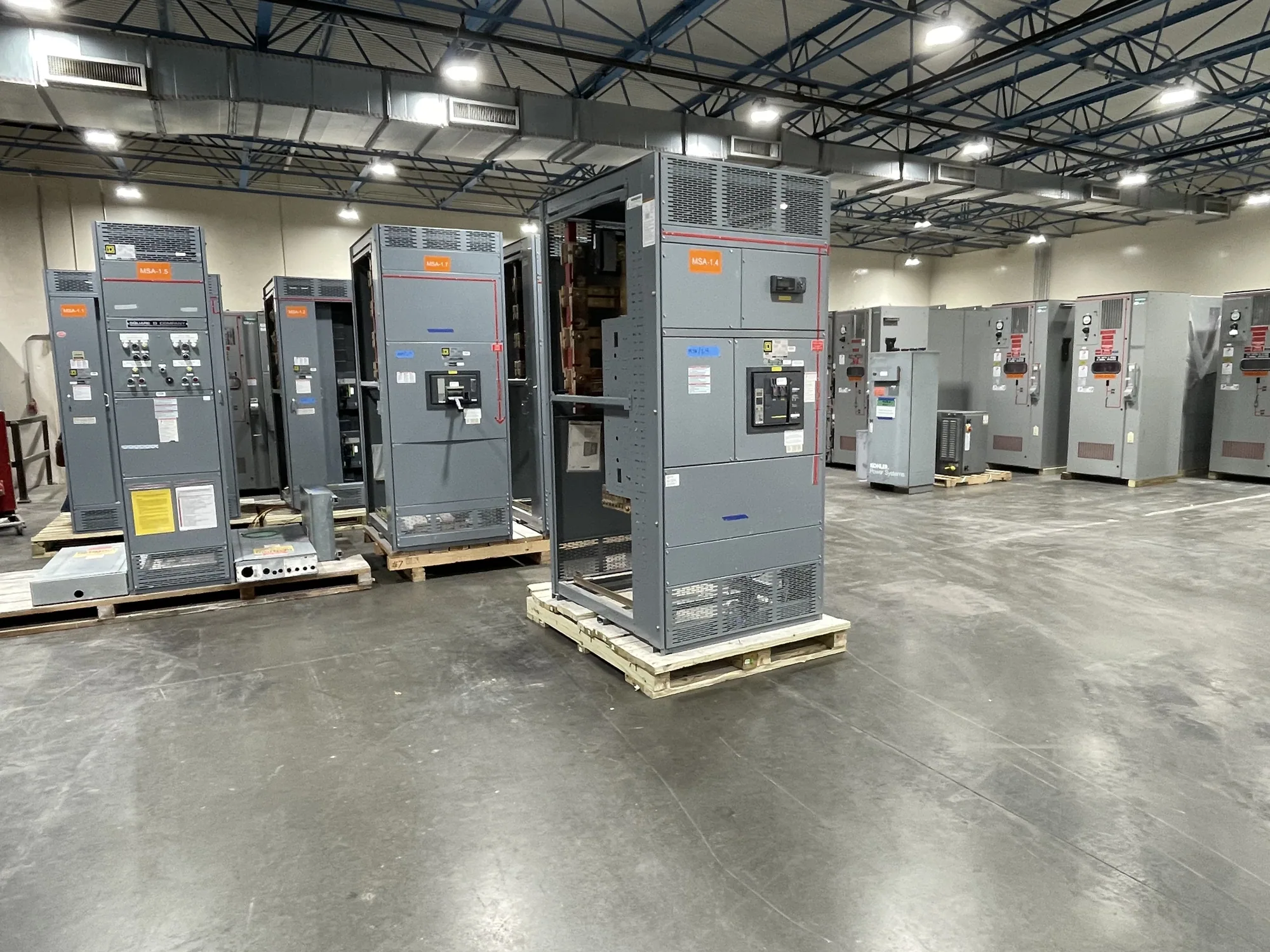
Match the switchgear scope to aerospace operations
Aerospace manufacturing facilities can combine precision production equipment, test systems, environmental controls, process support loads, and general plant services. Metal-enclosed switchgear can form part of the electrical distribution serving these operations, but the right configuration depends on the project’s voltage class, operating requirements, and system design. Begin with the loads and interfaces the equipment must serve rather than assuming one standard lineup fits every facility.
Separate critical production and test loads from supporting loads in the project documentation. Identify which loads operate together, which may be interrupted during a planned outage, and whether future phases or equipment additions are expected. These distinctions help the project engineer assess the distribution arrangement and switching needs. They do not, by themselves, establish a particular lineup, rating, or continuity capability; those must be resolved against the actual system and specification.
Confirm equipment class and interfaces
“Metal-enclosed” describes a construction approach, not a complete electrical specification. The required equipment class and design must be confirmed for the application. Provide the nominal system voltage and identify whether the project calls for low-voltage or medium-voltage equipment. A 480 V class application is low voltage; 5 kV and 15 kV class applications are medium voltage. Do not infer the required class from the facility type or a neighboring installation.
Document the incoming source, outgoing feeders, connected equipment, and points of connection to other distribution assemblies. Identify the switching devices and protective functions required by the design, along with any metering, control, or communications interfaces that belong in the manufacturer’s scope. The responsible engineer should define protection coordination and confirm how proposed devices relate to upstream and downstream equipment. A clear boundary between supplied equipment and field wiring, controls, and other project work prevents gaps during procurement.
Address quality-sensitive operations and access
For precision production and test areas, equipment selection should account for operational consequences of switching and planned outages. Ask how the proposed arrangement supports the project’s operating sequence, and identify equipment that must remain available during phased construction or later changes. If the facility will be expanded in stages, provide the anticipated phases and interfaces early. Future provisions should be stated as design requirements, not assumed from enclosure appearance or spare physical space.
Grounding, enclosure arrangement, and service access deserve project-specific review. Supply the available room dimensions, access paths, working-space constraints, cable entry preferences, and any relevant environmental conditions for the installation area. Clarify which side or sides require access and how operators and qualified maintenance personnel will approach the equipment. The design team must confirm grounding details and applicable safety provisions for the actual system; installation, testing, and maintenance are work for qualified personnel following applicable procedures.
Resolve continuous-current ratings with operating data
Continuous-current selection should reflect the expected load and the ratings of the relevant bus and switching devices. Share load schedules, connected and expected operating demand, load grouping, and any known duty cycles. Explain which production or test processes can run simultaneously and whether operating patterns vary by shift or manufacturing phase. The responsible engineer can use that information to determine the required ratings and evaluate the proposed equipment against the system design.
Also disclose conditions that may affect equipment selection, including the installation environment and enclosure or ventilation constraints. Do not choose a rating solely from a connected-load total or an assumed margin. The manufacturer needs the specified voltage class, system information, requested continuous-current ratings, and relevant project conditions to evaluate a configuration. Ratings, derating considerations, operating temperature assumptions, and any design-dependent limits require confirmation for the actual equipment and installation.
Coordinate protection, outages, and phased changes
Protection coordination requires information beyond the switchgear lineup itself. Provide available system data and the project engineer’s protective-device requirements, along with upstream and downstream equipment information needed to review interfaces. Identify the intended switching sequence and any constraints on planned outages. These inputs support a coordinated equipment specification, but protection settings, system studies, and field commissioning responsibilities should be assigned explicitly to the qualified professionals responsible for the project.
For phased work, identify what is included in the current purchase and what is planned for later. State whether future feeders, sections, or interface provisions are being requested, and ask the design team to confirm their feasibility within the specified arrangement. Clarify site delivery coordination, required submittal information, and the schedule assumptions driving procurement. Availability and actual lead times depend on the order and must be confirmed; do not rely on an unverified delivery date when planning an outage or production transition.
Prepare a complete purchase specification
A useful request for quotation identifies the application and scope in concrete terms: voltage class, one-line information, source and feeder details, requested continuous-current ratings, switching and protective-device requirements, grounding requirements, metering or control interfaces, and installation conditions. Include load schedules, enclosure and access constraints, project phases, and the applicable documentation requirements. Mark unresolved items for review rather than filling gaps with assumptions, and identify who will approve technical deviations.
South Carolina Switchgear Builders manufactures new switchgear and switchboards to specification, with US-built equipment and all-American components, and ships nationwide. The company’s scope is equipment supply; engineering decisions, installation, field testing, and maintenance should be coordinated with the project’s responsible professionals. Share the project documents and desired procurement schedule to begin specification review. Confirm the proposed configuration, applicable listing or testing requirements, ratings, availability, and delivery timing against the final design and order before committing the equipment to the facility plan.