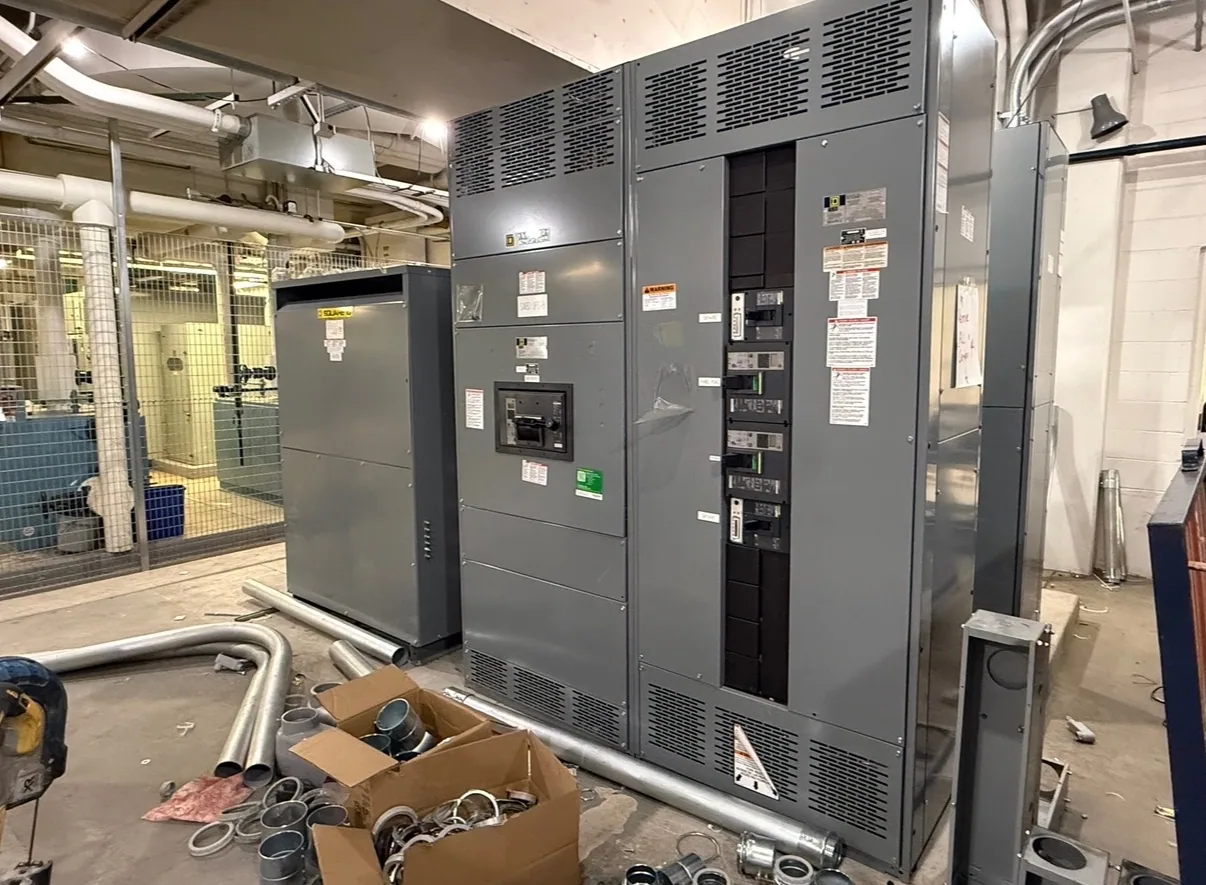
Where medium-voltage distribution fits — Medium-Voltage Switchgear for Automotive Manufacturing
In an automotive manufacturing facility, medium-voltage switchgear can receive and distribute power at the plant’s medium-voltage level, supplying downstream transformers, substations, or other defined loads. The arrangement depends on the facility’s electrical design, utility or onsite source, and the loads assigned to each feeder. Production lines, large motors, body shops, paint operations, and planned expansions may place different demands on the distribution system; the project engineer must establish how each load connects.
Consider a hypothetical plant adding a production line while keeping other areas operating. The switchgear scope may involve a new feeder, replacement of existing equipment, or a larger distribution change. Before selecting an arrangement, identify the source, the loads served, the intended operating sequence, and the outage windows available for cutover. These facts shape equipment interfaces and project coordination; they do not establish a standard configuration suitable for every automotive plant.
Set the voltage class and system interfaces
Confirm the system voltage class and electrical characteristics from project documents rather than inferring them from a general description such as “plant power.” Medium-voltage equipment must match the specified system and its insulation requirements. The responsible engineer should define applicable voltage, frequency, grounding method, insulation coordination, and any other required ratings. Fault-duty requirements and protective-device coordination also need to be established for the actual system and verified against the equipment specification.
Document how the switchgear will connect to incoming conductors, transformers, downstream distribution, and control or monitoring systems. Identify cable entry and termination requirements, phase arrangement, available room, access clearances, and any connections to existing equipment. For a retrofit or phased project, provide interface drawings and existing nameplate information where available. The manufacturer can use a clearly bounded scope to evaluate a custom-to-specification design; engineering approval remains with the project’s responsible professionals.
Plan feeder segregation around production
Feeder organization can affect how a plant isolates equipment for planned work or responds to a production-area change. List each feeder’s destination and function, and distinguish critical production loads from loads that can be interrupted under the plant’s operating plan. Ask the project engineer to assess whether separate feeder sections, bus arrangements, or another configuration best supports the required operating sequence. The physical arrangement, protection scheme, and available space must all be considered together.
Staged outages require more than a proposed installation date. Identify which equipment must remain in service, what can be de-energized, how the new section will connect to the existing system, and what approvals or shutdown windows govern the work. Switchgear supply does not itself provide engineering, installation, commissioning, or field labor. The facility’s qualified electrical professionals and project contractors should define the safe work plan, switching responsibilities, testing scope, and acceptance process before equipment delivery and cutover.
Coordinate relays, control, and maintainability
Provide the intended protective-relay functions and relevant coordination information, including available settings or interface requirements when established by the engineer. Specify control power, trip and close circuits, interlocks, metering, alarms, communications, and remote-control points only as required by the project. These details determine how the assembly interfaces with plant systems; they should not be assumed from the automotive application alone. Confirm who supplies each component and who is responsible for configuration and integration.
Discuss maintainability in the context of the actual equipment location and outage constraints. The design team should review access to operating mechanisms, cable terminations, compartments, and any parts requiring inspection or replacement, along with safe isolation provisions. Required access, barriers, and interlocks depend on the selected design and applicable project requirements. Maintenance and testing should be performed only by qualified personnel following the equipment documentation and applicable safety procedures, with the plant’s operating controls in place.
Resolve continuous-current and thermal requirements
Continuous-current rating is not simply a choice based on a motor’s nameplate. Establish the expected normal load current on each feeder and bus, how loads operate together, and whether future production capacity is part of the scope. The engineer should compare those operating conditions with the specified continuous-current ratings of the bus and associated devices. Confirm the ratings for the actual proposed assembly and its defined operating conditions rather than relying on a general product description.
Ask whether installation conditions could affect the required rating or equipment arrangement. Enclosure, ambient temperature, ventilation, altitude, conductor configuration, and nearby heat sources may be relevant, depending on the design and manufacturer requirements. Provide the expected conditions and request confirmation of any applicable limitations or adjustments. A larger nominal rating may affect equipment selection, footprint, or cost, while an underspecified rating can constrain operation; the right tradeoff follows from verified load data and project-specific engineering.
Prepare a useful purchasing scope
For a quotation, assemble the one-line diagram, system voltage and grounding details, source and fault information, feeder schedule, load data, continuous-current requirements, relay and control interfaces, and physical layout. Add cable entry preferences, environmental conditions, required accessories, project standards, desired documentation, and the planned outage or delivery sequence. Identify what is firm and what remains under engineering review. Clear assumptions help the manufacturer define the proposed new equipment and flag information that still needs confirmation.
South Carolina Switchgear Builders manufactures new medium-voltage switchgear to specification, with US-built equipment, all-American components, and nationwide shipping. Availability and actual lead times depend on the order and must be confirmed; no delivery date should be assumed until the project requirements and schedule are reviewed. Before placing an order, align the equipment scope, drawings, interfaces, responsibilities, and delivery coordination with the owner, engineer, and installation team. That preparation supports a more dependable transition from specification to plant project execution.