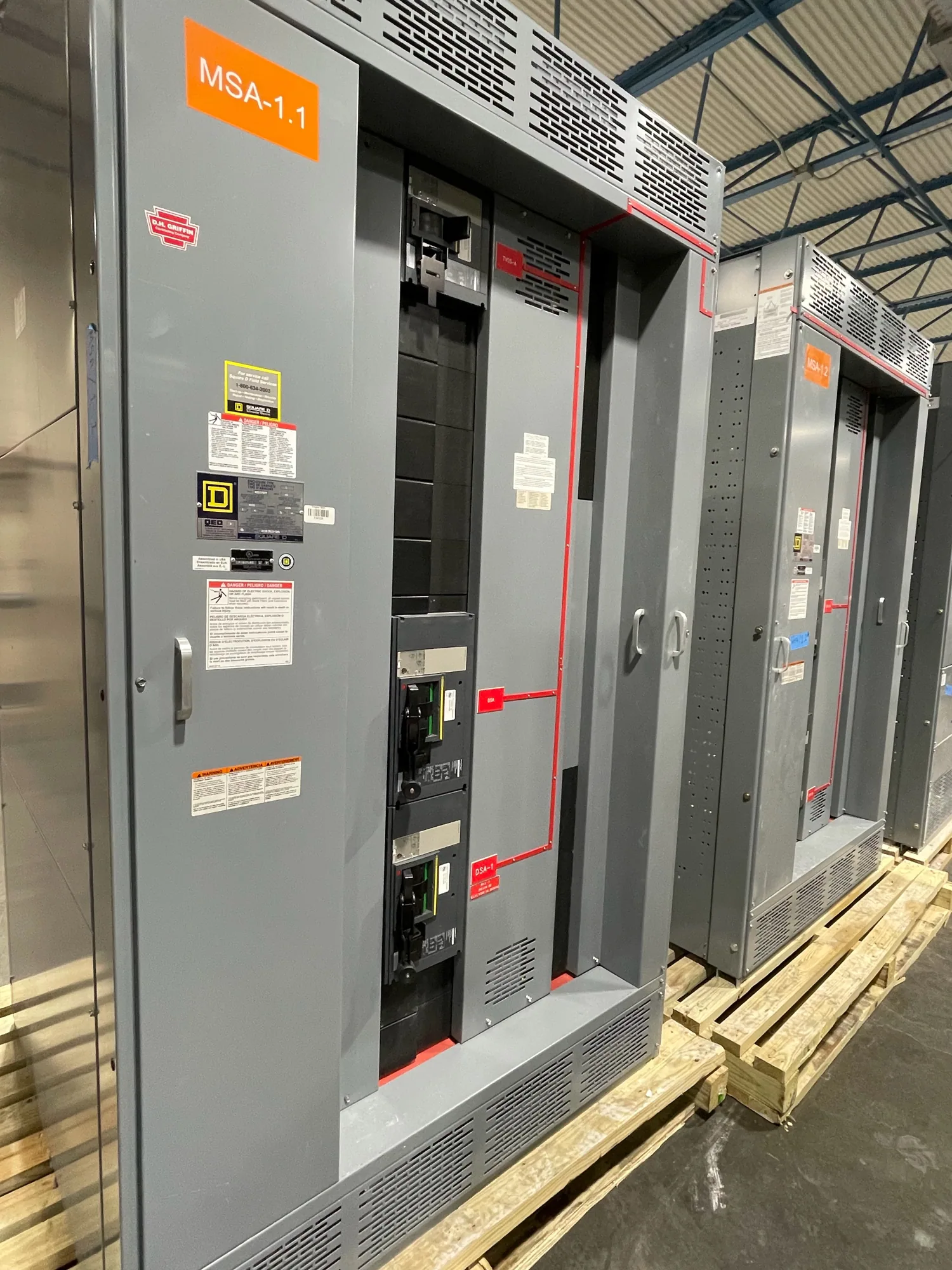
Where medium-voltage distribution fits — Medium-Voltage Switchgear for Pharmaceutical and Biotech Facilities
In a pharmaceutical or biotech facility, medium-voltage switchgear may receive power from an incoming source and distribute it to transformers, large equipment, or downstream electrical systems. The actual arrangement depends on the facility one-line diagram and project scope. Process utilities, controlled environments, and supporting systems can have different power needs, so define which loads and distribution boundaries this equipment is intended to serve.
For a new project or an expansion, start with the responsible electrical engineer’s system design rather than a product label alone. Confirm the nominal system voltage, source arrangement, feeder destinations, and whether the assembly is intended for indoor or other specified conditions. Clarify how the gear relates to transformers, downstream switchboards, and existing equipment. These interfaces affect both the required configuration and the information needed for a useful quotation.
Translate operating priorities into requirements
Regulated operations make disciplined project records especially important, but they do not establish a single switchgear design. Identify the facility’s change-control process, approved drawings, equipment naming conventions, and document review expectations. Determine who approves electrical changes and which controlled documents must be updated. The manufacturer can build to confirmed specifications; facility and engineering stakeholders remain responsible for defining operational requirements and approving the design basis.
Discuss maintenance and outage constraints early. Ask which loads can be interrupted, what switching boundaries are planned, and whether installation or replacement must align with a defined shutdown window. These are project-planning questions, not a reason to assume that an assembly enables uninterrupted operation. Qualified personnel must plan installation, testing, and maintenance under applicable safety procedures. Confirm what drawings, manuals, and other project documents are required and when they must be reviewed.
Resolve voltage class and insulation details
Medium-voltage selection requires more than matching a nominal voltage. Provide the system’s nominal voltage and ask the project engineer to confirm the equipment’s required maximum voltage and insulation specifications for the actual application. Do not infer those values from a facility description or assume one rating applies to every feeder. The equipment configuration and applicable design requirements must be checked against the project specification before selection or purchase.
Also document the system configuration and available electrical information required by the design team to establish equipment duties and protective-device requirements. Source and grounding arrangements, feeder functions, and interfaces with upstream and downstream devices may shape the specification. Ask which project inputs remain unresolved and who will approve them. A manufacturer can quote against a defined scope, but should not substitute assumptions for missing engineering decisions.
Specify isolation and protective-relay interfaces
Describe the switching and isolation functions the project requires, along with any interlocks or operating provisions shown in the approved design. Be precise about how operators are expected to use the equipment and which interfaces must coordinate with other systems. Whether a particular feature is appropriate depends on the application and specified assembly. Record requirements in the procurement documents instead of relying on broad phrases such as “plant standard” without supporting details.
For protective relays, identify the intended protection functions and the boundaries between switchgear, relays, instrument transformers, control power, and external systems. Provide relevant interface drawings, signal lists, communications requirements, and responsibility assignments when available. Confirm which components and documentation are included in the manufacturer’s scope and which belong to others. This clarity supports review and change control; it does not replace the engineer’s protection study or final approval.
Balance maintainability with project constraints
Maintenance access, room layout, cable entry, equipment arrangement, and connections should be evaluated together. Share room plans, access routes, cable information, and known site constraints so the design team can assess fit. Ask how the proposed arrangement affects planned isolation and maintenance boundaries. The best choice is project-specific: spatial limits, installation sequencing, operational preferences, and the approved electrical design can point to different configurations.
For facilities where changes are tightly managed, establish a review path for drawings and deviations before release for manufacture. Identify reviewers from electrical engineering, operations, maintenance, and relevant facility functions, as appropriate. Record decisions and revisions in the project’s controlled documentation. Confirm delivery expectations against actual order details rather than relying on a general schedule; availability and lead time depend on the specified equipment and must be confirmed.
Prepare a purchase-ready scope
A useful request for quotation should include the one-line diagram, nominal system voltage, required equipment maximum voltage and insulation details, feeder schedule, system configuration, and the intended equipment boundaries. Add available fault and protection information, relay and control interfaces, room and cable-entry constraints, operating requirements, and applicable project specifications. Identify required submittals, review milestones, documentation, and any project-specific listing or testing expectations for confirmation.
Also state the quantity, destination, requested delivery window, and who will answer technical questions or approve submittals. Separate the equipment manufacturer’s supply scope from engineering, site installation, commissioning, and field services so responsibilities remain clear. South Carolina Switchgear Builders manufactures new medium-voltage switchgear to specification, with US-built equipment, all-American components, short lead times, and nationwide shipping; configuration and actual availability and lead time require confirmation. A complete, reviewed scope helps the manufacturer assess fit and prepare a quotation while the project team retains responsibility for engineering and execution.