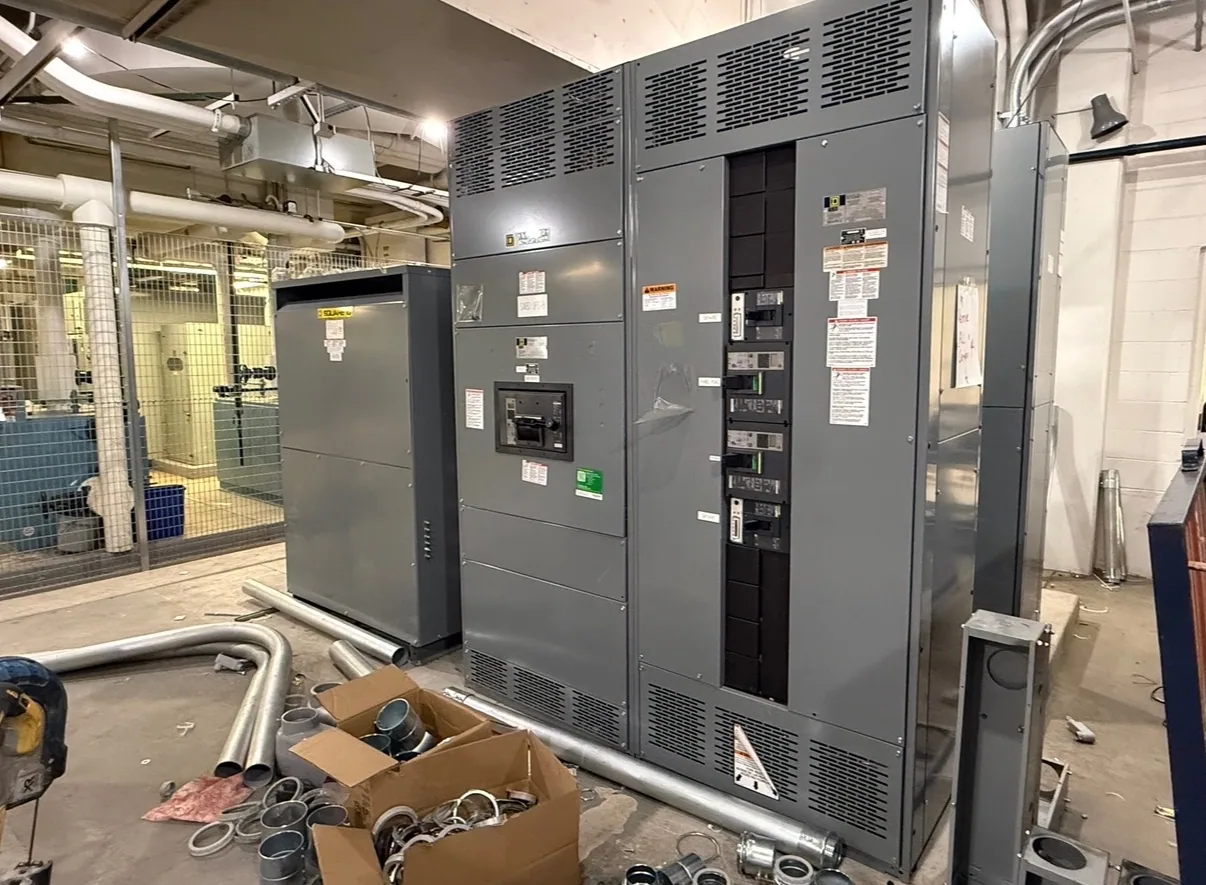
Define the campus service boundary
A commercial campus may include several buildings, shared mechanical systems, tenant spaces and phased construction. The service-entrance switchgear is considered at the point where the utility service connects to the campus distribution arrangement; the exact boundary and equipment scope depend on the project design and utility requirements. Start by documenting which buildings and loads are served from each service, rather than assuming one lineup serves the entire property.
Map the service, main distribution equipment, downstream switchboards or distribution panels, and major feeder routes. Identify existing buildings, planned additions, tenant areas, central plants, and any loads intended to be supplied separately. This one-line view helps the project team determine whether the new equipment is a single service entrance assembly, part of a larger distribution lineup, or a component in a more distributed arrangement. Confirm the intended scope with the responsible electrical engineer.
Coordinate utility and service requirements
Utility interface details shape the equipment design and project approvals. Provide the utility’s applicable service requirements and clarify the service configuration, connection point, metering arrangement, available fault-current information, and any required compartments or access provisions. The utility and project engineer should confirm which requirements govern the service. Do not assume that a configuration used at another campus will satisfy a different utility or site.
Define the service disconnect arrangement and how it relates to grounding and bonding, protective devices, metering, and downstream distribution. Those decisions affect the equipment layout and interfaces, but they must be established for the specific electrical design and applicable approvals. Identify who is responsible for utility coordination, engineering, permit submissions, and review comments. The manufacturer can build equipment to an agreed specification; engineering determinations and project approvals remain with the responsible parties.
Plan feeders, metering and isolation
Campus distribution often needs clear separation between a main service and feeders serving individual buildings or functional areas. List each feeder destination, its design requirements, and whether future connections or spare provisions are part of the approved scope. Consider how tenant turnover, building additions, or central mechanical changes may affect operating arrangements. Spare space or future provisions should be specifically designed and confirmed, not assumed to be included in a quoted lineup.
Decide what metering information the owner, utility, or tenant arrangements require, and identify the intended metering interfaces early. Likewise, discuss how the equipment will support planned isolation of downstream sections for construction or maintenance. A design may need to coordinate operating access and isolation points with the project’s outage plan, but switching arrangements and work procedures must be established by qualified project personnel. Describe real constraints, such as occupied buildings or limited outage windows, so they can inform equipment and phasing discussions.
Evaluate current ratings against actual conditions
Continuous current ratings should be selected from the project’s calculated load and equipment conditions, not from a campus label or a rule of thumb. Give the engineer the expected normal demand, load mix, growth assumptions, and any known operating patterns for major mechanical equipment. The engineer should determine the required bus and device ratings and confirm how the specified assembly performs under its intended conditions. Do not treat a single demand estimate as a substitute for that review.
Ask whether ambient temperature, enclosure arrangement, ventilation, grouping, or other installation conditions affect the specified ratings. Confirm the operating environment and installation details that the equipment design must accommodate. The applicable rating, device selection, and any limitations must be verified against the actual specification and supplied assembly. If the project anticipates future load growth, state the basis and desired design approach so the engineer can assess capacity without implying an unverified rating or performance result.
Fit equipment to campus phasing
Construction phasing may require a new service to support an initial building group while later buildings remain in planning or construction. Provide the target sequence, service availability assumptions, site access constraints, and interfaces with equipment supplied under other contracts. Identify whether feeder terminations, metering, or spaces for later work must be included in the initial equipment scope. Confirm which provisions are practical and approved for the selected design before purchase.
Also establish how equipment dimensions, cable entry, conduit locations, room access, and handling routes coordinate with the electrical room and construction schedule. These details can affect lineup arrangement and delivery planning. South Carolina Switchgear Builders manufactures new equipment to specification, is US-built, uses all-American components, and ships nationwide. Availability and actual lead times depend on the order and must be confirmed; coordinate the required delivery window with the project schedule rather than relying on an assumed date.
Prepare a complete purchasing scope
For a useful quotation, assemble the current one-line diagram, project specifications, utility requirements, calculated load information, equipment location and environmental conditions, feeder schedule, metering needs, and requested phasing. Include known interface responsibilities and identify any owner or engineer review steps. Flag open decisions rather than allowing assumptions to become part of the equipment scope. This information helps align the proposed configuration with the campus distribution plan.
Before release, have the responsible engineer verify ratings, protective-device requirements, grounding and bonding provisions, approvals, and any listing or testing requirements for the specific design. Confirm equipment scope, interfaces, documentation, availability, and delivery timing with the manufacturer. Engineering, installation, field testing, and maintenance are separate project responsibilities and belong to qualified personnel following applicable procedures. With clear requirements and coordinated reviews, the campus team can purchase new service-entrance equipment that fits the defined project—not an assumed future configuration.