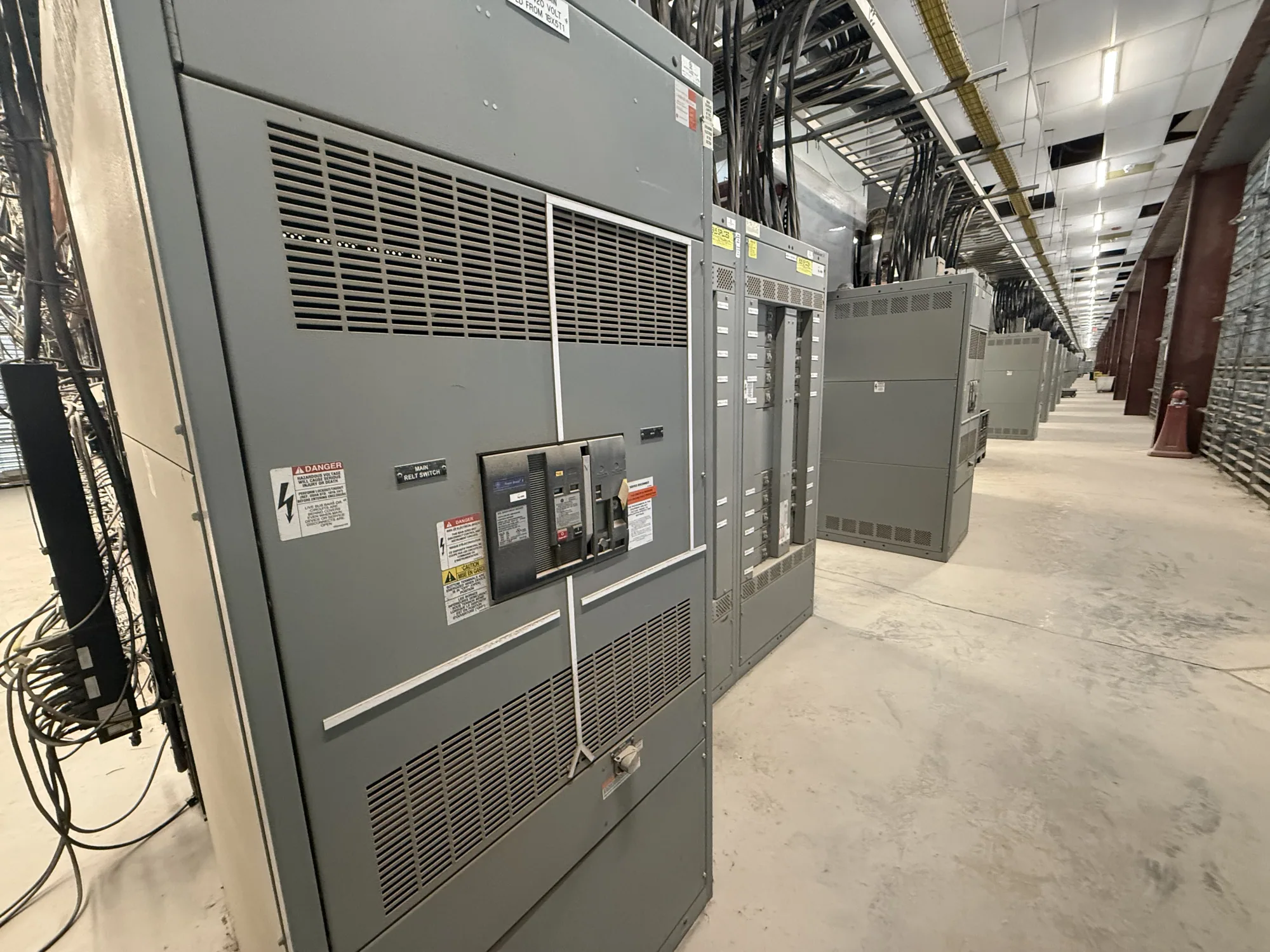
Define the service entrance’s role
For a data center, service-entrance switchgear is part of the boundary between the incoming utility supply and the facility’s electrical distribution. The exact arrangement depends on the utility interface, service configuration, project design, and applicable approvals. It may include service disconnecting and protective functions, but the project engineer must establish the required equipment scope and confirm how those functions are allocated.
Start with the loads and operating plan, not just the building’s total capacity. High-density IT equipment, cooling, pumps, controls, and other facility systems can have different operating profiles and continuity requirements. Identify which loads are critical, how they are grouped, and what phases of development are expected. This context helps the design team define an appropriate service entrance and coordinate it with downstream distribution.
Coordinate utility, disconnect, and grounding interfaces
Document the utility service characteristics and the point where the customer’s equipment begins. The utility and responsible project professionals should confirm the service arrangement, available fault-current information, metering requirements, and any review or approval steps relevant to the installation. Do not assume a familiar arrangement from another site applies; requirements and interfaces must be established for this specific project.
Clarify which equipment provides the service disconnect and how it connects to the facility’s grounding and bonding design. The one-line diagram, equipment connection points, neutral arrangement where applicable, and grounding provisions should be reviewed together by the responsible engineer. Include the intended cable or bus connections and access needed for installation. These details affect enclosure layout and coordination, and should be settled before the manufacturer prepares a design to specification.
Plan sources, redundancy, and capacity phases
Many data center designs coordinate utility power with generators, transfer equipment, UPS systems, or other sources. The service-entrance equipment’s role depends on the chosen topology; it should not be assumed to perform transfer, paralleling, or downstream redundancy functions unless those duties are explicitly part of the specified assembly. Share the one-line diagram and identify every source, interconnection, operating mode, and boundary between equipment packages.
Phased growth creates another design tradeoff. A facility may need capacity for an initial build while reserving space or provisions for later expansion. Ask the engineer to define the present and future scope, including which sections are supplied now, what interfaces are required, and whether later additions are expected to connect to existing equipment. Physical room, electrical capacity, protection coordination, and outage constraints must be evaluated together; future expansion should not be presumed feasible without review.
Resolve voltage and equipment configuration
Provide the nominal system voltage and configuration rather than asking for a generic “data center rating.” The design team must distinguish nominal voltage from equipment maximum voltage and specify insulation and other applicable characteristics for the intended system. Confirm whether the project calls for low-voltage switchboard equipment or medium-voltage switchgear; these are different product categories, and a voltage label alone does not establish a complete configuration.
Also provide the specified current and fault-duty requirements, protection functions, bus arrangement, number of sources, and any control or metering needs. The responsible engineer must establish and verify these values against the system study, utility information, and project criteria. Product ratings, listing applicability, testing, and standards depend on the actual design and assembly. For eligible low-voltage switchboards, UL 891 applicability and assembly listing must be confirmed for the specific design; it does not apply as a blanket claim to all switchgear.
Address monitoring and maintainability
Monitoring requirements should be explicit: identify the measurements, indications, alarms, communications interfaces, and intended connection to facility monitoring systems. Clarify which functions belong in the service-entrance equipment and which are provided by separate systems. Naming a communications protocol or dashboard alone may not define the required points, wiring, or responsibility, so provide the project’s interface documents and controls requirements for review.
Maintainability is shaped by layout and operating constraints. Describe room dimensions, access routes, working clearances established by the project team, cable-entry direction, and nearby equipment that affects placement. Explain whether maintenance windows are limited and how the design is expected to support isolation or planned outages. Qualified personnel handle installation, testing, and maintenance under applicable safety procedures; equipment selection should account for the project’s documented access and coordination needs.
Prepare a complete purchasing scope
A useful RFQ package includes the one-line diagram, utility service data available to the project, load and capacity phases, voltage and configuration, required ratings, protection and monitoring scope, enclosure and connection details, and the expected delivery location and project schedule. Include applicable specifications and identify any open decisions. Clear assumptions and exclusions help the manufacturer evaluate the requested new equipment without treating unconfirmed design details as settled.
South Carolina Switchgear Builders manufactures new switchgear and switchboards to specification, with US-built equipment, all-American components, and nationwide shipping. Short lead times may be available, but availability and actual lead times depend on the order and must be confirmed. Manufacturer supply is distinct from engineering responsibility, utility approval, installation, and field services. Coordinate these roles early, then have the project team verify the final configuration, applicable approvals, and delivery schedule before release.