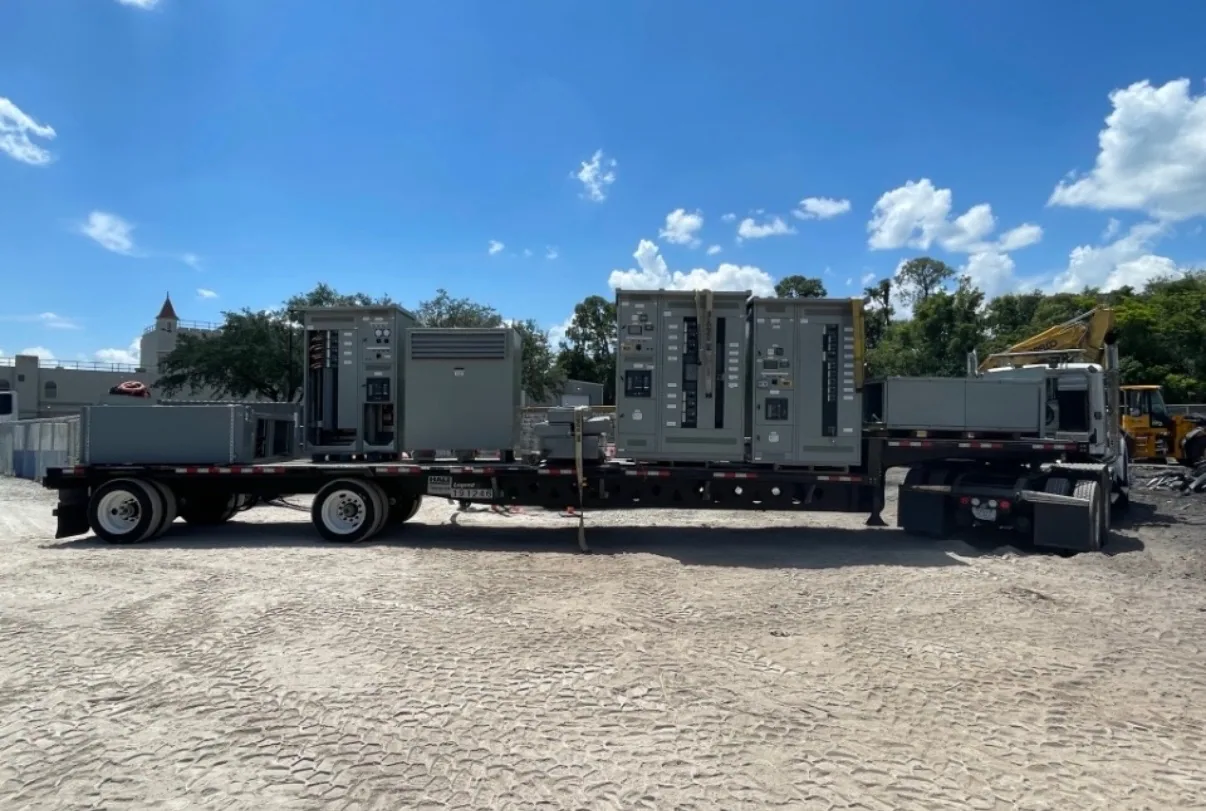
Where metal-clad switchgear fits in healthcare systems
Hospitals depend on electrical systems that serve a varied mix of clinical, building, and support loads. In a project with medium-voltage distribution, metal-clad switchgear may form part of the equipment connecting incoming sources, transformers, or distribution feeders. Its role and boundaries should be established by the project engineer rather than assumed from the facility type alone.
Consider a hypothetical facility with utility service and an alternate source, such as onsite generation. The one-line diagram determines how these sources connect and which loads each path can support. Switchgear selection must follow that engineered arrangement, including transfer or paralleling provisions if specified. It should not be treated as a stand-alone substitute for the complete essential electrical system or its operating plan.
Compartmentalization and removable devices
Metal-clad construction uses separate compartments for designated components, with the exact arrangement determined by the specified design. That separation can help define equipment interfaces and maintenance boundaries, but it does not by itself ensure uninterrupted service or make work safe. Buyers should review the proposed layout, access points, and device functions against the project drawings and the facility's operating requirements.
Removable circuit-interrupting devices may support planned inspection or replacement procedures when included in the design. Confirm which devices are removable, what positions or interlocks are provided, and how isolation and grounding provisions are specified. The project team should also consider the physical route for handling devices, room clearances, and whether maintenance can be scheduled without affecting critical loads. These are equipment and facility coordination questions, not assumptions to settle after purchase.
Protection, coordination, and continuity planning
Protection settings and device characteristics influence how faults are detected and which portions of a system may be disconnected. For healthcare projects, the responsible engineer should evaluate selective coordination where required by the applicable design criteria and governing requirements. A manufacturer can supply equipment to a defined specification, but the complete protective-device study and system coordination depend on the project design and the connected equipment.
Provide the source arrangement, feeder destinations, available fault-current information when established, and the protection requirements shown in the project documents. Identify any interfaces for relaying, metering, control power, alarms, or communications. Ask how those interfaces will be represented in drawings and equipment documentation. Continuity planning also involves operations staff, procedures, and downstream systems; switchgear features alone cannot guarantee service during a transition, fault, or maintenance outage.
Resolve voltage and system configuration early
Healthcare projects may use different distribution levels for different parts of a facility. Confirm the nominal system voltage and frequency, number of phases, grounding method, and system configuration from the electrical design. For medium-voltage equipment, distinguish nominal voltage from the equipment's maximum-voltage designation and specify insulation requirements as the project engineer directs. Do not select a class based only on a familiar voltage label.
Also clarify bus arrangement, incoming and outgoing connections, and whether the scope includes source tie functions or other switching sequences. The required interrupting and continuous-current ratings, enclosure details, and environmental conditions must be established for the actual application. Provide the latest one-line diagram and applicable specifications so the manufacturer can identify questions or deviations for resolution. All ratings and configuration details require confirmation against the supplied design.
Healthcare-specific room and operational interfaces
Switchgear dimensions and connection locations affect room planning, cable routing, transformer placement, and access for installation. Share available room drawings, entry direction, conduit or cable approach, and any known constraints on equipment movement. Ask the design team to verify working clearances and egress against applicable requirements. Where the facility is being renovated or expanded, distinguish existing conditions from planned construction and identify the outage windows that shape the work sequence.
Clarify who is responsible for engineering, field verification, installation, acceptance testing, and commissioning. South Carolina Switchgear Builders manufactures and supplies new switchgear; installation, system studies, field services, and operating procedures should be assigned to qualified project parties. The equipment specification should identify required documentation, drawings, review milestones, and any project-specific testing or listing requirements for confirmation.
Prepare a focused equipment request
A useful request for quotation includes the one-line diagram, equipment schedule, technical specification, voltage and system data, source and feeder descriptions, protection and control requirements, and room or cable-entry constraints. Include the required quantities, delivery destination, project milestones, and the date by which submittals are needed. Note whether the design is preliminary or released for procurement, and list open engineering decisions instead of silently treating them as settled.
For a healthcare application, explicitly flag essential-system interfaces, source-transfer assumptions, coordination criteria, maintainability needs, and planned outage constraints. Identify required drawings, manuals, spare-device provisions, and any requested factory testing or assembly listing so each item can be reviewed against the proposed design. Availability and lead time depend on the confirmed configuration and order; delivery dates and compliance details should be verified during quotation and submittal review.
Coordinate the purchase with the project team
Before release, have the responsible engineer reconcile the approved submittals with the one-line diagram, protection scheme, physical layout, and project requirements. Resolve deviations in writing and confirm which components and services are included in the equipment supply. This review is especially important when multiple sources, critical feeders, and phased construction must work together within a facility's operating constraints.
South Carolina Switchgear Builders manufactures new, custom-to-specification equipment in the United States and ships nationwide. The appropriate configuration, applicable ratings, availability, and delivery timing depend on the confirmed project scope. A complete, coordinated request gives the manufacturer and project team a sound basis for evaluating the equipment and planning the next procurement steps.