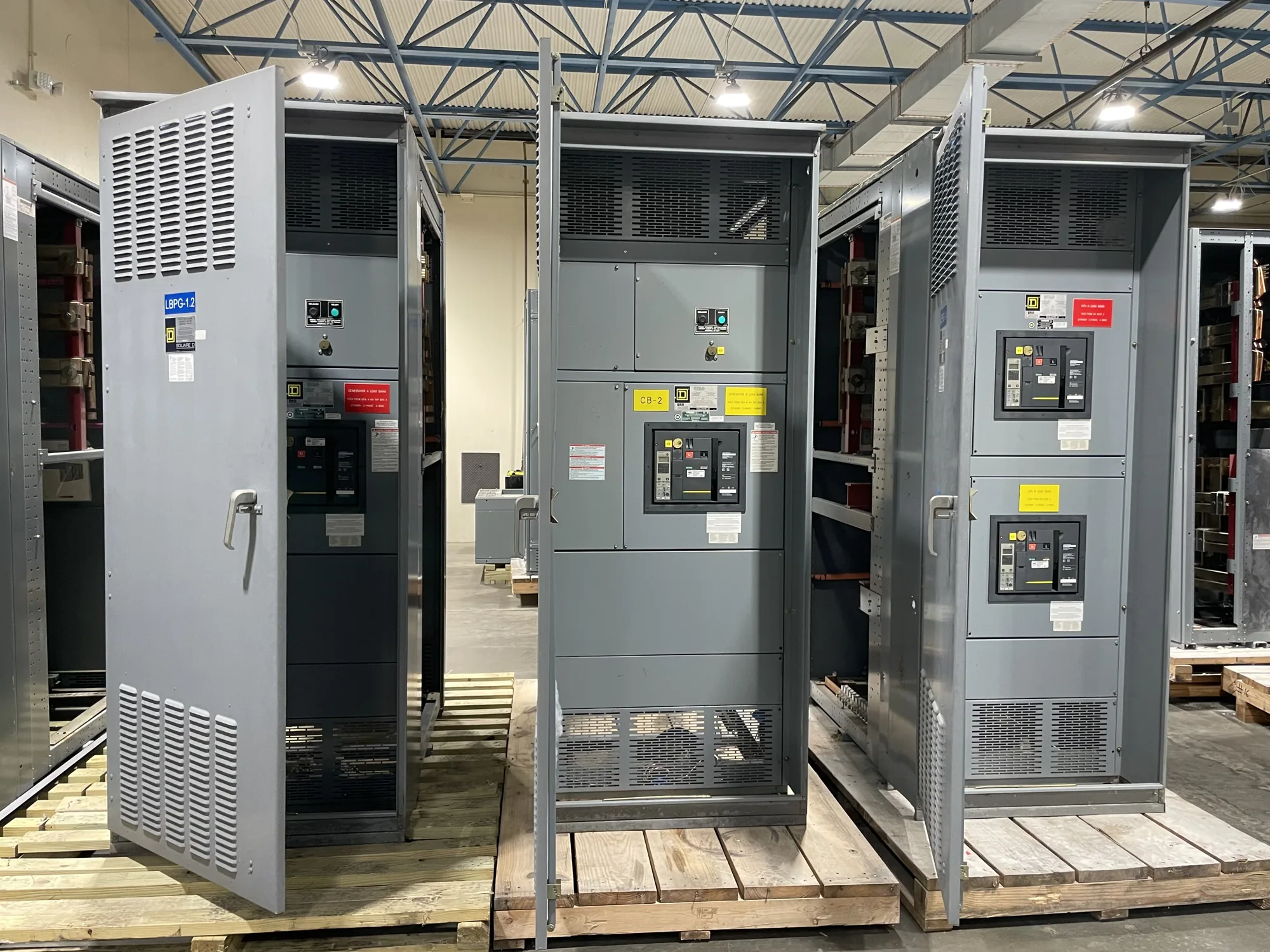
Where metal-enclosed switchgear fits — Metal-Enclosed Switchgear for Warehouses and Logistics Facilities
Warehouse and logistics facilities can combine building services, conveyor systems, automated storage equipment, charging infrastructure and future process loads. Metal-enclosed switchgear can provide a defined point for switching and distributing electrical power, but the correct equipment depends on the project’s voltage class, system design and operating requirements. It is not a one-size-fits-all package: the construction and devices must match the actual electrical scope.
For a hypothetical distribution center, the design team might consider how incoming power feeds facility distribution and how separate outgoing circuits serve material-handling areas or other loads. The manufacturer’s scope should be coordinated with the one-line diagram and project specifications. Confirm whether the requested product is low-voltage switchgear, medium-voltage switchgear or another assembly; terminology alone does not establish the equipment class or appropriate configuration.
Define the equipment and construction
Start by identifying the system voltage, incoming arrangement, bus requirements, number and purpose of feeder circuits, and specified switching or protective devices. The project engineer should define grounding provisions, compartmentation, access expectations and any required control interfaces. These details affect the assembly and should be settled before quotation rather than inferred from a general request for “warehouse switchgear.”
Metal-enclosed describes an enclosure approach, not a complete performance specification. Construction class, device selection and the intended operating environment must be verified for the particular design. Consider room dimensions, equipment location, cable entry and termination space, working clearances, ventilation requirements and the route for moving the assembly into position. The responsible design team should confirm applicable requirements and equipment suitability for the actual installation.
Plan feeders around real operating demand
Conveyors and automation can produce load patterns that differ from general lighting or building services. Charging equipment may add demand that changes by shift, charging schedule or fleet growth. Provide the design team with the equipment list, expected operating sequence, known starting or demand characteristics, and any planned phases. Do not size a bus or feeder from a rough count of machines without evaluating how the loads operate together.
For continuous-current selection, distinguish expected normal load current from the continuous-current ratings specified for the bus and individual devices. Ask the responsible engineer to confirm the required ratings from the load study, system conditions and governing project specifications. Also identify ambient temperature, enclosure and installation conditions, grouping, and other factors that could affect allowable current or require design adjustments. A rating printed in a preliminary schedule is not a substitute for confirming the complete assembly.
Make growth and expansion deliberate
Scalable distribution is most useful when future loads are described rather than left as an open-ended request for spare capacity. Identify which areas may add conveyor zones, automated equipment or vehicle charging, the likely sequence of those additions, and which feeders or spaces the project expects to reserve. The design engineer can then determine whether the initial configuration should include specified spare devices, provisions for future circuits or a planned second-stage assembly.
Staged expansion also raises practical questions about outages, connection points, physical access and coordination with operating schedules. The project team should establish which work must occur during an outage and who is responsible for planning and performing it. Never assume that future equipment can be added while the existing assembly remains energized. Installation, inspection, testing and maintenance should be performed only by qualified personnel following applicable safety procedures.
Coordinate service access and interfaces
Review access from the electrical room to the assembly, door and aisle clearances, working space, cable routing, conduit locations and the positions of adjacent equipment. Confirm how the proposed lineup interfaces with the incoming source, downstream distribution and any specified monitoring or control system. These checks can uncover conflicts before release for manufacture and help ensure that the submitted arrangement reflects the site design.
Grounding and bonding requirements, control power, metering, communications and interlocking should be addressed explicitly when they are part of the project. Provide interface drawings or written requirements and identify the party responsible for coordinating each connection. A manufacturer can build new equipment to an approved specification; engineering responsibility, site preparation, installation and field commissioning should be clearly assigned within the project team.
Information to include in a purchase inquiry
A useful inquiry includes the one-line diagram, equipment class and voltage, system details, required bus and device ratings, feeder schedule, enclosure and access requirements, and the applicable project specifications. Include load information for conveyors, charging systems and other major equipment, along with the expected operating profile and planned expansion stages. Identify site constraints, cable entry preferences, control interfaces and the required submittal documents.
South Carolina Switchgear Builders manufactures new switchgear and switchboards to specification, with US-built equipment, all-American components and nationwide shipping. Availability and actual lead times depend on the order and must be confirmed. Listing, testing, ratings, standards and delivery dates are specific to the proposed design and supplied equipment, so ask for confirmation against the project requirements before purchase.
Move from concept to a defined scope
Before requesting a proposal, have the electrical engineer and facility stakeholders reconcile the load forecast, system arrangement, equipment room layout and expansion plan. Resolve which ratings and features are mandatory, which are allowances, and which require later engineering. A coordinated scope gives the manufacturer a clearer basis for configuring the new assembly and helps the buyer compare proposals on equivalent requirements rather than assumed capabilities.
Once the design information is assembled, submit it with the requested quantity, project schedule needs, shipping destination and review milestones. Confirm the proposed equipment scope, documentation, availability and delivery expectations in writing. This process keeps equipment selection tied to the warehouse’s actual electrical design while leaving engineering approval, installation and field work with the qualified project professionals responsible for them.