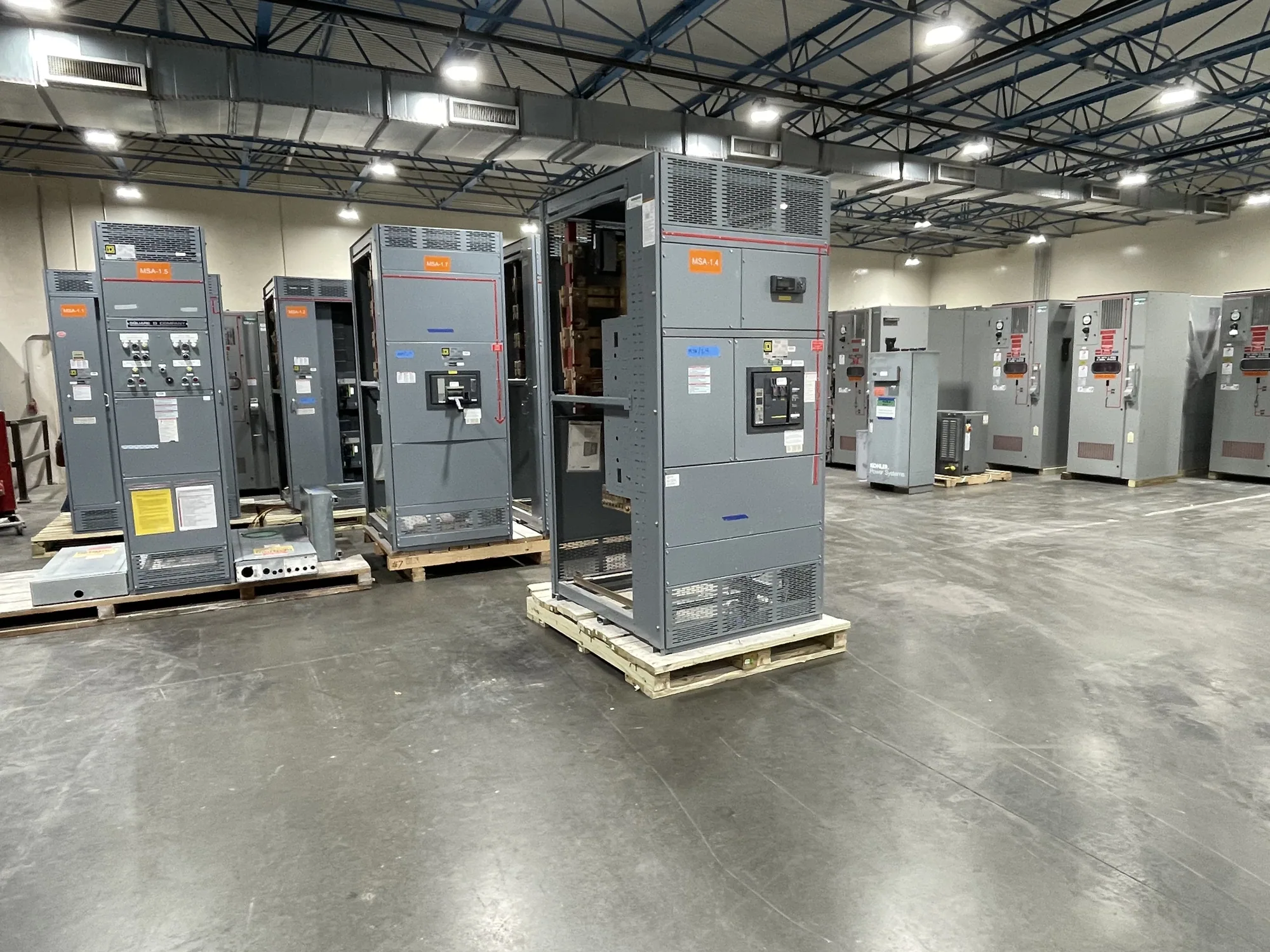
Where an MCC fits in a regulated facility
In a pharmaceutical or biotech facility, a motor control center can group motor branch-circuit components and control equipment that serve defined process and building systems. Depending on the project, loads might include pumps, fans, mixers, or other utility equipment. An MCC is not a synonym for all facility switchgear: its suitability depends on the loads, electrical distribution design, operating requirements, and interfaces established by the project team.
Consider a hypothetical expansion adding process-support equipment near controlled production areas. The MCC may need to support new motors while fitting into an existing distribution plan and documented operating procedures. Buyers should identify which systems the assembly will serve, what equipment lies upstream and downstream, and how operators and maintenance personnel are expected to interact with it. These boundaries help distinguish the manufacturer's equipment scope from facility engineering and field work.
Translate process needs into motor-unit scope
Start with a motor schedule that identifies each load and its electrical and control requirements. Provide available motor data, starting method, expected operating duty, and any specified drive requirements for review by the responsible engineer. The design may use a combination of starter types, variable-frequency drives, and feeder protection, but the correct arrangement cannot be assumed from the industry alone. Each unit and its protective coordination must be checked against the project design.
Also describe anticipated changes. A planned future motor or process expansion can affect section space, feeder provisions, control interfaces, and the overall arrangement. Ask the engineer to identify which future provisions are actually required and how they should be documented. Reserving capacity is not simply leaving an empty space: the required electrical provisions, physical layout, and later modification approach need to be defined and confirmed for the particular assembly.
Resolve voltage and system details early
Voltage selection requires more than naming a nominal system voltage. Provide the project’s nominal voltage, system configuration, grounding approach, and available information about the upstream source. The responsible electrical engineer should determine the required equipment maximum voltage and insulation details from the system and applicable design criteria. Do not infer a suitable MCC configuration from a nominal value alone; the complete specification must be reviewed against the actual supply and connected loads.
Clarify the protection and fault-duty information required for the proposed installation, along with any specified short-circuit or coordination criteria. The manufacturer needs a defined equipment scope and engineering inputs to evaluate a configuration; the buyer should not treat a generic product description as confirmation of a particular rating or compliance. The assembly’s ratings, listing applicability, and other project-specific characteristics must be confirmed against the supplied design and specification before purchase.
Account for drives, heat, and the operating environment
Drives can affect enclosure arrangement, heat dissipation, wiring, and maintenance access. Identify which motors require drives, their intended operating range if specified, and any project requirements for control or communications. Ask how the selected arrangement addresses heat and the stated environment, including room conditions and available ventilation information. Do not assume every drive can be added later without changes to the assembly design or electrical evaluation.
For controlled environments, define the MCC location and the boundary between the electrical room and process area. Describe relevant room constraints, access routes, and any project requirements for enclosure construction or environmental protection. The owner’s engineering and quality teams should determine what equipment documentation, review, and change-control records are needed. A manufacturer can supply equipment to an agreed specification, but facility validation, process qualification, and approval of operating procedures remain with the responsible customer team.
Plan interfaces and maintenance windows
Document the interfaces between the MCC and the facility: incoming feeder, downstream motor circuits, control wiring, network or monitoring connections, and any required signals to other systems. Identify who supplies and terminates each interface, and provide available drawings or interface schedules. Clear boundaries reduce uncertainty during design review and site coordination. Confirm that the proposed equipment arrangement can be transported to its intended location and that installation access has been considered by the project team.
Where operations require planned outages, share the expected installation sequence and constraints early. The manufacturer can coordinate equipment configuration and delivery planning with the purchaser, but should not be assumed to provide installation, commissioning, or field testing unless that scope is separately agreed. Installation, testing, and maintenance must be performed by qualified personnel under applicable safety procedures. The facility team should coordinate outage authorization and operational controls.
Prepare a complete purchasing package
For a useful quotation review, provide the motor schedule, one-line diagram, voltage and system information, equipment location, environmental conditions, required starters and drives, control and communication interfaces, and any specified documentation or review requirements. Include desired future provisions, delivery location, and project milestones. Mark unresolved items plainly rather than relying on assumptions; the responsible engineer can then identify which decisions must be settled before the equipment configuration is finalized.
South Carolina Switchgear Builders manufactures new motor control centers to specification, with US-built equipment and all-American components, and ships nationwide. Short lead times may be available, but availability and actual lead times depend on the order and must be confirmed. A purchase scope should state the required equipment, drawings and documentation, review responsibilities, and delivery expectations. Installation and facility engineering are separate responsibilities unless expressly included in an agreed scope.
Coordinate decisions before release
Before authorizing manufacture, reconcile the approved electrical design, motor-unit schedule, physical arrangement, interface responsibilities, and requested documentation. Confirm that revisions have passed the facility’s change-control process and that purchasing documents reflect the final requirements. This review is especially important when a process change affects motor loads or control signals. A well-defined package gives the manufacturer a clear basis to build new equipment and gives the project team a sound starting point for coordinated delivery and installation planning.