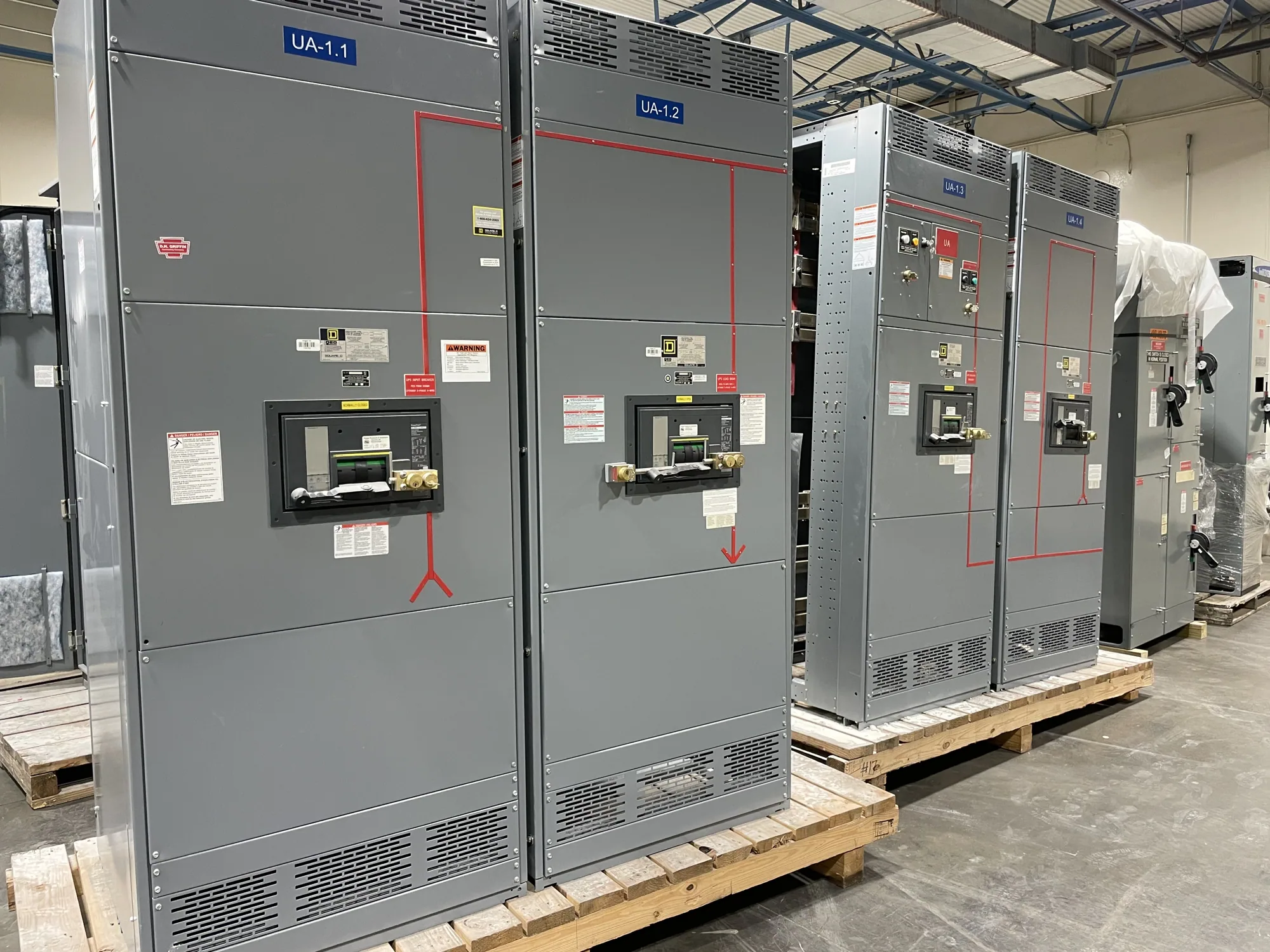
Where outdoor distribution fits
Food and beverage facilities may use outdoor electrical distribution to serve process motors, refrigeration equipment, packaging lines, or other plant loads. A hypothetical expansion might add a new refrigeration area and packaging equipment while preserving existing production routes. The switchgear’s role is to receive and distribute power through a configuration defined for the project; it does not replace the engineering needed to coordinate connected loads, protective devices, and facility operations.
Start by defining what the equipment will supply and where it will sit. Identify incoming power, outgoing circuits, motor loads, expected operating patterns, and any loads that the facility considers essential to production or product handling. Document whether outdoor equipment will connect to indoor motor-control or process systems. These boundaries help distinguish the switchgear scope from motor-control equipment, downstream wiring, controls, and work by other project contractors.
Environmental exposure and enclosure decisions
“Outdoor” does not describe one uniform environment. The equipment location may face direct rain, sun, windblown debris, temperature swings, coastal exposure, or cleaning practices nearby. Describe the actual conditions instead of assuming a standard enclosure will suit every site. The project engineer and manufacturer should confirm enclosure construction and any environmental provisions against the installation location, specified ratings, and applicable project requirements.
Washdown deserves particular attention because sanitation routines can create exposure beyond ordinary weather. Provide details about cleaning methods, spray direction, frequency, chemicals, and the distance between wash areas and electrical equipment. The layout should account for nearby hoses, drains, splash zones, and process piping without assuming that a particular enclosure is suitable for direct washdown. Confirm the required separation and protection with the responsible design team.
Moisture, foundations, and service access
Moisture control depends on both equipment design and site conditions. Share information about drainage, standing water, condensation risk, prevailing exposure, and any temperature differences between the enclosure and its surroundings. Ask how the proposed configuration addresses moisture for the specified environment, and confirm whether any project-specific heaters, ventilation provisions, or other measures are required. Such choices depend on the design and should not be assumed from the application alone.
Coordinate the foundation and installation envelope early. The civil and electrical teams should establish support details, equipment orientation, conduit entry locations, clearances, and access for delivery and future maintenance. Keep doors, operating handles, and service areas clear of vehicle paths, ingredient storage, cleaning stations, and production traffic. Confirm that the proposed arrangement accommodates the supplied equipment and the site’s installation plan; foundation design and field installation remain separate project responsibilities.
Process continuity and operating interfaces
Production continuity is a facility planning concern, not a rating that can be inferred from the equipment category. Identify circuits serving refrigeration, process motors, packaging, controls, and supporting systems, then explain how an interruption to each affects operations. The project team can use this information to define distribution sections, protective-device coordination, and any planned transfer or isolation interfaces. Requirements must be established for the actual system rather than presumed for every food or beverage plant.
Sanitation and production workflows also shape maintainability. Consider whether authorized personnel can inspect and service the equipment without crossing restricted hygiene zones or obstructing loading and packaging routes. Clarify who is responsible for access, shutdown planning, and integration with plant procedures. Installation, testing, and maintenance should be performed by qualified personnel following applicable safety procedures; manufacturer equipment supply does not itself include field work unless separately confirmed in the project scope.
Continuous current and load information
Do not select a continuous current rating from a rough estimate of motor horsepower or a single nameplate. Provide the electrical schedule, connected loads, expected simultaneous operation, motor starting information, incoming supply details, and any known load-growth allowance. The responsible engineer should determine the required normal load current and evaluate bus and device current ratings for the specified arrangement. Confirm the applicable ratings for the actual equipment configuration.
Operating temperature, enclosure exposure, installation conditions, and other design factors may affect the rating decision. Ask the project engineer and manufacturer to review relevant derating conditions and clarify which assumptions support the proposed ratings. If production changes are planned, explain their timing and expected impact rather than choosing an arbitrary margin. A complete specification lets the manufacturer evaluate a new custom-to-specification assembly without implying a rating, listing, or performance result before design review.
Prepare a useful equipment request
A focused request should identify the project location, indoor or outdoor installation, system voltage and available fault information, incoming and outgoing circuits, load schedule, and required bus and device ratings. Add drawings, one-line diagrams, preferred lineup dimensions, cable-entry direction, enclosure requirements, environmental conditions, and any applicable project specifications. Include sanitation practices, refrigeration and process interfaces, access constraints, and the facility’s preferred outage or installation window.
South Carolina Switchgear Builders manufactures new switchgear and switchboards in the United States, using all-American components, and ships nationwide. Equipment can be custom to specification; availability and actual lead times depend on the order and must be confirmed. Ask for review of the proposed scope, applicable listing and testing requirements, ratings, and delivery schedule against the project documents. Define separately who will engineer the system, prepare the foundation, install equipment, and perform field testing so procurement and site responsibilities are clear before release.