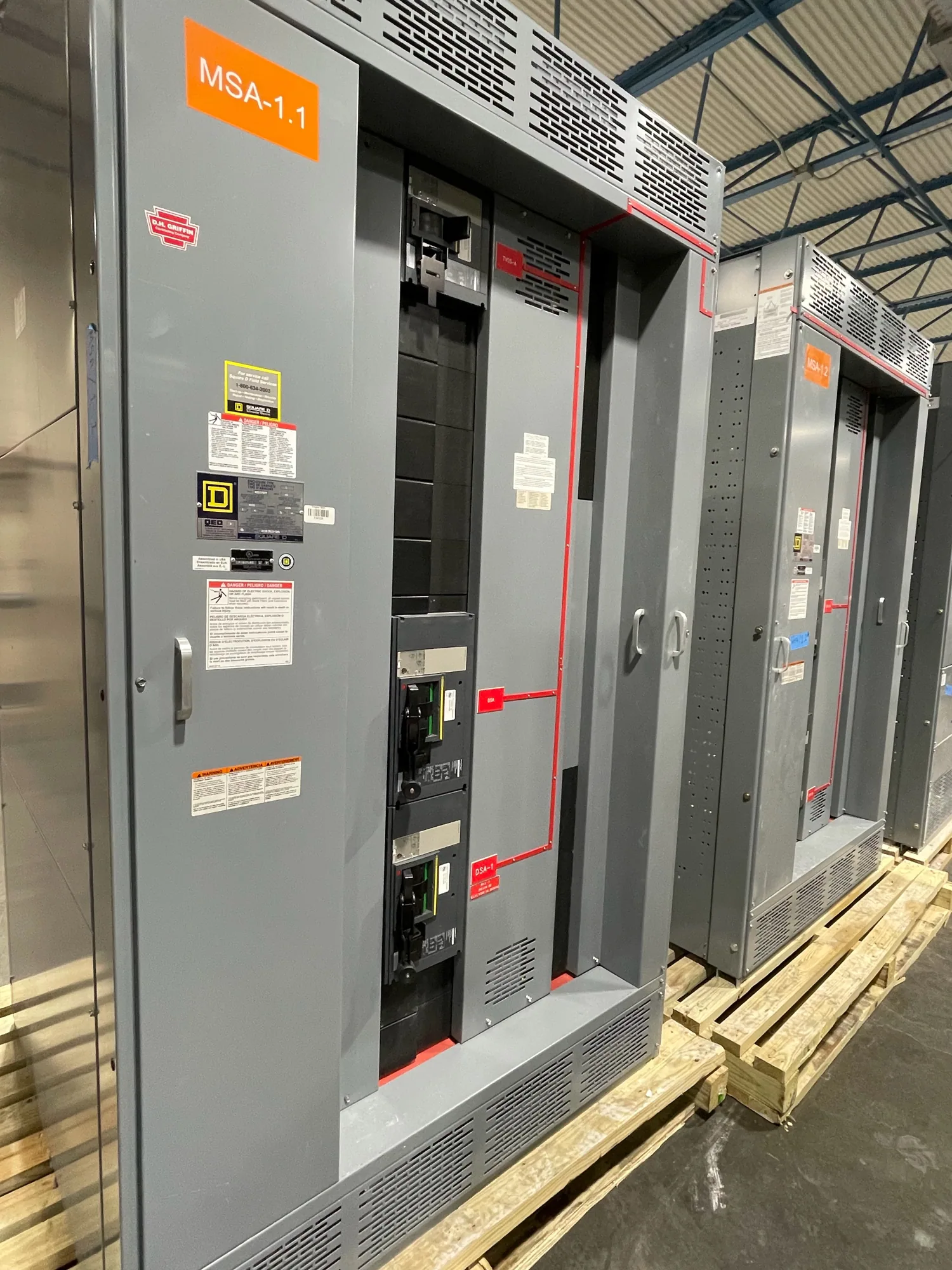
Plan around the facility’s power needs
A warehouse or logistics site may combine building services, conveyor systems, material-handling equipment, vehicle charging and future automation. If distribution equipment is located outdoors, its configuration must address both the electrical system and the conditions at the installation point. Begin by defining what the switchgear is expected to supply, where it will connect, and how the facility plans to operate during maintenance or expansion.
Make a load schedule that separates present equipment from planned additions. Conveyor motors, charging equipment and automated systems can have different operating patterns, starting behavior and demand assumptions. The project engineer should establish applicable load calculations and operating scenarios rather than treating a future nameplate total as a guaranteed simultaneous demand. This distinction can shape feeder planning and avoid specifying capacity based on an unclear growth assumption.
Match the equipment to outdoor exposure
Describe the actual installation environment: precipitation, humidity, temperature range, airborne contaminants, direct sun, wind exposure and any washdown or cleaning practices. The responsible engineer and manufacturer can use these conditions to evaluate a suitable enclosure and construction details. Do not rely on the word “outdoor” alone; the required environmental protection depends on the specific site, installation and equipment configuration.
Moisture management deserves explicit attention. Ask how the proposed design addresses condensation and how any heaters, vents or other environmental-control features, if needed, are specified. Their suitability depends on the site conditions and assembly design. Also document nearby drainage, roof runoff, snow or standing-water concerns where applicable. The civil and electrical teams should coordinate equipment elevation, foundation layout, conduit entries and water-shedding details before fabrication and site work.
Coordinate foundations, clearances and access
Outdoor switchgear affects more than the electrical one-line. Confirm the available footprint, foundation dimensions, equipment orientation, door-swing and working-space requirements, cable entry direction, conduit routing and access for delivery and placement. The project team should resolve these against the selected assembly drawings and applicable project requirements. Avoid assuming that a convenient pad location will also provide adequate cable bends, operating access or future maintenance clearance.
Plan for qualified personnel to inspect and maintain the equipment under applicable safety procedures. Consider how technicians will approach the assembly, open doors, access operating mechanisms and handle planned outages without disrupting critical warehouse activity. Coordinate equipment location with traffic lanes, loading areas, fire access and adjacent systems. Installation, field testing and maintenance are project responsibilities for qualified personnel; manufacturer equipment supply should not be confused with those services.
Specify feeder capacity and continuous current
Continuous-current selection should follow the actual load and operating assumptions, not a generic warehouse allowance. Provide normal load current by feeder, expected duty, diversity or demand assumptions established by the project engineer, and any known operating cycles. Identify the bus and protective-device requirements separately, since the assembly, bus and individual devices have project-specific ratings that must be confirmed against the final design.
Ask the responsible engineer to evaluate operating temperature and any conditions that could affect equipment or component ratings. Ambient conditions, enclosure details, ventilation and loading can influence the design; do not infer an acceptable rating without review of the actual specification. For anticipated charging or automation growth, state the proposed phase, estimated load basis and timing. A reserve-feeder strategy, spare spaces or future sections may be considered, but each affects layout, cost and coordination.
Make staged expansion practical
Phased construction can help a distribution facility add capacity as operations evolve, but expansion provisions need to be designed rather than presumed. Identify which feeders or loads are part of the initial phase, what may be added later, and whether the desired approach is spare devices, future sections or a defined interface to subsequent equipment. Confirm physical space, electrical ratings, connection details and any outage needed to complete the work.
Explain operating constraints early. A warehouse may have limited shutdown windows or areas that cannot be taken out of service during peak shipping periods. Share the preferred outage windows, temporary-power assumptions if relevant, and dependencies on utility or contractor work. The manufacturer can use a clear scope to quote the specified new assembly; the facility’s engineering and installation teams determine system integration, construction sequencing and field execution.
Prepare a useful purchase specification
For a quote, provide a one-line diagram, load and feeder schedule, system voltage and phase, specified fault-duty information, protective-device requirements, enclosure and environmental criteria, cable-entry preferences, drawings, and requested options. Include site conditions, foundation constraints, delivery location, project milestones and the expansion plan. Flag any required listing, testing, documentation or standards so they can be checked against the proposed design rather than assumed for every assembly.
South Carolina Switchgear Builders manufactures new switchgear and switchboards to specification, with US-built equipment, all-American components and nationwide shipping. Short lead times may be available, but availability and actual timing depend on the order and must be confirmed. Share the project documents and unresolved design questions when requesting a quotation. A complete, coordinated scope gives the manufacturer and project team a sound basis to confirm configuration, ratings, schedule and supply responsibilities before the order proceeds.