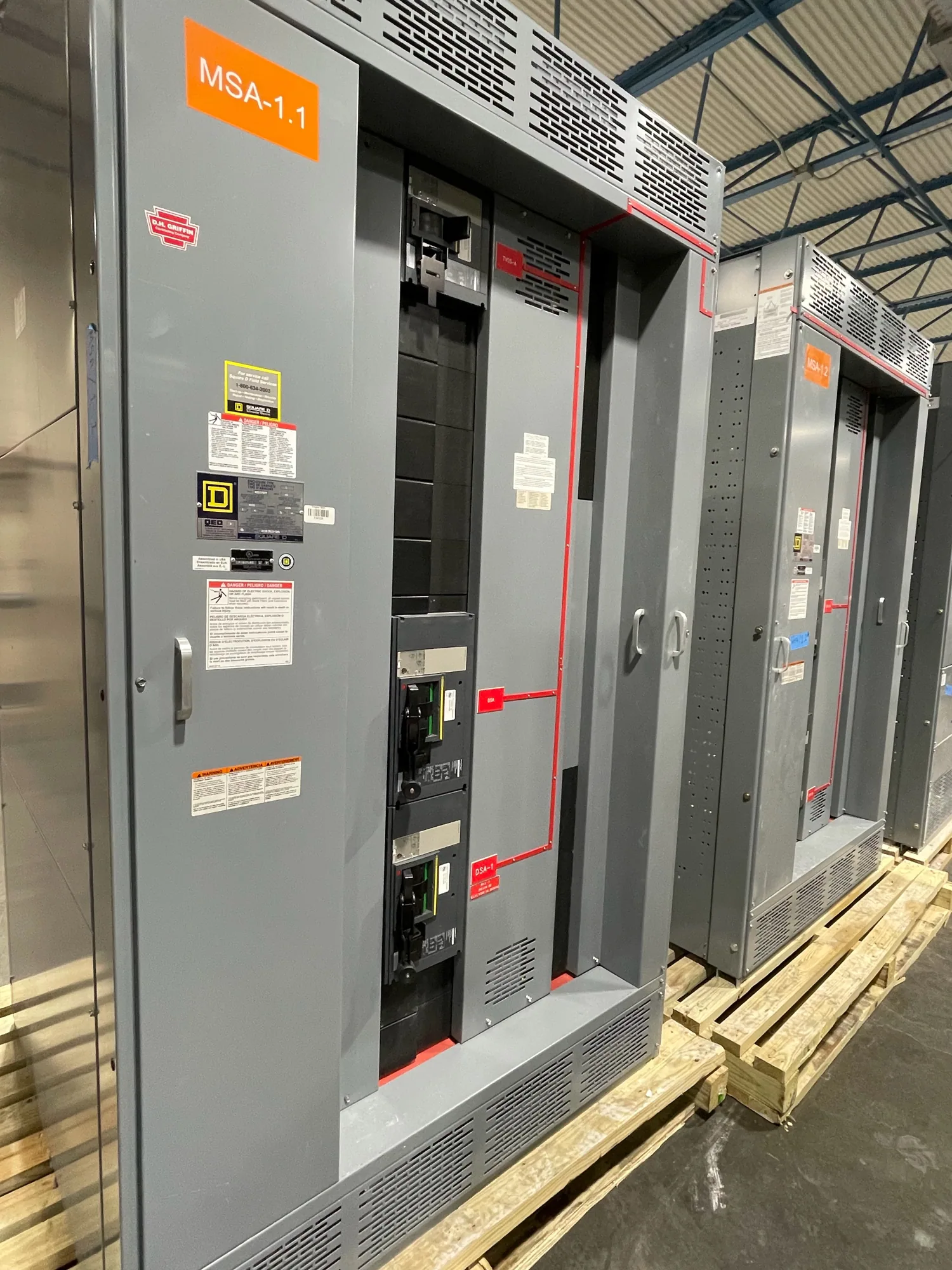
Where panelboards fit in campus distribution
Higher education campuses often coordinate electrical distribution across academic buildings, laboratories, residence halls, libraries and central plants. In that system, a power distribution panelboard serves branch circuits within a defined part of a building or facility. It is distinct from switchgear: the panelboard’s role, construction and application should be specified as its own equipment category, rather than treated as interchangeable with upstream distribution equipment.
For a new building, renovation or phased expansion, start by identifying what the panelboard will serve and where power will come from. A laboratory may have different load characteristics and operating requirements from a classroom floor or mechanical space. The responsible project engineer should establish the electrical design and determine whether a panelboard suits the intended location and duty.
Map building loads and feeder interfaces
Campus planning requires more than a count of buildings. Document the source feeder, voltage and phase information, expected connected and demand loads, and the downstream equipment served by each proposed panelboard. Identify whether the work adds a panel to a new facility, replaces equipment during a renovation, or extends distribution in a later construction phase. Those distinctions affect scope and coordination.
Check the interfaces with upstream protective devices, conductors, grounding arrangements and any existing distribution equipment. The project engineer should confirm available fault current and specify an appropriate fault-current rating and protective-device arrangement for the actual installation. Do not assume that a rating or configuration suitable for one campus building will apply at another; source conditions and the complete system determine the requirements.
Branch-circuit capacity and protective devices
Size the panelboard scope around the branch circuits it must serve, including planned spaces and credible future additions identified by the owner. Provide a circuit schedule or equivalent load information that distinguishes existing loads, new loads and reserved capacity. Spare spaces and spare capacity are not the same: the engineer should state whether future circuits require unused positions, additional bus capacity, or both.
Protective devices must align with the connected loads, conductor requirements and upstream coordination approach. Provide the specified device types and ratings, circuit quantities, poles and any project-required features. Where selective coordination, arc-energy considerations or special load behavior affect the design, the responsible engineer should define the criteria. The manufacturer can build to an accepted equipment specification, but should not infer system design decisions from a general panelboard request.
Continuous current ratings in context
Continuous current selection is not simply a matter of choosing the largest bus or device value available. The design team should establish expected normal load current, the bus rating, the ratings of individual protective devices and the equipment’s applicable operating conditions. These values must fit the actual load profile and the project design; the panelboard assembly’s limits and component selections need to be reviewed together.
Ask the engineer to identify conditions that could affect allowable loading, such as ambient temperature, enclosure placement, grouping, ventilation or other specified derating factors. Confirm what information the manufacturer needs to evaluate the requested configuration, and have the responsible engineer resolve any design assumptions. Do not treat a nominal current rating as proof that every combination of loads, devices and installation conditions is suitable.
Placement, access and outage planning
Panel location influences feeder routing, conductor lengths, access and the practical reach of branch circuits. Coordinate the proposed room or area with architectural plans, equipment clearances, environmental conditions and the owner’s maintenance requirements. For laboratories, central plants and other specialized spaces, confirm whether the environment or connected equipment calls for particular enclosure or construction details rather than assuming a standard arrangement will fit.
Renovations and phased campus work also require careful outage coordination. Record which existing loads must remain in service, what work depends on a planned shutdown, and which building or feeder interfaces are affected. The owner and project team should establish the outage window and sequence. Equipment supply does not itself include installation, switching, commissioning or field work; those responsibilities should be assigned to qualified parties under applicable project procedures.
Prepare a complete purchasing scope
For a useful quotation, provide the one-line diagram, panel schedules, project specifications, source and load information, required quantities, installation environment and requested delivery location. Include the specified voltage and phase, bus and device requirements, fault-current information, enclosure details, spare-space expectations and any owner standards. Identify approved deviations or unresolved items explicitly so they can be reviewed before the design is finalized.
Also state the project phase, required submittal information, review milestones and anticipated need date. Availability and actual lead times depend on the order and must be confirmed; delivery dates require confirmation against the final specification. South Carolina Switchgear Builders manufactures new equipment to specification, with US-built equipment and all-American components, and ships nationwide. The buyer’s project team remains responsible for engineering approval, installation and field testing by qualified personnel. When the scope, interfaces and schedule are clearly documented, the manufacturer can assess the requested panelboard configuration and coordinate a more informed next step.