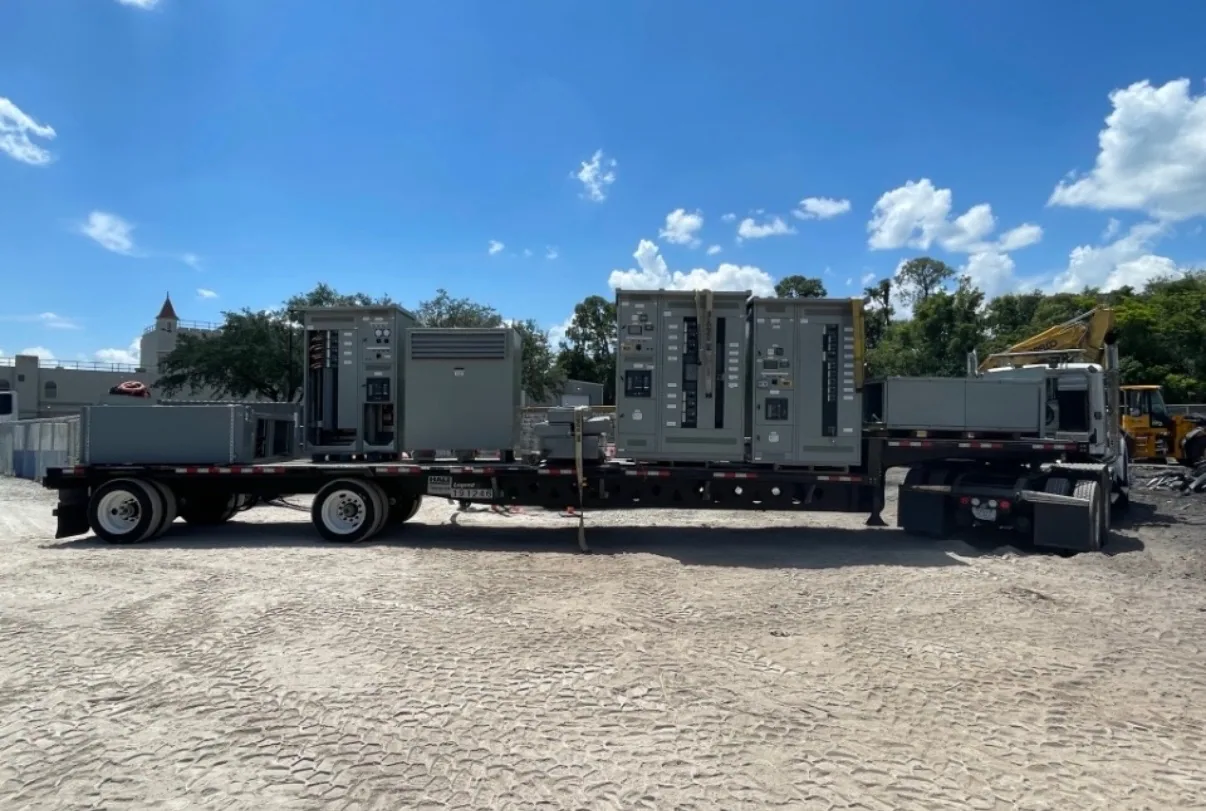
Panelboards in a healthcare distribution plan
In a hospital or other healthcare facility, a power distribution panelboard divides an upstream feeder into branch circuits serving defined areas or equipment. It is distinct from switchgear and from a switchboard: each has a different role in the distribution system. A project may use panelboards downstream of service or distribution equipment, with the arrangement determined by the engineer’s design and the facility’s operating needs.
Consider a renovation adding clinical rooms while keeping adjacent areas in operation. The design team must identify which loads are served by normal power and which belong to an engineered essential electrical system, along with the intended sources and transfer arrangement. The panelboard is one component in that scheme; its role and circuit assignments should follow approved documents, not assumptions based on a room name or equipment label.
Map loads, circuits and capacity
Begin with a current load schedule and the expected branch-circuit count, including identified spare or future spaces. Confirm connected loads, relevant demand assumptions, circuit characteristics and the equipment served with the responsible engineer. The number of circuits alone does not establish adequate capacity: feeder sizing, panel bus rating, protective-device selection and the applicable design conditions must be evaluated together for the actual project.
Clinical equipment can have distinct electrical requirements, and renovation work may introduce new loads or change how existing circuits are grouped. Provide equipment schedules and clarify which devices are critical to care, which require dedicated circuits, and whether any loads are planned for future phases. Ask the engineer to resolve these details and document circuit identification so the specified panelboard fits the distribution design and facilities team’s operating plan.
Coordinate essential-system protection
For circuits assigned to an essential electrical system, specify the applicable system arrangement and the panelboard’s position relative to upstream distribution and transfer equipment. Protective-device type, trip characteristics and available fault current affect whether the proposed assembly and devices are suitable. Selective coordination may be required by the project’s governing design criteria; where applicable, the responsible engineer should define and verify the coordination approach across relevant protective devices.
Obtain the available fault-current information at the panel location and identify the required short-circuit or interrupting ratings for the selected devices and assembly. Do not treat a nominal voltage or a panel’s physical size as a substitute for these values. Confirm rating terminology and suitability against the project specification and equipment submittal. Any design-dependent ratings, test documentation or listing applicability should be verified for the specific configuration before purchase approval.
Resolve voltage and system configuration
State the nominal system voltage, phase and wire arrangement, grounding approach, and source configuration shown in the project documents. Also ask the engineer to identify the equipment’s required maximum voltage and insulation characteristics, as applicable to the design. These are related but distinct specification details; do not infer one from another or assume a panelboard is compatible merely because a nominal voltage appears similar.
Where a facility has normal and alternate sources, clarify whether the panelboard receives power through upstream transfer equipment or has another specified arrangement. Provide the relevant one-line diagram and indicate whether the panelboard serves normal, essential, or other designated loads. The manufacturer can configure new equipment to the supplied specification, but engineering decisions about system design, code application and source transfer belong to the project’s qualified design team.
Choose placement and plan continuity
Panel location affects feeder routing, circuit lengths, access for qualified personnel and coordination with room use. Share the proposed location, environmental conditions, enclosure requirements, available working space information and any access or infection-control constraints documented by the project team. The responsible designers must determine code-compliant placement and clearances. A manufacturer’s equipment dimensions and connection details can inform coordination, but do not replace site-specific layout review.
For occupied facilities, plan the work sequence around the approved outage and continuity strategy. Identify existing circuits to be transferred, temporary arrangements if engineered, shutdown windows, and the parties responsible for each interface. Never assume a panelboard change can be completed without interruption. Installation, testing, commissioning and maintenance are tasks for qualified personnel following applicable safety procedures; manufacturer equipment supply does not itself provide those field services.
Prepare a complete purchasing package
For a useful quotation, provide the panelboard schedule, one-line diagram, nominal and maximum voltage requirements, system configuration, bus and circuit details, protective-device schedule, available fault-current data, required ratings, enclosure and mounting requirements, and any project-specific listing or documentation criteria. Include the intended application, essential-system designation where relevant, quantities, submittal milestones and requested delivery destination. Mark open engineering decisions clearly rather than treating them as settled.
South Carolina Switchgear Builders manufactures new equipment to specification, including power distribution panelboards, and ships nationwide. Share the project documents early so configuration, interfaces, availability and actual lead time can be reviewed against the order; lead times depend on the specified equipment and must be confirmed. Keep the engineer, electrical contractor, facility representative and manufacturer aligned on approved submittals, connection details and schedule assumptions before procurement and installation proceed.