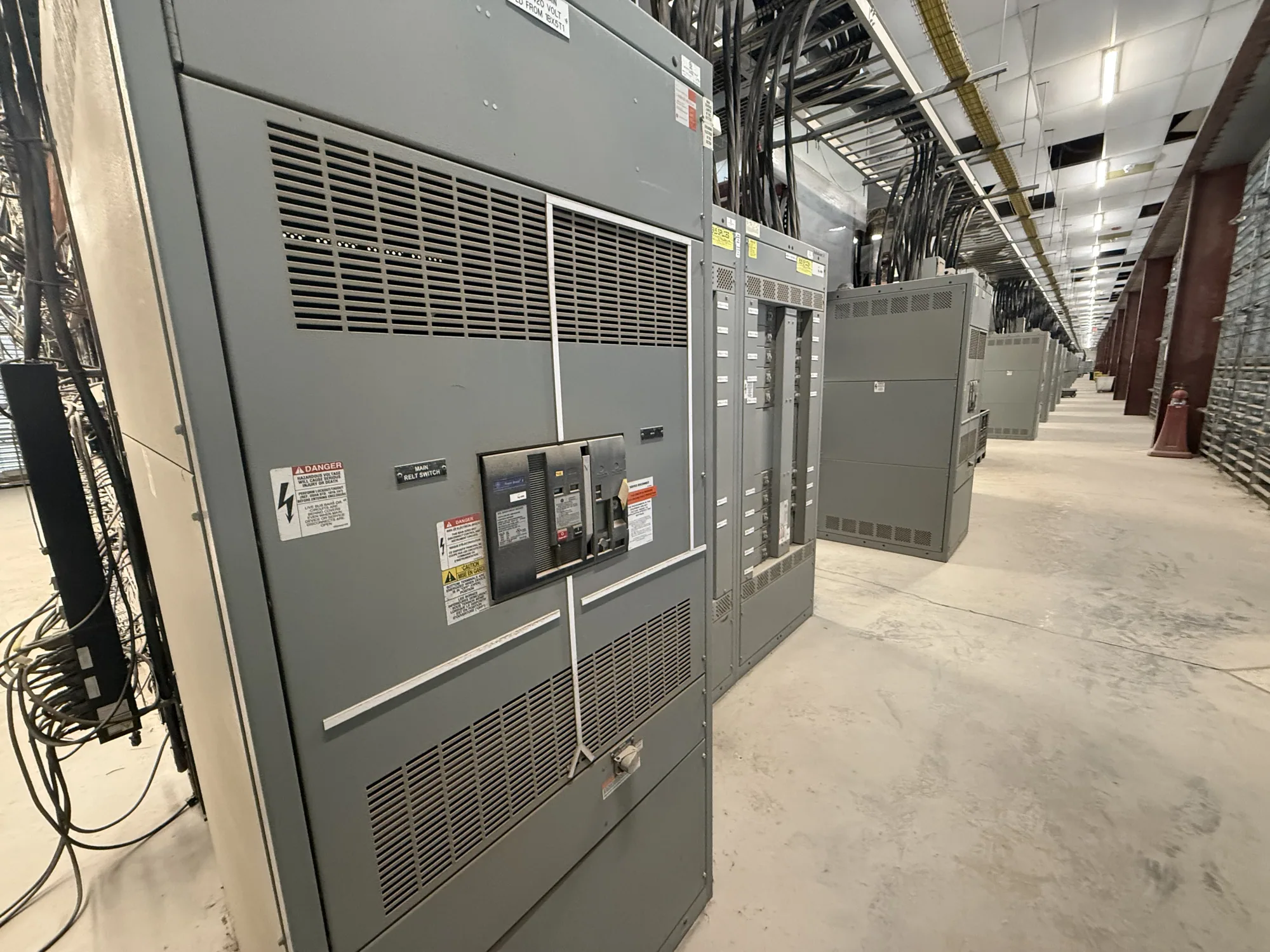
Panelboards in a regulated operating environment
In a pharmaceutical or biotech facility, panelboards can distribute power from an upstream source to branch circuits serving process utilities, laboratory equipment, controlled-environment support systems and ordinary building loads. The exact loads depend on the facility and its process design. A hypothetical project might add a production suite while keeping adjacent operations in service, making clear circuit boundaries and planned outage windows important from the outset.
A power distribution panelboard is a distinct equipment category from switchgear. The project engineer should define where each panelboard sits in the distribution system, what feeds it and which loads it serves. Manufacturer supply concerns the specified new equipment; it does not replace facility design, installation, validation, commissioning or operational procedures. Clarifying those responsibilities avoids treating a panelboard purchase as a complete electrical-system solution.
Translate process loads into branch capacity
Start with a circuit schedule that identifies each intended load, its electrical characteristics, connection method and operating context. Include known continuous or intermittent operation, starting behavior where relevant, and any loads expected to be added later. The responsible engineer should determine demand and capacity requirements from actual equipment data and applicable design criteria rather than relying on a general allowance for a facility type.
Branch-circuit count is only one part of capacity planning. Review the required protective devices, poles, conductor terminations, spare positions and physical arrangement against the equipment schedule. A panelboard with nominal spare spaces may still be a poor fit if future circuits require a different configuration or if access is constrained. Identify which loads are process-critical and document any intended coordination with upstream protection for engineering review.
Coordinate protection and fault ratings
Specify the available fault-current information and the required equipment fault rating based on the project’s system study and design documents. Do not assume a rating from voltage or application alone. The engineer responsible for the distribution system should verify protective-device selections and coordination with upstream equipment, including the assumptions used for the panelboard location and source configuration.
For regulated operations, traceable equipment identification and controlled documentation can make review and future changes more manageable. Ask what nameplate details, circuit directories, approved drawings and submittal records are required by the owner’s document-control process. Define how revisions will be identified and reviewed. These are project interface requirements to agree upon; they should not be confused with a guarantee that a particular panelboard configuration satisfies every facility quality or validation procedure.
Resolve voltage and system configuration
Provide the nominal system voltage, phase and wire configuration, grounding arrangement and source information, as established by the responsible engineer. Also state the required equipment maximum voltage and insulation requirements when applicable to the specified equipment. Nominal system voltage and equipment maximum voltage are related but are not interchangeable terms, so both should be checked against the actual design and equipment data.
Voltage rating alone does not establish suitability. The project team should confirm frequency, bus and branch requirements, protective-device compatibility, fault rating and any other specified electrical characteristics. If the project includes more than one distribution system, identify which loads and circuits belong to each. Resolve discrepancies among one-line diagrams, schedules and purchase documents before release rather than expecting the manufacturer to infer the intended design.
Choose placement around access and operations
Panel location affects circuit routing, working access, environmental exposure and how maintenance can be scheduled. Provide the proposed room or area, available dimensions, access path, mounting expectations and relevant environmental conditions for review. The design team should determine whether the location is suitable for the specified equipment and applicable facility requirements. Do not assume that a controlled environment automatically calls for a particular enclosure or that a standard location is acceptable.
Where production continuity matters, describe planned outage windows and the sequence for connecting or replacing equipment. Identify loads that cannot be interrupted together and the party responsible for approving shutdowns. Panelboard placement and circuit grouping may influence installation sequencing, but field work and outage execution remain the responsibility of qualified personnel under applicable safety procedures. Coordinate equipment dimensions and connection interfaces early enough to inform room and routing plans.
Prepare a complete purchase scope
For a useful quotation, provide the one-line diagram, panel schedules, load information, voltage and system configuration, required fault rating, protective-device details, enclosure and mounting expectations, and any specified documentation or identification conventions. Include the anticipated quantity, project delivery location and requested schedule. Mark open items clearly so the project engineer and manufacturer can distinguish confirmed requirements from assumptions requiring resolution.
South Carolina Switchgear Builders manufactures new equipment to specification, with US-built equipment, all-American components and nationwide shipping. Short lead times may be available, but availability and actual timing depend on the order and must be confirmed. Submit the project requirements for review before finalizing procurement; ratings, configuration, listing applicability and delivery dates must be confirmed for the specific design. Engineering, installation, testing and field services should be assigned separately in the project scope.