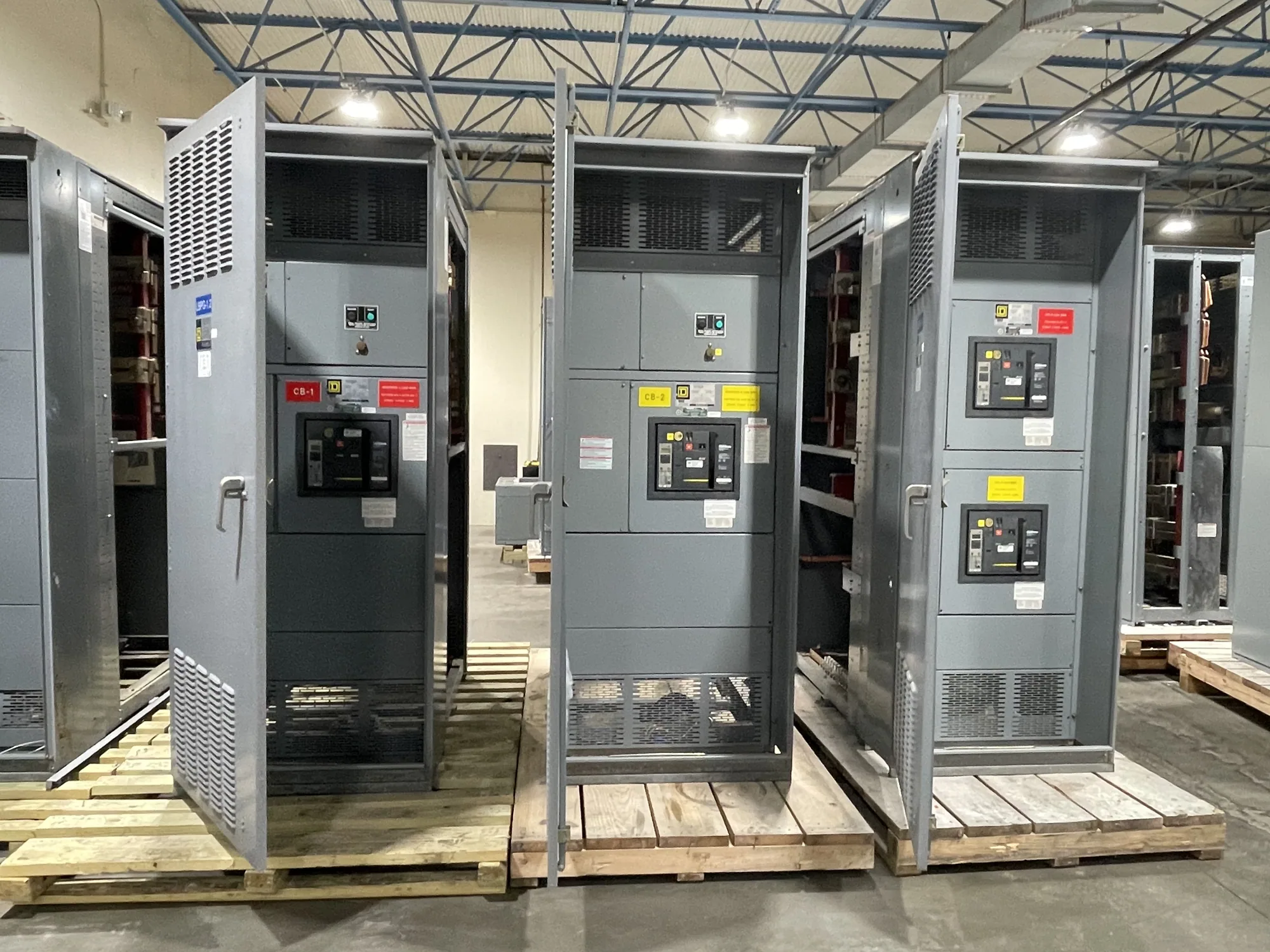
Where panelboards fit in a logistics facility
In a distribution center, electrical loads are spread across receiving, storage, packing, shipping, and support areas. Power distribution panelboards serve as branch-circuit equipment: they divide an incoming supply into circuits for downstream loads. Depending on the project design, those loads might include conveyor sections, dock equipment, lighting, receptacles, battery-charging areas, and controls for future automation. The actual circuit scope should come from the facility’s electrical design.
Panelboards are a distinct equipment category from switchgear and switchboards, even when they are part of the same distribution system. A panelboard is typically considered for branch-circuit distribution; upstream equipment may provide feeder distribution or other system functions. The responsible engineer should define how each assembly connects, what it serves, and which equipment category and construction are appropriate. South Carolina Switchgear Builders manufactures new equipment to specification and ships nationwide.
Plan circuits around operations and growth
Start with an equipment schedule that identifies each load, its electrical characteristics, location, operating pattern, and planned source. Conveyors may be divided into zones so that circuits align with controls and operational areas, while charging equipment may require a separately coordinated layout. Avoid assuming that all equipment operates simultaneously—or that it does not. The project engineer should document applicable demand assumptions and how future operating changes affect feeder and panel capacity.
Scalable planning means considering more than spare breaker spaces. A design may need room for future circuits, adequate feeder capacity, physical space for additional equipment, and a path to connect it without disrupting essential operations. Those provisions depend on the facility plan and the available upstream capacity. Identify which expansion stages are intended, when they may occur, and which loads must remain available during construction or equipment changeovers.
Coordinate protection, fault ratings, and placement
Protective devices must be selected and coordinated for the system and the connected loads. Provide the available fault-current information at the proposed panel location and the upstream protective-device details so the responsible engineer can evaluate the required fault rating and coordination. Do not choose an assembly or protective device based on a generic rating assumption. The appropriate configuration depends on the actual system, specification, and equipment combination.
Panel placement affects feeder length, access, environmental exposure, and day-to-day work around the equipment. Review the facility layout for traffic paths, loading areas, washdown or dust concerns, temperature conditions, and access restrictions. If a panel could be affected by vehicle movement or later racking changes, resolve location and protection with the design team before finalizing the equipment scope. Qualified personnel must perform installation, testing, and maintenance under applicable safety procedures.
Resolve continuous-current requirements
Continuous-current selection calls for project-specific review, not a shortcut based on a facility label. Share expected normal load current, the duration and pattern of operation, connected loads, and the proposed bus and protective-device current ratings. The engineer should assess applicable derating conditions, ambient temperature, enclosure and installation conditions, and the equipment instructions. Confirm how the design treats continuous loads and whether planned additions are included in the stated operating case.
Charging demand deserves special attention because vehicle or material-handling charging schedules can change. Provide charger quantities, input requirements, expected operating windows, and any managed charging assumptions. If future charging capacity is part of the plan, identify whether it is an immediate connected load or a later expansion scenario. The manufacturer can review the requested equipment configuration against the supplied specification; engineering responsibility for load calculations and system adequacy remains with the project’s qualified design professionals.
Prepare a complete purchasing scope
A useful request for quotation identifies the application, equipment type, system voltage and phase, feeder and branch-circuit requirements, bus and device ratings, fault-current data, enclosure and environment, and requested options. Include drawings, schedules, applicable specifications, and the intended expansion strategy when available. Flag unusual operating conditions, charging assumptions, access constraints, and any required delivery coordination. Clarify which information is preliminary and which values are approved for equipment design.
Also identify the equipment interfaces: incoming conductors, upstream protection, downstream loads, control or monitoring needs, and connections to related distribution assemblies. Note site receiving limitations and the project’s anticipated sequence so equipment scope can be coordinated with construction planning. Availability and actual lead times depend on the order and must be confirmed. Listing, testing, ratings, and standards applicability should be checked against the particular design and supplied equipment rather than presumed for every configuration.
Coordinate supply with the project team
South Carolina Switchgear Builders supplies new panelboard and distribution equipment built in the United States with all-American components, custom to specification, and shipped nationwide. Confirm the requested construction, submittal information, availability, and delivery timing for the specific order. The manufacturer’s supply scope should be distinguished from system engineering, permitting, installation, field testing, and ongoing maintenance, which must be assigned to the appropriate project professionals.
Before release, have the design team verify the final load assumptions, fault data, device selection, panel locations, feeder interfaces, and expansion provisions. Then reconcile approved drawings and equipment documentation with site conditions and the construction schedule. This careful handoff helps keep warehouse operations, charging plans, and future automation in view while the new panelboard configuration is finalized to the project specification.