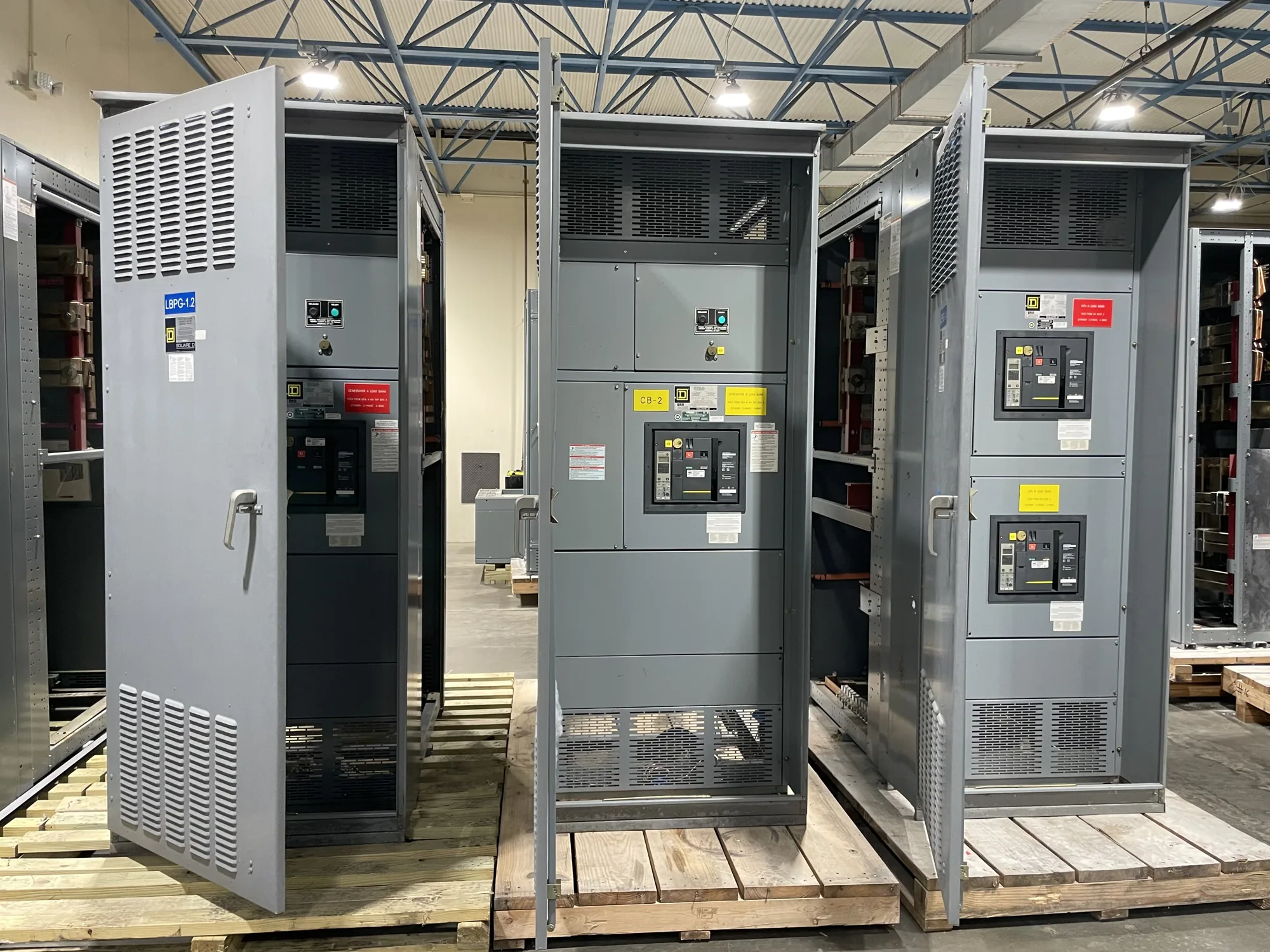
Start with the plant’s service and production plan
Automotive manufacturing facilities can combine production lines, motor-driven equipment, material handling, building systems, and planned capacity additions. Service-entrance switchgear is considered at the point where incoming utility power connects to the facility’s main distribution. Its configuration must follow the project’s one-line diagram, utility interface, and operating plan—not a generic assumption about what an automotive plant needs.
For a new or expanding facility, map the incoming service to the downstream distribution areas that matter to operations. Identify which loads are essential to production, which can be separated, and whether future lines or process changes are part of the current scope. This early picture helps the project team evaluate equipment arrangement, feeder provisions, and access without committing to unverified ratings or features.
Coordinate the utility interface and service disconnect
Confirm the service characteristics and division of responsibilities with the serving utility and project engineer. The equipment specification should identify the incoming conductors and termination requirements, the service disconnect arrangement, metering or other interface requirements where applicable, and the protection and operating boundaries. These details are project-specific and may depend on utility review; they should be documented before the manufacturer develops a final configuration.
Grounding and bonding provisions also require deliberate coordination. The responsible electrical engineer should define the system grounding approach, bonding points, conductor paths, and how the service equipment connects with the facility’s distribution. Resolve these interfaces alongside the one-line diagram and physical layout. A mismatch between specified terminals, cable entry, or grounding provisions and the installation design can complicate procurement and site coordination.
Plan feeder segregation around production continuity
Production continuity is an operating objective, not something switchgear alone can guarantee. The facility team should identify whether production areas need separately arranged feeders, how loads are grouped, and what isolation boundaries support maintenance or process changes. A planned expansion may influence spare or future feeder provisions, but the required arrangement, space, and ratings must be stated and confirmed for the actual design.
Staged outages deserve attention before equipment selection is complete. Provide the project team with the acceptable outage windows, work sequencing assumptions, and any limits on shutting down particular production areas. Ask how the proposed equipment interfaces with existing distribution and whether the specified scope includes only new service equipment or associated sections as well. Installation sequencing, temporary power, switching plans, and outage execution belong to the facility’s qualified project and electrical personnel.
Resolve current ratings from real operating conditions
Begin rating discussions with the expected normal load current and the electrical design basis, rather than selecting a bus or device rating from a broad industry label. Share the load information, service voltage and configuration, one-line diagram, and specified operating conditions. The responsible engineer must determine the applicable continuous-current requirements and protective-device needs for the particular assembly and service.
Bus and device ratings are related but not interchangeable. Ask the engineer to define the required rating for each relevant component and identify the conditions used to establish it. Enclosure arrangement, ambient and operating temperature, ventilation, conductor details, and installation conditions can affect design decisions. Any derating or temperature-related assumptions must be evaluated for the specified equipment; no rating or performance result should be inferred without that review.
Specify maintainability and physical coordination
Provide the available electrical-room dimensions, access routes, working-space constraints, cable entry direction, and connection details. Include the preferred equipment lineup arrangement and any known restrictions on moving sections into the room. These inputs help the manufacturer assess whether the requested configuration can be developed to the project requirements, while the project’s qualified design team remains responsible for confirming room layout and applicable clearances.
For maintainable distribution, describe the intended access and isolation approach and identify any operating or maintenance constraints that affect section arrangement. If the plant expects future process additions, distinguish firm requirements from possible later work. A defined scope makes it easier to evaluate whether provisions should be included now or handled through a future project, subject to space, design, and equipment confirmation.
Prepare a complete automotive project RFQ
A useful request for quotation includes the project location, new-equipment scope, service data, one-line diagram, load and rating requirements, utility interface information, feeder schedule, grounding approach, room dimensions, cable entry needs, and requested documentation. Add planned expansion assumptions, outage constraints, preferred delivery coordination, and any project specifications that govern the assembly. Clearly flag open items for engineering or utility confirmation instead of treating estimates as approved requirements.
South Carolina Switchgear Builders manufactures new switchgear and switchboards to specification, with US-built equipment, all-American components, short lead times, and nationwide shipping. Availability and actual lead times depend on the order and must be confirmed. Project-specific ratings, configuration, standards, listing applicability, testing, and delivery dates also require review against the final specification and supplied equipment. The manufacturer’s supply scope should be distinguished from engineering approval, utility acceptance, installation, commissioning, and field services, which must be assigned to the responsible project parties.
Coordinate decisions before release
Before purchase, align the equipment specification, approved electrical documents, utility requirements, physical layout, and procurement schedule. Resolve who will provide final engineering, review submittals, manage site installation, and coordinate any planned outage. Qualified personnel must perform installation, testing, and maintenance under the applicable safety procedures; equipment procurement is not a substitute for those responsibilities.
When the project team can provide a coordinated scope and identify remaining decisions, the manufacturer can evaluate the requested new service-entrance equipment against that information. Confirm open technical items, configuration, availability, and schedule before release. This process gives automotive plant stakeholders a clearer basis for comparing proposals and coordinating equipment delivery with construction and production plans.