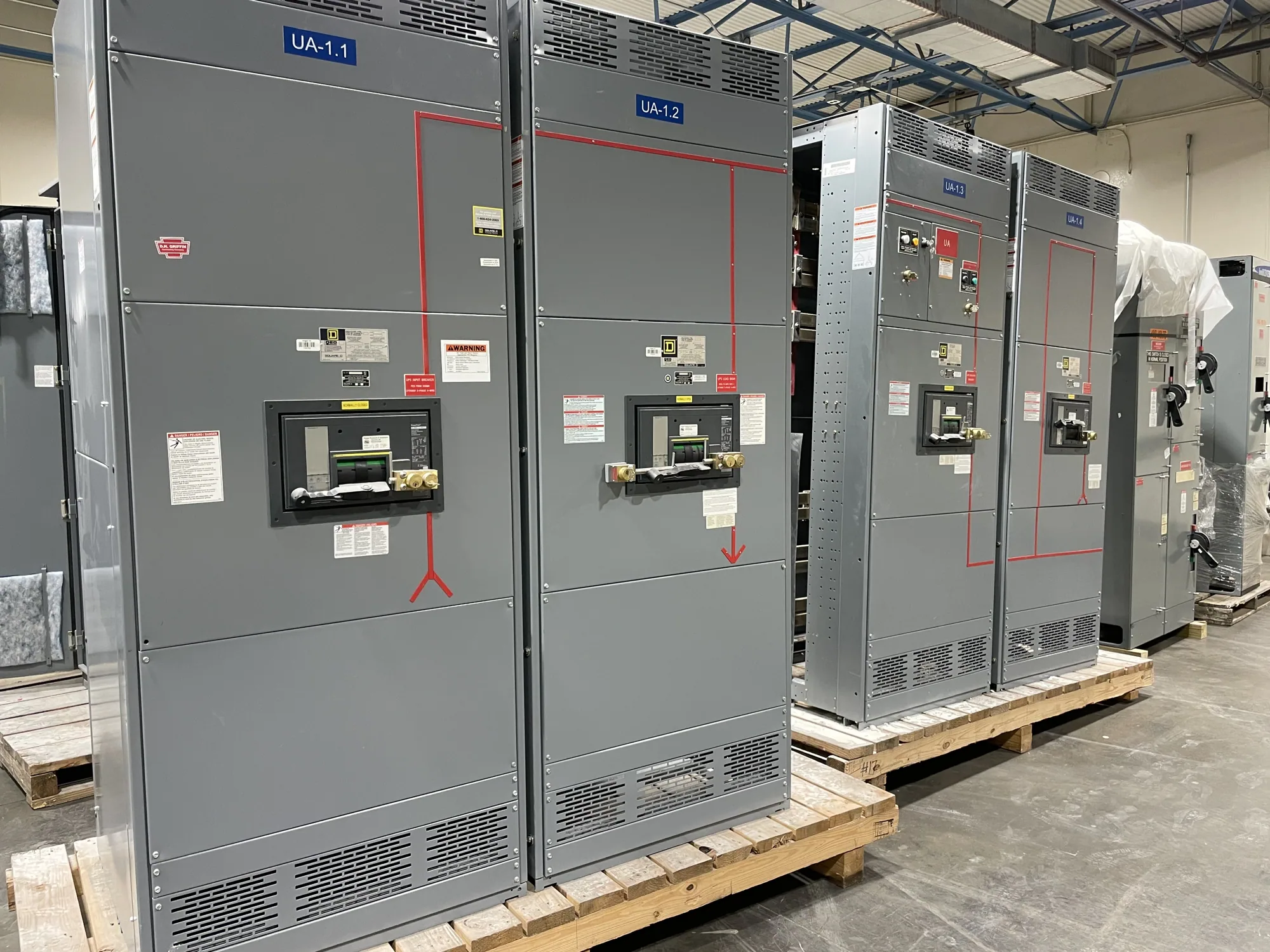
Where service-entrance equipment fits on campus
A university or college may add a laboratory, renovate an academic building, expand a central plant, or phase construction across several facilities. Each project can affect the point where utility service enters a building and how power is distributed downstream. Service-entrance switchgear is considered as part of that defined electrical scope; it is not automatically a single campus-wide solution for every building or feeder.
Begin by identifying whether the equipment serves one building, a campus distribution node, or a project phase with future connections. The one-line diagram should show the utility source, service disconnecting means, switchgear, outgoing feeders, and relevant downstream equipment. Confirm which boundaries belong to the utility, owner, engineer, and equipment supplier. That shared scope prevents assumptions about who provides interface components or obtains approvals.
Coordinate the utility interface and service scope
Before selecting an arrangement, the project engineer should document the serving utility’s applicable requirements and review process. Confirm the service characteristics, point of connection, metering provisions, fault-current information, and any required equipment or compartment arrangements with the responsible parties. These details depend on the project and utility; they should not be inferred from another campus building or copied from a past specification without review.
Clarify the service disconnect function and the intended distribution boundaries. On a campus with multiple buildings, determine whether feeders leave the service equipment for separate facilities, connect to downstream distribution, or serve only the building in the current construction phase. Identify planned future feeders and how their inclusion affects the initial lineup, space, and protection coordination. The engineer should also establish grounding and bonding requirements for the actual service configuration and verify them against project documents and applicable authority review.
Plan feeders around buildings and phases
Map each outgoing feeder to its destination, load scope, and construction phase. Labs may have different operating schedules and expansion plans than lecture spaces; central plants may serve several buildings and require coordination with existing distribution. A feeder schedule, one-line diagram, and load information help distinguish current work from future provisions. Ask whether spare spaces or provisions are needed, and specify exactly what they are intended to accommodate rather than treating “future ready” as a complete requirement.
Phased work also affects physical arrangement and installation planning. Record available electrical-room dimensions, access routes, working clearances, cable entry preferences, and any limits imposed by existing construction. Identify the equipment that remains in service during each phase and the planned outage windows for tie-ins or replacement work. The manufacturer’s supply scope should be coordinated with the project schedule, while removal, installation, connections, and field work remain assigned to the project’s qualified contractors.
Specify current ratings from project conditions
Continuous current selection starts with the expected load and the electrical design conditions at the equipment. Provide calculated or documented load information, source details, operating modes, and any anticipated growth that the engineer wants considered. The required continuous-current rating is not determined by building type alone. It must be evaluated for the specified bus and devices, their intended use, and the conditions identified in the project documents.
Ask the responsible engineer to confirm how operating temperature, enclosure and installation conditions, loading patterns, and any applicable derating considerations affect the selected ratings. Bus rating and device rating are related but distinct specification items; neither should be assumed from the other. Also provide the required voltage class and other project-specific electrical characteristics for review. Actual ratings, listing applicability, and design details must be confirmed for the equipment configuration being quoted.
Resolve operating and approval requirements
Owner standards can shape metering, labeling, compartmentation, control interfaces, finish, and documentation. Submit the current campus standard and identify any approved deviations or project-specific additions. For a renovation, include available drawings and field-verified information about existing equipment and connections, but have the engineer determine what remains suitable for the new design. Confirm which documents must be reviewed by the owner, utility, engineer, and authority having jurisdiction, and who is responsible for each approval.
Outage planning deserves early attention because a campus may have teaching, research, residential, or plant operations that constrain shutdown timing. Share required outage windows, sequencing assumptions, and any temporary-power responsibilities with the project team. These constraints inform the procurement and installation plan, but they do not establish a delivery date or guarantee that a specific equipment arrangement will be available. Confirm configuration and schedule against the actual order and project requirements.
Prepare a useful purchasing package
For a focused manufacturer quotation, provide the one-line diagram, equipment schedule, specification, load and feeder information, utility requirements available to the project, and the desired scope boundary. Include voltage class, bus and device current requirements, service disconnect details, grounding and bonding criteria, metering or control needs, room constraints, and required submittals. Note campus standards, planned phases, outage constraints, and requested delivery timing so the proposal can be reviewed against the full application.
South Carolina Switchgear Builders manufactures new switchgear and switchboards to specification, with US-built equipment and all-American components, and ships nationwide. Availability and actual lead times depend on the order and must be confirmed. Manufacturer supply is distinct from engineering design, utility approval, installation, commissioning, and field testing; define those responsibilities with the project team. A complete, coordinated scope gives the engineer and buyer a sound basis to evaluate the proposed service-entrance equipment for the campus project.