Where service-entrance equipment fits — Service-Entrance Switchgear for Hospitality and Resorts
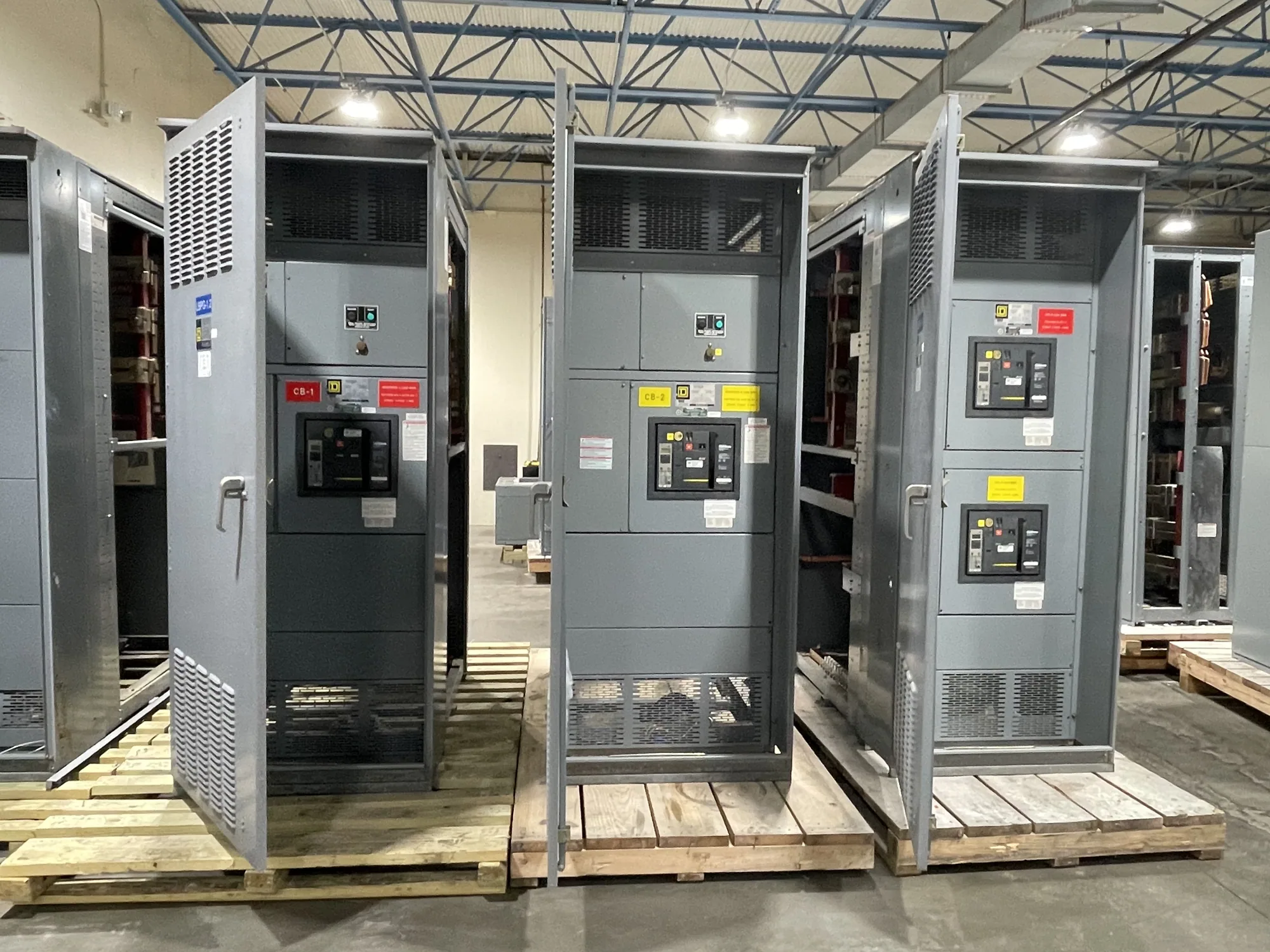
Hotels and resorts can bring together guest rooms, kitchens, laundry, pools, meeting spaces, retail areas and substantial mechanical systems behind one utility service. Service-entrance switchgear sits at the boundary between the incoming service and the facility’s distribution, with a configuration determined by the utility arrangement, project design and applicable requirements. It is not a substitute for a coordinated distribution plan across the property.
For a new build or major electrical project, begin by mapping which buildings and loads the service will supply. A resort may have separate buildings, phased construction or existing distribution that remains in operation while new work proceeds. The one-line diagram should clarify service conductors, main disconnecting means, metering interfaces where applicable, feeders and downstream equipment. The project engineer and utility determine the required service arrangement and approvals.
Coordinate the utility interface and approvals
Utility service requirements are project-specific. Confirm the service characteristics, point of delivery, available fault-current information, metering approach, permitted equipment arrangement and utility review process with the serving utility and responsible engineer. These details affect the equipment design and cannot be inferred from a property’s location or hospitality use. Share the utility’s written requirements early enough to resolve interface questions before equipment is finalized.
Service disconnecting means, grounding and bonding provisions, compartmentation and access must align with the actual design and applicable authority requirements. Identify who is responsible for each interface: utility, electrical engineer, equipment manufacturer, contractor and inspector. The manufacturer can build new equipment to an approved project specification; engineering decisions, permits, utility acceptance and field installation remain with the responsible project parties.
Account for changing occupancy and seasonal demand
Guest occupancy can vary by season, events and operating schedule, but a low-season snapshot is not a sound basis for equipment selection. Gather documented demand data where available and identify the loads expected at peak occupancy, including HVAC, water heating, commercial kitchens, laundry, elevators, pumps, pool systems and electric vehicle charging if included. Distinguish connected load from measured demand and projected future loads in the engineer’s analysis.
Seasonal operation may change load timing as well as magnitude. A cooling peak, holiday event or simultaneous kitchen and laundry operation can shape the demand profile differently from the property’s annual average. Ask the engineer to state the design assumptions and explain whether planned additions, electrification or phased occupancy are included. The manufacturer needs the resulting equipment requirements, not an unverified estimate based only on room count or season.
Resolve continuous-current and thermal questions
Continuous current rating should be evaluated for the actual equipment design and expected operating conditions. The project team should identify calculated loads, expected continuous loading, bus and device ratings, enclosure arrangement and any specified margin or future capacity. A nameplate rating by itself does not establish that every component or the complete assembly is suitable for a particular loading scenario.
Operating temperature and site conditions also matter. Ask the engineer to identify ambient temperature assumptions, indoor or outdoor placement, ventilation and any environmental exposure that could affect the specified design. If conditions require derating or other adjustments, those must be established for the actual configuration by the responsible design professionals and confirmed against the equipment specification. Do not select a rating by applying a generic rule to every resort.
Consider outages, phasing and site exposure
Replacing or adding service equipment can require coordination around a planned outage, especially where guest operations, food service, life-safety systems and refrigeration depend on electrical continuity. Define acceptable outage windows, temporary-service responsibilities and the sequence for disconnecting and reconnecting loads with the project engineer and contractor. A manufacturer’s equipment supply does not itself establish an outage plan or provide field switching and installation.
Coastal or humid locations deserve an accurate environmental description rather than a blanket assumption. Tell the design team whether the equipment will be indoors or outdoors and describe actual exposure to salt air, moisture, temperature variation, wind-driven rain or other site conditions. The required enclosure and construction details should follow the project specification and manufacturer review. Confirm physical access, delivery route, working clearances and any phased construction constraints before release.
Prepare a complete purchasing specification
For a useful quotation, provide the current one-line diagram, utility requirements, service voltage and configuration, available fault-current information, specified ratings, main-device requirements, metering details, grounding and bonding requirements, enclosure and environmental conditions, and any project standards. Include drawings or schedules that identify feeder connections, cable entry, space constraints and downstream interfaces. Mark unresolved items clearly instead of treating assumptions as final design criteria.
Also share the project location, required submittal documents, review milestones, target delivery window and construction sequence. Configuration, availability and actual lead time depend on the order and must be confirmed against the final specification. South Carolina Switchgear Builders manufactures new switchgear and switchboards in the United States, uses all-American components, offers custom-to-specification equipment and ships nationwide; project-specific details and timing require confirmation.
Keep responsibilities clear through release
Before approving the equipment for production, have the responsible engineer verify the complete submittal against the utility interface, one-line diagram, ratings, site conditions and applicable approval requirements. Confirm any requested listing or testing against the specific assembly; applicability depends on the equipment design, and no general statement replaces project review. Resolve discrepancies in writing so that procurement, construction and inspection teams are working from the same accepted configuration.
After release, coordinate drawing review, manufacturing questions, delivery access and the contractor’s installation schedule. Qualified personnel must perform installation, testing and maintenance under applicable safety procedures; energized work should never be treated as a routine project step. A clear specification and defined responsibilities help the hospitality owner, engineer, utility, contractor and manufacturer manage a complex service entrance with fewer late-stage surprises.