Plan around the campus distribution scope
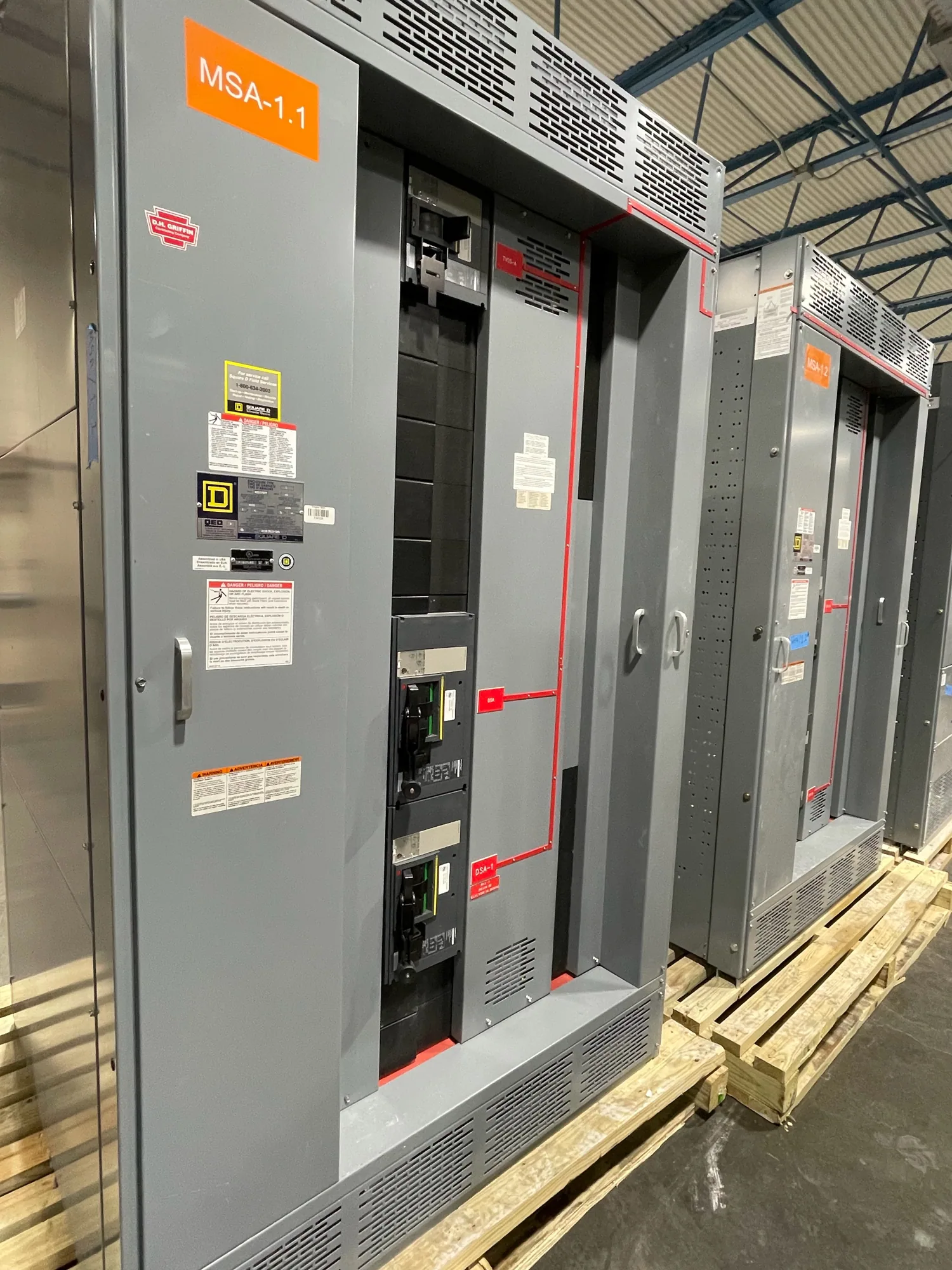
Higher education campuses often bring together academic buildings, laboratories, residence facilities, central plants and renovation projects, each with distinct electrical requirements. A low-voltage switchboard may serve a building or distribution point, supplying service and feeder circuits to downstream loads. Its role depends on the project’s one-line diagram and design; it should not be selected from a building label alone.
For multi-building planning, distinguish equipment serving one facility from equipment intended to distribute power toward other buildings. Confirm the source, downstream destinations, existing distribution interfaces and project boundaries with the responsible engineer. A new assembly can be configured to specification, but campus integration, protection coordination and installation scope must be defined for the actual project.
Translate building uses into service and feeder requirements
Academic spaces, research areas and central plants may have different load profiles and operating priorities. Provide the design team’s load schedule, service arrangement, expected demand assumptions and identified large or sensitive loads. The equipment schedule should state required service and feeder devices, their functions, and the ratings specified by the project engineer rather than relying on broad descriptions such as “lab building.”
For each feeder, identify the destination, connected equipment, conductor and termination requirements, and any provisions for future circuits shown in the design. Clarify whether distribution is radial, includes alternate sources, or has other operating arrangements; these choices affect the assembly and its interfaces. Future capacity should be deliberate: added space or devices may change dimensions, bus requirements and cost, and should not be assumed available without design confirmation.
Check continuous current and operating conditions
Continuous current selection calls for more than copying a single load number. The engineer must evaluate expected load, service and feeder device ratings, bus requirements and applicable design conditions together. Provide the calculated loads, demand assumptions and relevant operating schedule, then ask the responsible engineer to confirm how continuous loading and any applicable adjustment or derating conditions are treated for the specified assembly.
Operating temperature, enclosure conditions, ventilation, installation location and the equipment arrangement may affect the design review. Share known environmental and room constraints instead of presuming that a nominal rating alone settles suitability. South Carolina Switchgear Builders can manufacture new switchboards to specification; project-specific ratings and configuration require confirmation against the final documents and supplied equipment.
Coordinate fault ratings, dimensions and campus interfaces
Fault-current information is essential to equipment selection. Provide the available fault-current data and the required short-circuit or withstand criteria established by the project engineer, along with the system voltage and source information. Ask that the proposed assembly’s applicable ratings and protective-device configuration be checked against the project design. Do not infer a suitable fault rating from the building type or from another campus installation.
Room and routing constraints are equally practical. Share equipment-room dimensions, access and handling limits, conduit or cable entry locations, working clearances shown in the plans, and any restrictions on assembly sections. Confirm connection points and interfaces with upstream and downstream equipment. Manufacturer drawings and submittals should be coordinated with the project team before fabrication so changes can be addressed through the agreed review process.
Account for owner standards and planned outages
Campus owners may have standard naming, labeling, documentation, device preferences or maintenance-access expectations. Provide current owner standards and identify which requirements apply to this project. If a renovation must connect to existing distribution, include available existing-equipment information and define responsibility for field verification. Compatibility and retrofit assumptions should be reviewed by the engineer; a new switchboard does not by itself resolve legacy-system constraints.
Scheduled outages can shape project sequencing, especially when work affects occupied buildings or shared distribution. Identify the intended outage window, required milestones and dependencies, but treat them as coordination inputs rather than a delivery or installation guarantee. The owner, engineer, contractor and other project parties should establish switching, cutover, testing and acceptance responsibilities under their applicable procedures. Installation and testing belong to qualified personnel using required safety procedures.
Prepare a complete purchasing package
A useful request for quotation includes the one-line diagram, equipment schedule, project specification, system voltage, service and feeder requirements, available fault-current data, requested ratings, enclosure and room constraints, connection details, owner standards, and desired submittal and delivery milestones. Include the project phase and whether the switchboard is for new construction, a building addition or a replacement. Mark open design decisions clearly rather than presenting assumptions as approved requirements.
South Carolina Switchgear Builders manufactures new, US-built switchboards with all-American components, custom to specification, and ships nationwide. Short lead times may be available, but availability and actual lead times depend on the order and must be confirmed. The manufacturer’s supply scope is distinct from engineering of the campus system, installation, field testing and outage execution; confirm responsibilities and any requested documentation in the project scope.
Move from design questions to a defined quote
Before procurement, align the quotation basis with the latest approved documents and resolve items that could change the assembly: device functions, continuous current requirements, fault ratings, dimensions, termination arrangements and applicable listing requirements. UL 891 may apply to eligible low-voltage switchboards, but applicability and assembly listing must be verified for the specific design. Avoid treating a general specification reference as confirmation that a particular assembly is listed.
With a coordinated scope, the buyer and project team can compare the proposed configuration against campus needs, identify exclusions and clarify submittal review before ordering. Where design information is incomplete, request engineering clarification rather than guessing at ratings or interfaces. A well-defined package gives the manufacturer a sound basis to quote new equipment and gives the campus team a clearer path for procurement and project coordination.