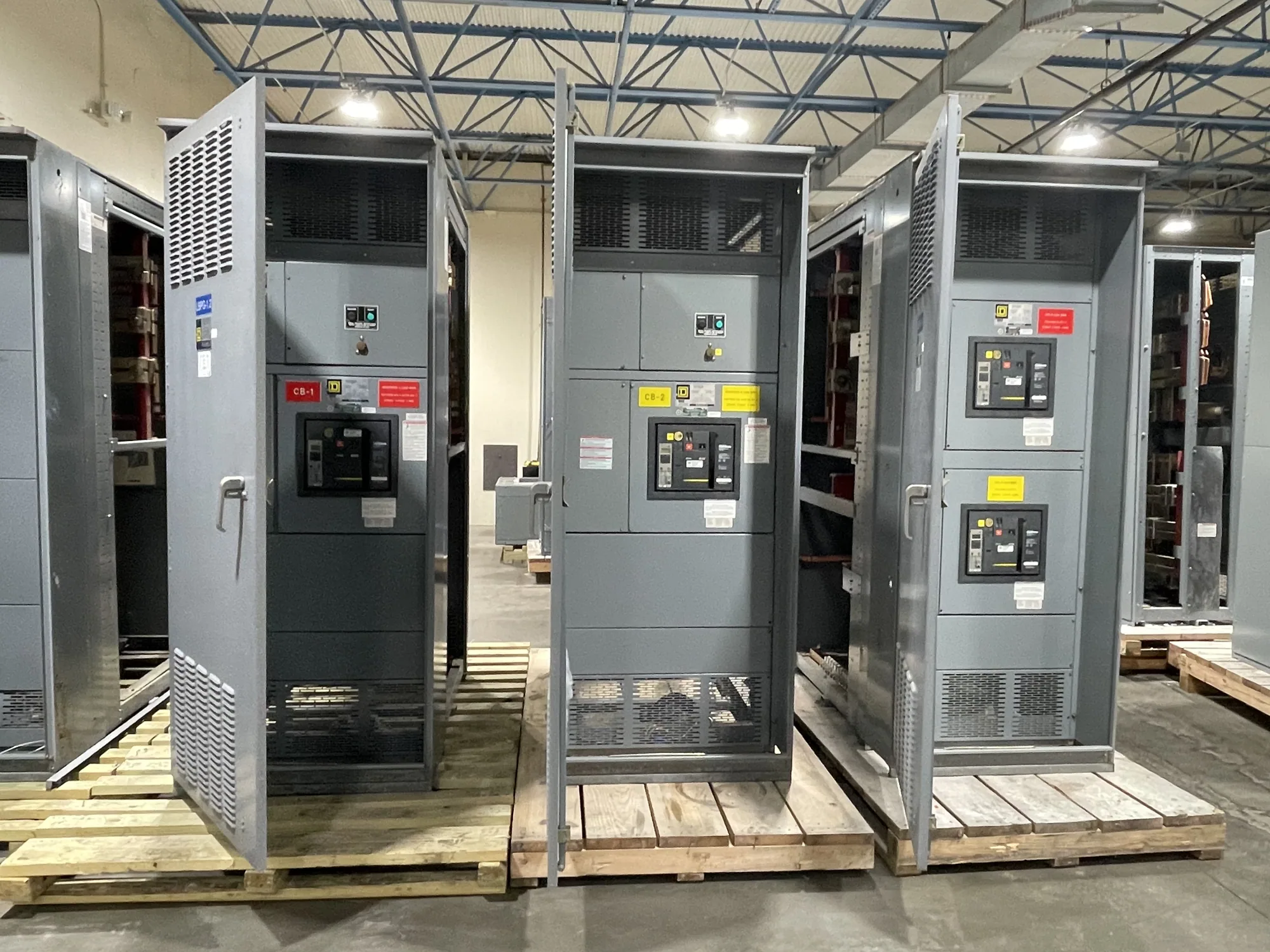
Start with the facility’s distribution plan — Electrical Switchboards for Warehouses and Logistics Facilities
A warehouse switchboard can serve as a central point for distributing low-voltage power to building systems, production areas, conveyor equipment, charging infrastructure, and downstream panels. The right configuration depends on the facility’s electrical design—not simply its floor area or industry label. A new distribution center, an operating warehouse adding automation, and a logistics campus with multiple buildings may need very different service and feeder arrangements.
Begin by identifying the source feeding the switchboard, the loads it must supply, and the equipment downstream. Ask the project engineer to define the service arrangement and confirm which functions belong in the switchboard versus separate assemblies. Establish how the board will connect to upstream protection and downstream equipment, including cable or busway entry locations. These interfaces influence the assembly layout and can prevent avoidable coordination problems.
Translate warehouse loads into feeder requirements
Develop a load schedule that reflects how the facility will actually operate. List conveyors, sorters, dock equipment, lighting, HVAC, charging systems, and planned automation separately where practical. Include equipment nameplate information and expected operating patterns when available. Starting, cycling, simultaneous operation, and future shifts can affect demand assumptions; the responsible engineer should determine the design basis rather than treating every connected load as continuously operating.
Use that load information to evaluate service and feeder devices, bus capacity, and how loads are divided among circuits. A large conveyor line or group of chargers may call for a dedicated feeder, while smaller loads may be served through downstream distribution. Avoid sizing future feeders from an informal allowance alone. Identify which additions are foreseeable, their estimated electrical requirements, and whether the project expects those loads to operate at the same time as existing equipment.
Resolve continuous current and operating conditions
Continuous current rating is one part of equipment selection, not a substitute for a complete load and protection review. The project team should compare anticipated current with the proposed bus and device ratings, and verify applicable conditions that may affect those ratings. Ask whether the design basis accounts for ambient temperature, enclosure conditions, device configuration, conductor terminations, and any other manufacturer-specified limitations. The correct evaluation is specific to the proposed assembly and installation.
Provide the expected load profile and operating environment so the responsible engineer and manufacturer can review the requested configuration. Do not assume that a switchboard can carry a particular load because a single component has a matching nominal rating. Bus, protective devices, connections, and the complete assembly must be considered together. Applicable ratings and any required derating need confirmation against the actual design and supplied equipment; they should not be inferred from a generic warehouse application.
Coordinate fault ratings, space, and interfaces
Provide the available fault-current information and the upstream protective-device details needed for the design review. The specified short-circuit and protective-device arrangement must suit the project’s electrical system and be confirmed for the proposed equipment. Also share the one-line diagram, if available, and identify any coordination requirements established by the electrical engineer. These details are essential to evaluating a board; an assumed fault rating is not a safe substitute for project data.
Room dimensions and access can shape the assembly just as much as the electrical schedule. Confirm the intended equipment location, working and service access requirements, door and aisle constraints, cable routing, entry direction, and any building or structural limitations with the project team. Record the planned shipment route and final placement constraints early. A layout that fits electrically may still require revision if it conflicts with the room, distribution path, or equipment-handling plan.
Plan expansion without compromising safe operation
Scalable distribution starts with a defined expansion plan. Identify likely future feeders, reserve-space expectations, and the equipment or automation those circuits may support. Ask whether the initial assembly should include provisions for those additions and which details must be established now. Future work is not automatically accommodated by leaving physical room: bus capacity, protection, fault ratings, enclosure layout, and the assembly’s approved configuration all require review.
For a staged project, document which sections are part of the initial scope and what later work may require an outage or changes to the electrical design. Expansion planning must not imply that equipment can be modified or connected while energized. Installation, testing, maintenance, and any future alterations belong to qualified personnel following applicable safety procedures and project requirements. The manufacturer can clarify the supplied assembly’s configuration, but field execution remains a separate responsibility.
Prepare a useful purchasing package
A focused request for quotation should include the project location, requested quantity, service and feeder information, one-line diagram, load schedule, available fault-current data, and the required ratings. Add enclosure and environmental requirements, dimensions, cable-entry preferences, connection interfaces, and any specified listing or standards. If continuous operation, charging growth, or automation phases affect the design, state the assumptions clearly and identify which information is preliminary.
Also provide the delivery destination, target project milestones, review contacts, and the scope boundary between equipment supply and other project work. South Carolina Switchgear Builders manufactures new switchboards to specification, with US-built equipment, all-American components, and nationwide shipping. Availability and lead times depend on the order and must be confirmed. Project-specific ratings, listing, testing, delivery dates, and standards require review against the actual specification and supplied assembly.
Coordinate responsibilities through approval
Before releasing an order, have the electrical engineer and other project stakeholders review the proposed equipment data and interfaces. Confirm that the final scope matches the load assumptions, fault information, room plan, and expansion strategy. Resolve open items in writing, including any design-dependent ratings or listing requirements. This review helps align the manufactured equipment with the project documents without confusing equipment supply with engineering approval or field services.
Clear inputs make warehouse switchboard selection more practical: define present loads, explain credible growth, document site constraints, and identify the required electrical characteristics. With those details, the project team can evaluate a suitable new assembly and coordinate purchasing, approval, shipment, and installation responsibilities around the facility’s actual needs.